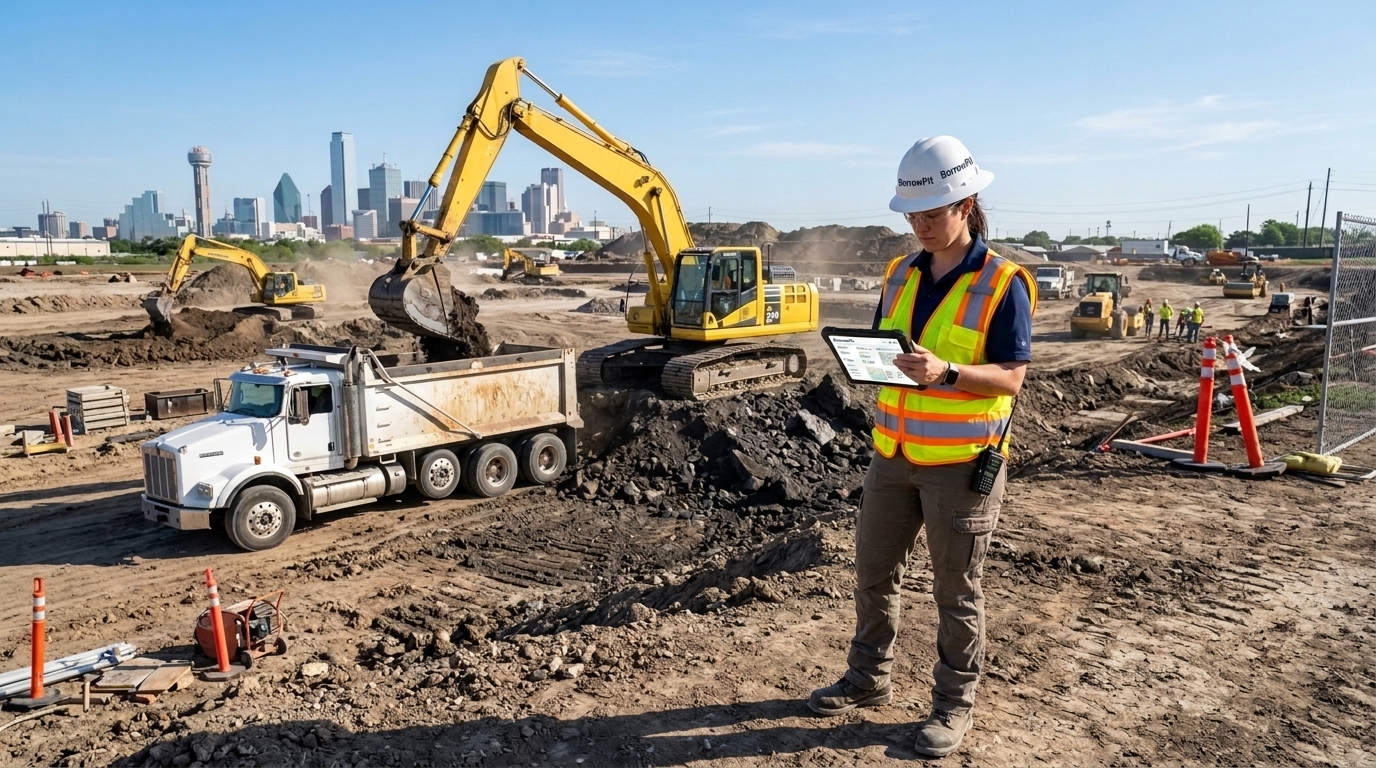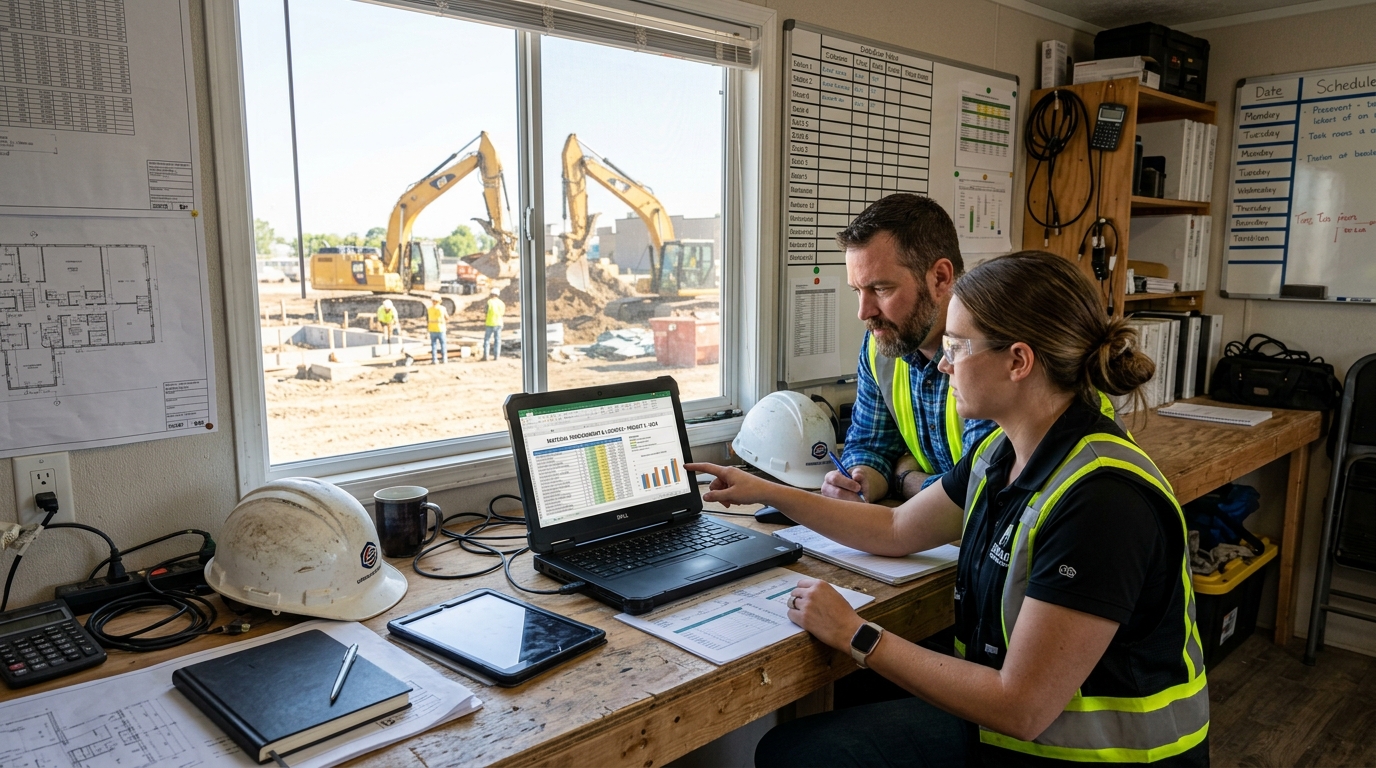
How to source fill dirt for large civil projects is one of the most important questions facing contractors, developers, and project managers across Texas. Whether you’re building a highway expansion outside Houston, preparing a large industrial site near Dallas-Fort Worth, or developing a master-planned community around Austin, access to reliable fill material directly affects project schedules and budgets.
Large civil projects often require tens of thousands, or even millions, of cubic yards of material. Unlike smaller jobs where contractors may rely on a local supplier, major earthwork operations require a structured sourcing strategy that considers material quality, haul distance, availability, permitting, and long-term supply reliability.
Across Texas, demand for fill dirt sourcing Texas solutions continues to grow as infrastructure investment expands. Projects along I-35, SH 130, I-45, and the rapidly developing corridors surrounding Houston, Austin, Dallas, and San Antonio all depend on consistent access to civil project fill material. The challenge isn’t simply finding dirt. The challenge is finding the right material, in the right quantity, at the right location.
Why Fill Dirt Procurement Can Make or Break a Civil Project
Before excavation crews arrive and equipment begins moving earth, successful contractors spend significant time planning material procurement.
A shortage of fill material can delay grading operations, embankment construction, utility installation, and paving activities. On large-scale developments, even a few days of disruption can create scheduling conflicts across multiple subcontractors.
This is why experienced project teams treat earthwork material sourcing Texas projects as a critical component of preconstruction planning. Contractors frequently evaluate several sources before selecting a supplier. Factors such as material specifications, trucking costs, moisture conditions, and production capacity often carry more weight than the advertised price per cubic yard.
For projects requiring bulk fill dirt Texas contractors also need confidence that a source can continue supplying material throughout the duration of construction rather than running out midway through the job.
Understanding Borrow Pits and Where Fill Dirt Comes From
Many contractors searching for how to source fill dirt for large civil projects in Texas eventually encounter borrow pits.
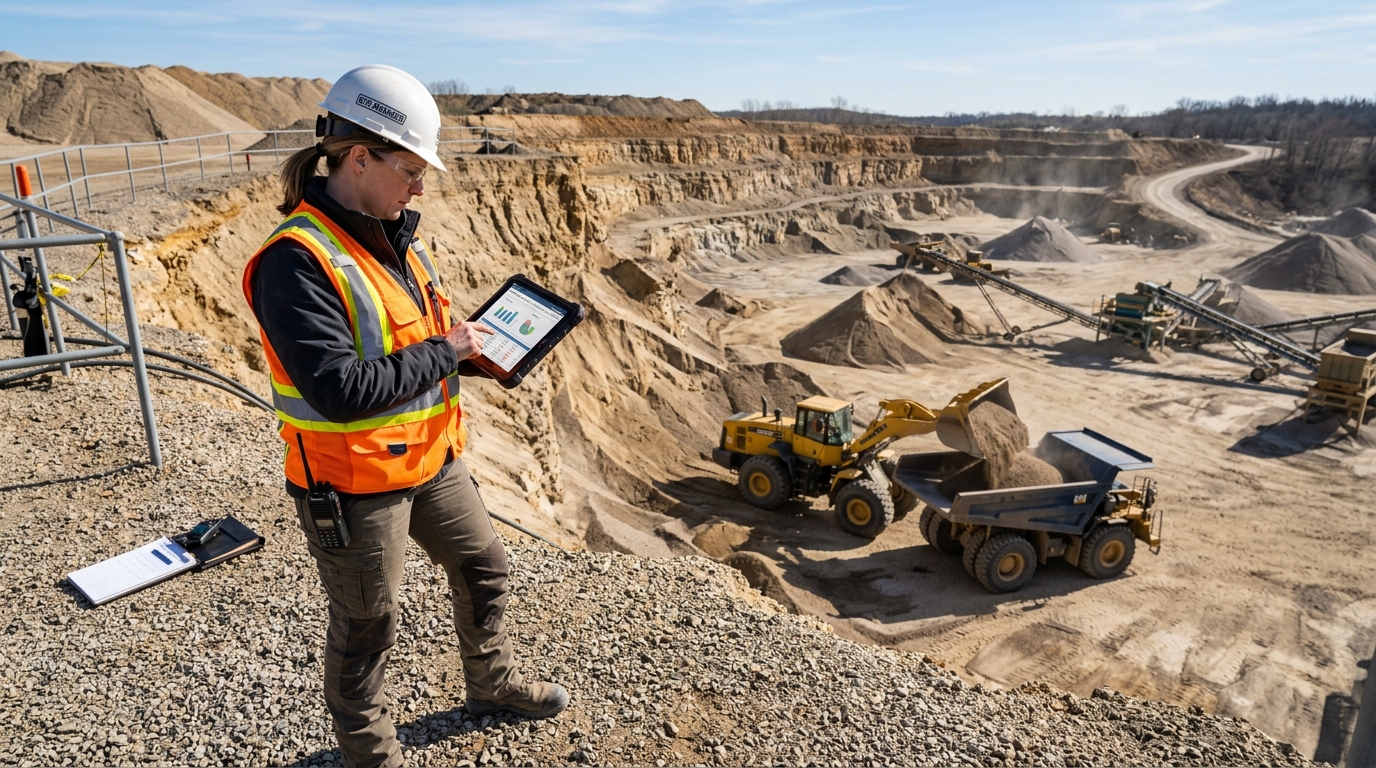
A borrow pit Texas contractors use is an excavation site where soil, sand, clay, or other earth materials are removed and transported to another location for construction purposes. The term “borrow” has been used in earthwork construction for decades because material is effectively taken from one site to support development at another.
Borrow pits serve as an important source of:
- Common fill
- Select fill
- Structural fill
- Engineered fill dirt
- Embankment materials
- Construction aggregates
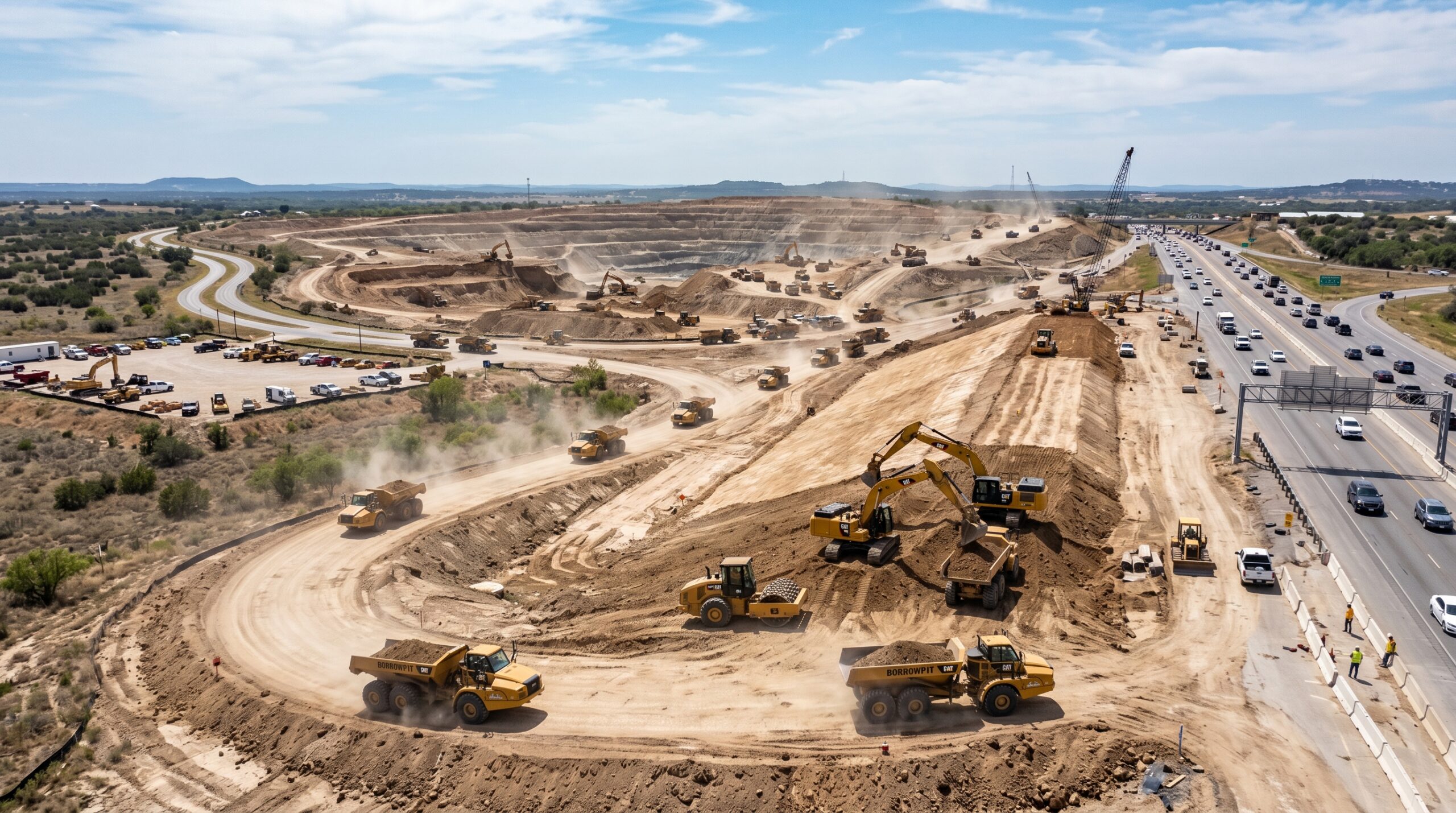
Many large infrastructure projects depend heavily on borrow pit material because of the sheer quantities required. A commercial supplier may have limited inventory, but an active borrow pit can often support long-term production needs throughout an entire project lifecycle.
This makes borrow pits particularly valuable for highway construction, airport expansions, industrial developments, and large-scale residential communities.
How Borrow Pits Are Permitted and Operated in Texas
One area often overlooked by contractors is understanding how borrow pit operations actually function.
Not every excavation site automatically becomes a borrow pit. Depending on location, size, and operational scope, owners may need to comply with environmental regulations, stormwater requirements, local ordinances, and land reclamation standards.
The borrow pit permitting Texas process varies based on site conditions and jurisdiction. Operators often coordinate with state and local agencies to ensure excavation activities comply with environmental requirements.
The Texas Commission on Environmental Quality (TCEQ) provides guidance related to environmental compliance and stormwater management that may affect excavation operations across the state.
Once operational, borrow pits typically function as active earth material sources where excavation, loading, hauling, and quality control activities occur simultaneously. Material may be tested, classified, and managed according to project specifications before shipment.
For contractors, understanding these operations provides confidence that a source can reliably supply engineered fill dirt Texas projects require.
How Contractors Source Fill Dirt for Highway and Infrastructure Projects
Contractors rarely begin by calling random suppliers. Instead, sourcing often starts with project specifications and geotechnical requirements. Engineers determine whether the project requires common fill, select fill, structural fill, or another type of approved material.
Once specifications are established, procurement teams evaluate available sources based on several criteria:
Material Quality and Testing
Projects involving roadway embankments, bridge approaches, and site stabilization often require specific engineering characteristics. Material testing helps confirm suitability before large purchases are made.
Haul Distance and Transportation Costs
Transportation can represent a major percentage of overall fill dirt expenses. A source located 15 miles from a project may ultimately provide greater value than one located 60 miles away with a lower purchase price.
Production Capacity
Large projects require confidence that supply can continue throughout multiple construction phases. Contractors often prioritize sources capable of supporting long-term demand.
Project Location Considerations
A project near Houston may rely on different sourcing strategies than a development in West Texas. Likewise, contractors working on expansions along I-35 or I-10 frequently evaluate local availability to reduce hauling time and improve logistics efficiency.
The best procurement strategies combine material quality, reliable supply, and transportation efficiency into a single decision-making process.
Using Technology to Simplify Fill Dirt Sourcing
The process of locating fill dirt suppliers Texas contractors can trust has changed significantly over the past decade.
Many procurement teams now use online marketplaces and supplier networks to improve sourcing visibility before contacting vendors. Rather than relying exclusively on personal relationships or phone calls, contractors can review available material opportunities in one place.
BorrowPit was created to help connect contractors, developers, suppliers, and material owners within the earthwork industry. The platform provides visibility into available material sources while helping users identify opportunities that may fit project requirements.
Some companies use BorrowPit to advertise available material directly to the market. Others prefer a brokering approach, submitting project requirements and working with the team to identify suitable material sources.
For contractors managing large infrastructure or development projects, these tools can streamline procurement and improve decision-making during the planning phase.
Final Thoughts
Understanding how to source fill dirt for large civil projects requires more than finding the nearest supplier. Successful procurement involves evaluating material quality, understanding borrow pit operations, planning logistics, verifying long-term availability, and selecting sources that align with project specifications.
Texas continues to experience significant growth in infrastructure, transportation, and commercial development. As projects become larger and more complex, efficient fill dirt sourcing becomes increasingly important.
Explore available material sources, connect with industry participants, or promote available material inventory through the BorrowPit marketplace.
FAQs
What is the best source of fill dirt for large civil projects in Texas?
For high-volume projects, borrow pits are often the most cost-effective source because they can supply large quantities of material from a single location.
How do contractors find fill dirt near their construction site?
Many contractors use local supplier networks, hauling companies, and online marketplaces to locate nearby material sources and compare availability.
What permits are needed to operate a borrow pit in Texas?
Permit requirements vary by location and project scope. Operators may need approvals related to environmental management, stormwater control, and land use regulations.
What is the difference between select fill and common fill?
Select fill generally meets stricter engineering requirements and is often used for structural applications, while common fill is typically used for general grading and embankment work.
Can BorrowPit help locate borrow pit material?
Yes. BorrowPit connects contractors, developers, and suppliers through a construction material marketplace and also offers brokering services for projects seeking specific material sources.