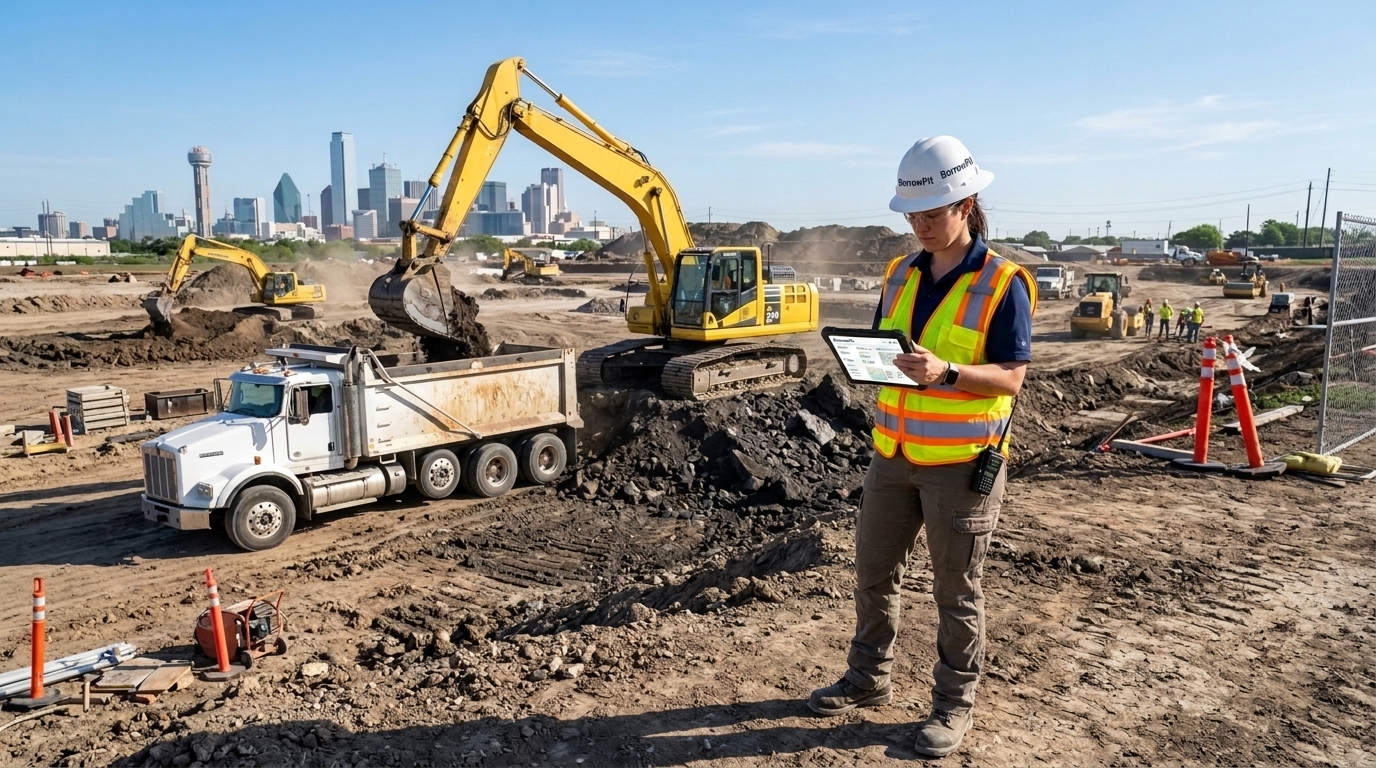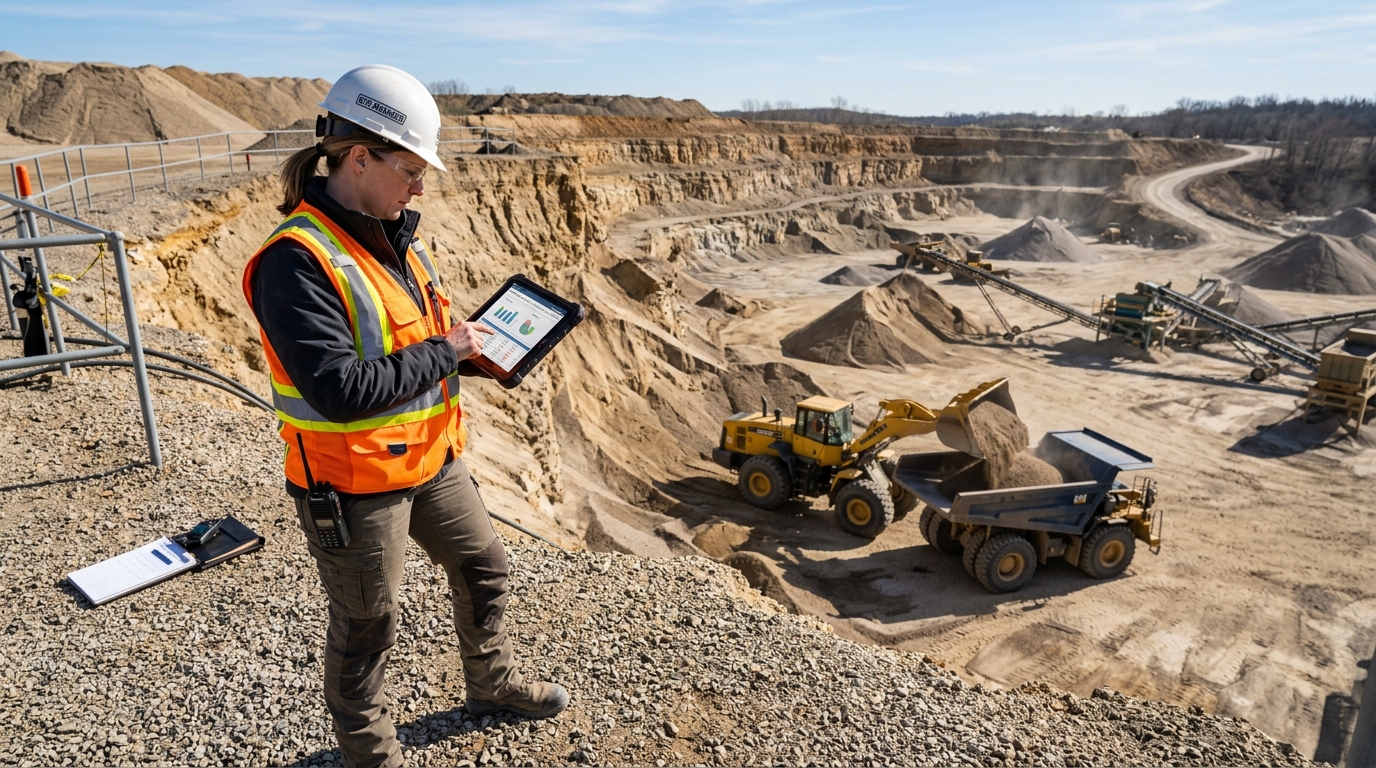
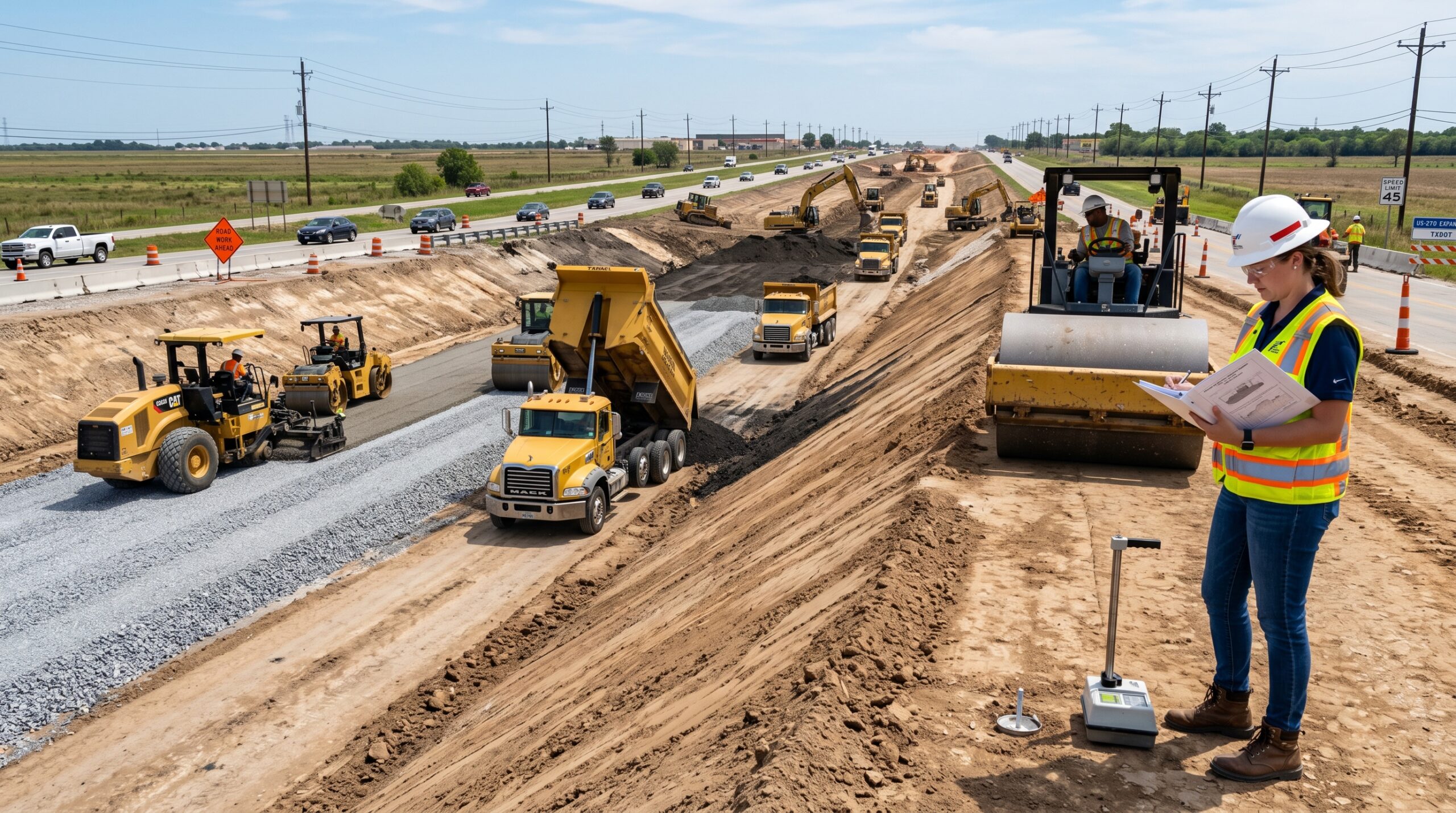
Texas contractors bidding roadway, bridge, and infrastructure projects quickly learn that not all dirt is acceptable under TxDOT fill material requirements. A borrow source that works perfectly for a private development in Houston may be rejected on a state-funded highway project because it fails plasticity, density, or gradation requirements. Understanding the difference before procurement begins can save weeks of delays, failed tests, and expensive rework.
Whether you’re sourcing embankment material for a US-281 expansion near San Antonio or flexible base for a roadway project outside Dallas-Fort Worth, knowing how TxDOT evaluates materials should be part of your preconstruction planning.
Understanding TxDOT Fill Material Requirements
Unlike private developments where engineers may approve locally available fill material, TxDOT projects operate under detailed specifications that define how materials are sourced, tested, placed, and compacted.
The two specifications most contractors encounter are:
- Item 132 – Embankment
- Item 247 – Flexible Base
Item 132 governs the soils used to construct roadway embankments, shoulders, and structural fills. Item 247 applies to aggregate base layers placed beneath pavement systems.
The requirements become particularly important on major projects throughout Texas including Interstate 35 improvements in Austin, Interstate 45 reconstruction in Houston, and ongoing DFW Metroplex transportation expansions. On projects of this size, material quantities often exceed 100,000 cubic yards, making supplier selection a major risk factor.
Contractors can review current specifications through the official TxDOT Standard Specifications portal.
TxDOT Item 132 Embankment Requirements Explained
When discussing TxDOT fill material requirements, Item 132 is usually the starting point because nearly every roadway project requires embankment construction.
The purpose of embankment material is straightforward: create a stable platform capable of supporting pavement, traffic loads, drainage structures, and future settlement conditions.
Common Embankment Materials Used in Texas
Under TxDOT Item 132 embankment, acceptable materials generally include:
- Approved on-site excavation
- Borrow pit material
- Select fill
- Rock embankment material
- Blended engineered fills
However, acceptance depends on testing, not appearance.
A contractor may receive material from a borrow pit near Waco that looks identical to material from a pit near Houston, but laboratory testing could produce very different results due to differences in clay content, moisture sensitivity, and plasticity.
For roadway embankments, TxDOT generally rejects materials containing:
- Organic matter
- Excessive vegetation
- Construction debris
- Frozen material
- Unsuitable waste products
This is why many civil contractors request laboratory reports before committing to a large procurement contract.
For example, a contractor constructing an SH-99 segment near Houston may need 75,000 cubic yards of fill. If testing later reveals excessive plasticity, the material may require stabilization or replacement, dramatically increasing costs.
TxDOT Item 247 Flexible Base Requirements
If embankment forms the foundation of a roadway, flexible base acts as the structural layer directly beneath pavement.
TxDOT Item 247 Flexible Base is one of the most frequently referenced specifications in Texas transportation construction because pavement performance depends heavily on base quality.
Flexible base materials are typically produced from:
- Crushed limestone
- Crushed concrete
- Recycled aggregates
- Approved natural aggregates
Unlike embankment fill, flexible base must meet detailed aggregate specifications governing particle size distribution, durability, and strength.
A supplier may advertise aggregate as road base material, but unless it satisfies Item 247 requirements, it may not be accepted for a TxDOT project.
Grade 1 vs Grade 2 Flexible Base
Many contractors encounter confusion regarding Grade 1 and Grade 2 materials.
Grade 1 Flexible Base
Typically produced from crushed stone or crushed gravel and subject to more stringent quality requirements. These materials are often specified for heavily trafficked roadways and major transportation corridors.
Grade 2 Flexible Base
May allow naturally occurring materials depending on project requirements and location. While still subject to testing, Grade 2 generally offers greater sourcing flexibility.
The specification selected by the engineer affects supplier options, hauling distances, and project costs.
A project along IH-10 near Beaumont may source material from a completely different supplier network than a project in El Paso because regional aggregate availability varies significantly across Texas.
Plasticity Index, Gradation, and Compaction Standards
The three technical areas that cause the most material rejections are:
Why Plasticity Index Matters
The TxDOT plasticity index requirements help determine how much clay-like behavior exists within a soil.
High-plasticity soils expand when wet and shrink when dry.
This movement creates problems including:
- Pavement cracking
- Differential settlement
- Shoulder failures
- Drainage issues
Because of these risks, TxDOT places limits on acceptable PI values depending on material type and project application.
A borrow pit producing material suitable for commercial building pads may not meet requirements for state roadway embankments.
Gradation Requirements
TxDOT gradation requirements measure how particles are distributed throughout a material.
Proper gradation improves:
- Density
- Stability
- Load transfer
- Drainage performance
Materials with excessive fines often compact poorly and become moisture sensitive.
Materials with too many oversized particles may create voids that reduce long-term performance.
This is particularly important for flexible base applications where aggregate interlock contributes directly to pavement strength.
Compaction Standards
Meeting TxDOT compaction standards is just as important as supplying acceptable material. Even excellent fill can fail if improperly placed.
Most contractors achieve compliance through:
- Controlled lift thicknesses
- Moisture conditioning
- Multiple roller passes
- Ongoing field density testing
Projects frequently require testing throughout construction rather than at project completion, meaning deficiencies must be corrected immediately.
Finding Compliant Borrow Material for Texas Projects
One of the biggest challenges facing contractors today is locating available material that satisfies both specification requirements and project budgets.
A supplier may offer low-cost material, but if hauling distances add 40 miles per trip, transportation costs can quickly exceed material costs.
This is why many earthwork contractors focus first on identifying nearby borrow sources capable of producing compliant material volumes.
For example:
| Project Type | Typical Material Need |
| Highway Expansion | Embankment Fill + Flexible Base |
| Industrial Site | Select Fill |
| Flood Control Project | Structural Fill |
| Bridge Approach | Engineered Borrow Material |
BorrowPit helps contractors identify available borrow sources, fill dirt suppliers, and aggregate providers throughout Texas. Companies searching for material can browse available dirt listings through the platform’s marketplace while suppliers can advertise available inventory directly to contractors seeking material.
Contractors interested in learning more about the marketplace can visit the BorrowPit About Us page.
Material owners, borrow pit operators, and suppliers interested in listing available inventory or discussing brokering services can connect through BorrowPit Contact Us page.
Unlike traditional sourcing methods that rely entirely on personal contacts, marketplaces provide greater visibility into available materials and can help contractors locate sources closer to their project sites.
Conclusion
Understanding TxDOT fill material requirements goes far beyond finding dirt and hauling it to a jobsite. Contractors must evaluate embankment specifications, flexible base requirements, plasticity limits, gradation standards, testing procedures, and hauling logistics before procurement begins.
Projects throughout Houston, Dallas-Fort Worth, Austin, San Antonio, and other Texas markets continue to grow in size and complexity. Contractors who verify material compliance early, secure reliable suppliers, and understand how TxDOT Item 132 embankment and TxDOT Item 247 flexible base specifications apply to their project are far more likely to avoid delays, failed tests, and costly rework.
FAQs
What does TxDOT consider acceptable fill material?
Acceptable fill depends on the application, but materials must generally be free of organic matter, debris, and unsuitable substances while meeting project-specific testing requirements.
What is the difference between Item 132 and Item 247?
Item 132 governs embankment and fill placement, while Item 247 covers aggregate flexible base materials installed beneath pavement systems.
Can borrow pit material be used on TxDOT projects?
Yes. Many TxDOT projects use borrow pit material, provided testing confirms compliance with project specifications.
Why does TxDOT test plasticity index?
Plasticity Index helps predict soil expansion and shrinkage behavior, reducing the risk of pavement failures and settlement problems.
How do contractors find compliant fill material sources?
Many contractors combine traditional supplier relationships with online material marketplaces to identify available borrow sources, aggregates, and engineered fill suppliers.