When an environmental enforcement officer from the state regulatory authority arrives unannounced at a commercial site in Orlando, work can halt instantly if imported soil lacks clean fill documentation. Trucking thousands of cubic yards of un-tested fill dirt onto a job site without verified origin records exposes civil contractors to severe administrative fines, mandatory material removal orders, and project shutdowns. Understanding fill dirt regulations in Florida protects site developers, excavating contractors, and project managers from catastrophic environmental liability across public infrastructure and private commercial builds.
Florida features unique hydro-geologic conditions, shallow drinking water aquifers, and sensitive coastal wetlands that demand strict soil oversight. Navigating fill dirt regulations in Florida ensures earthwork teams import uncontaminated material, secure necessary state permits, and maintain full environmental compliance across commercial, industrial, and residential projects.
FDEP Regulatory Framework for Fill Import and Placement
State environmental laws enforced by the Florida Department of Environmental Protection govern how earthwork materials are excavated, transported, and deposited across land development sites.
Chapter 62-701 Definition of Clean Fill Material
Under Florida Administrative Code Rule 62-701.200, clean fill is defined as un-contaminated soil, sand, gravel, rock, concrete, brick, or clay that does not contain solid waste, toxic chemicals, or hazardous substances. To satisfy fill dirt regulations in Florida, imported material must be free of petroleum hydrocarbons, heavy metals, synthetic organic chemicals, and pesticide residues that could leach into shallow groundwater aquifers.
Prohibition of Industrial Contaminants and Construction Debris
State regulations strictly forbid using commingled demolition rubble, painted dry-wall, treated timber, or industrial slag as clean fill. Placing un-tested demolition debris under the guise of general grading soil triggers immediate regulatory enforcement, mandatory site cleanup, and expensive environmental remediation orders.
When an Environmental Review and Soil Testing Are Required
Determining when a formal environmental review is mandatory depends on the historical land use of the source pit and the receiving construction site.
Phase I and Phase II Environmental Site Assessments
If imported soil originates from a site with a history of agricultural chemical spraying, commercial fueling, or industrial manufacturing, engineers must conduct a Phase I Environmental Site Assessment (ESA). If potential contamination is identified, Phase II soil core sampling is required to verify heavy metal and pesticide concentrations before moving soil across property boundaries.
Importing Material from Commercial vs Industrial Cut Pits
Soil excavated from virgin agricultural land or permitted greenfield borrow pits requires standard clean fill certification. However, cut dirt sourced from urban redevelopment sites, highway right-of-way broadenings, or industrial parks must undergo full chemical laboratory screening prior to placement on commercial job sites.
Wetland Buffer Zones and Environmental Resource Permitting
Placing fill near jurisdictional wetlands, retention ponds, or coastal waterways requires an Environmental Resource Permit (ERP). State rules enforce strict setback distances and turbidity controls to prevent sediment runoff from polluting state waters. Following fill dirt regulations in Florida guarantees that earthwork activities near water bodies remain fully permitted and compliant.
Clean Fill Certification and Chain-of-Custody Documentation
Protecting project owners and general contractors requires maintaining complete environmental documentation for every load of soil delivered to the job site.
Core Laboratory Sampling Parameters
Certified testing laboratories analyze representative soil samples under EPA testing methods. Testing sheets must demonstrate that concentrations of arsenic, lead, barium, synthetic organics, and total petroleum hydrocarbons (TPH) fall well below state Soil Cleanup Target Levels (SCTLs).
Managing Subgrade Inspection Protocols on Site
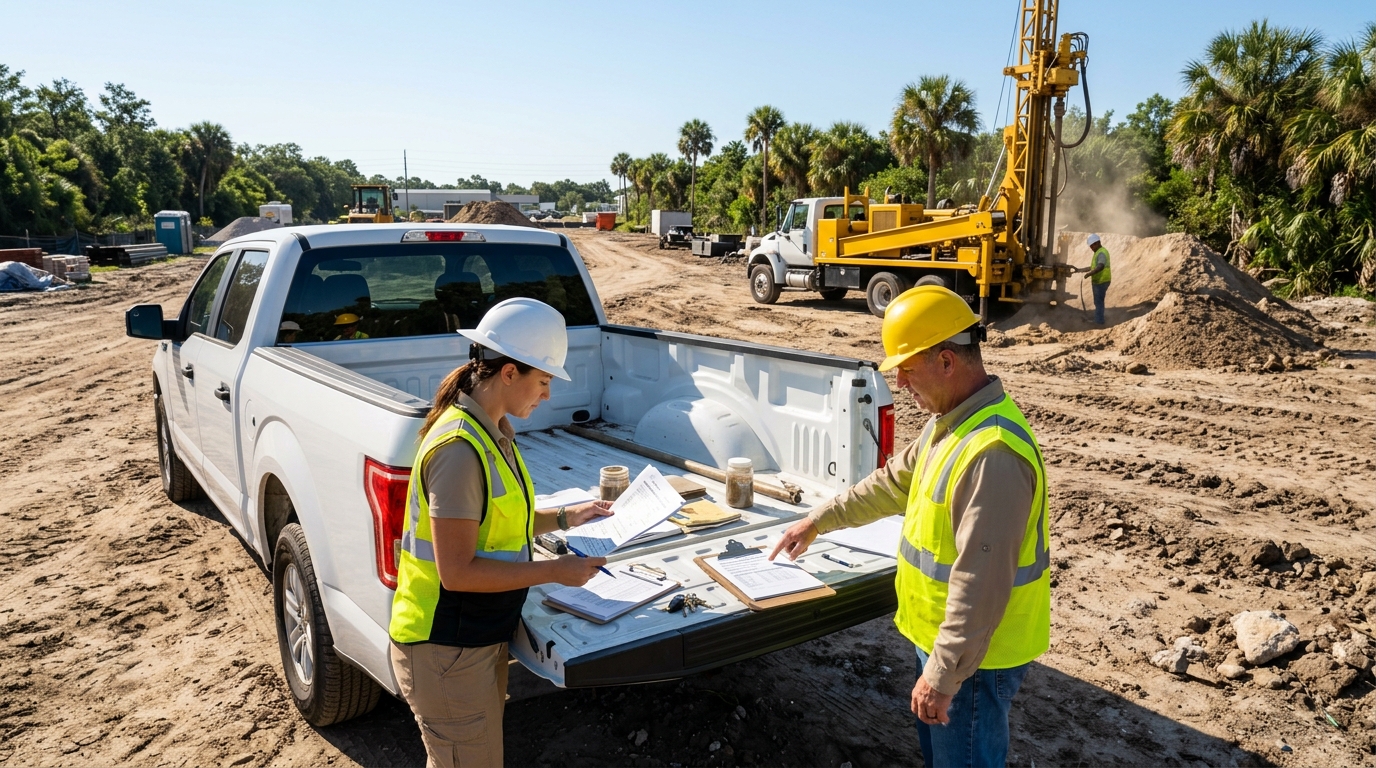
Establishing clear field receiving protocols protects general contractors if a dump truck arrives with questionable fill dirt. Grade checkers and site superintendents must perform visual inspections for chemical odors, dark petroleum staining, or foreign debris before allowing dump trucks to discharge loads onto structural fill areas.
Conducting Periodic Site Audits During Active Earthwork
Maintaining strict environmental compliance throughout high-volume site grading requires project managers to conduct unannounced job-site inspections. Randomly sampling imported soil lifts and cross-checking truck manifest timestamps against active pit certificates ensures haul drivers do not bypass approved borrow pit sources.
Maintaining Generator Affidavits and Haul Manifests
A valid clean fill submittal package contains a signed Material Generator Affidavit from the source property owner, certified laboratory analytical reports, and daily truck haul manifests. Field superintendents must archive these records in the job-site trailer to demonstrate compliance during state site inspections.
Compliance Strategies for Site Developers and Earthwork Crews
Implementing proactive environmental management protocols prevents project shutdowns and legal liabilities during land development operations.
Vetting Soil Pits Before Signing Supply Contracts
Project managers should inspect borrow pit sources in person and verify active mining permits before executing material purchase orders. Requiring vendors to furnish certified lab reports less than six months old ensures imported dirt meets environmental standards.
Managing On-Demand Soil Delivery Logistics
Finding pre-vetted, compliant dirt sources near job sites reduces haul distances and simplifies record-keeping. Project managers searching for clean fill can use digital platforms such as BorrowPit to search nearby fill materials to evaluate certified borrow pits, inspect lab test submittals, and review pit locations before sending trucks. On-demand access allows contractors with certified excess cut soil to list excess construction dirt online to connect directly with regional buyers, ensuring full adherence to fill dirt regulations in Florida.
Final Regulatory Compliance Takeaway
Adhering to environmental rules protects construction projects from severe legal penalties, mandatory subgrade undercutting, and costly cleanup orders. By securing clean fill lab certifications, verifying source pit history, and maintaining thorough haul manifests, contractors maintain smooth site operations. Sourcing verified soil through BorrowPit ensures project teams secure compliant material from pre-screened suppliers across Florida.
Frequently Asked Questions
What constitutes clean fill dirt under Florida state regulations?
Clean fill consists of un-contaminated soil, sand, clay, rock, or broken concrete containing zero solid waste, hazardous chemicals, or petroleum hydrocarbons.
Is chemical lab testing required for all imported fill dirt in Florida?
Chemical lab testing is required when soil originates from commercial, industrial, or agricultural sites with potential historical contamination.
What happens if un-certified fill dirt is placed on a Florida job site?
If un-certified soil fails environmental inspection, regulatory agencies can issue immediate stop-work orders and force the contractor to excavate and dispose of the material at a licensed landfill.
Who is legally responsible for verifying imported fill dirt quality?
The general contractor and property owner bear legal responsibility for ensuring all imported earthwork materials comply with state environmental rules.
Where can contractors locate clean fill certification documents in Florida?
Contractors can obtain clean fill certifications directly from accredited materials testing laboratories or pre-vetted borrow pit suppliers on digital material platforms.