When installing an onsite wastewater disposal system in a new residential subdivision near Orlando, using standard fill sand under drain field lines can trigger catastrophic system failure before homeowner move-in day. Fine silty sand or un-washed fill packs tightly around distribution pipes, clogging soil pores and causing untreated effluent to back up into home plumbing fixtures. In low-lying coastal terrain, specifying approved septic sand in Florida construction projects is essential to ensure rapid effluent percolation, secondary biological filtration, and long-term environmental protection.
Florida features shallow groundwater tables, sandy subgrades, and strict environmental health codes enforced across all sixty-seven counties. Understanding the engineering requirements of septic sand in Florida construction enables septic installers, utility contractors, and site developers to select compliant filter media, pass county health inspections, and avoid expensive drain field reconstruction.
Defining Septic Sand and Its Structural Role in Drain Fields
Septic sand is a specialized washed granular material engineered specifically for underlying absorption beds and mound wastewater systems.
Primary Hydraulic Functions in Onsite Wastewater Systems
In an onsite sewage treatment system, septic sand forms a un-compacted filter envelope beneath gravel trenches or chamber lines. Its main hydraulic duty is to accept liquid effluent from the septic tank at a controlled rate, distributing moisture evenly across the receiving native soil subgrade without ponding or surface breakouts.
Biological Treatment and Pathogen Removal Mechanics
As effluent trickles down through voids between coarse sand grains, oxygen-rich air inside soil pores supports beneficial aerobic bacteria. These microbes digest organic waste compounds, neutralize harmful pathogens, and filter suspended solids before water reaches the underlying drinking water aquifer.
FDOH and County Health Department Regulations
The Florida Department of Health regulates all private wastewater systems through County Health Departments under strict statutory rules.
Chapter 64E-6 Standards for Septic System Fill
Rule 64E-6 of the Florida Administrative Code governs the design, sizing, and material parameters of drain field installations. To comply with rules governing septic sand in Florida construction, filter sand placed beneath absorption drain field lines must consist of clean, coarse, un-consolidated silica sand featuring a high permeability rating.
Mound System Elevation Requirements for High Groundwater
In areas with high water tables, such as Tampa, Fort Lauderdale, or Jacksonville, health codes require elevated mound septic systems. Installers must import two to four feet of approved septic sand to build a raised absorption bed, maintaining a minimum 24-inch unsaturated separation zone between drain field pipes and the seasonal high water table.
Gradation, Fines Limits, and Permeability Specifications
Not all commercial sand meets state health department criteria. Material testing laboratories evaluate candidate sand deposits against three core physical parameters:
Sieve Gradation and Grain Size Distribution
Septic filter media requires a specific grain size distribution. The effective grain size (D10) must range between 0.25 mm and 0.50 mm, with a low uniformity coefficient (Cu) below 3.5. This controlled gradation ensures uniform void spaces that promote both rapid drainage and effective bacterial filtration.
Strict Limits on Clay, Silt, and No. 200 Fines
Standard un-washed fill sand contains high percentages of silt and clay. Health codes mandate that septic sand in Florida construction must contain less than 3 percent fines passing the No. 200 sieve. Excessive fine particles fill inter-granular voids, leading to premature biomat clogging and drain field failure.
Percolation Rates and Hydraulic Conductivity Testing
Engineers verify sand performance using falling-head permeability tests or field percolation checks. Approved septic sand must exhibit a percolation rate between 2 and 15 minutes per inch, providing rapid drainage while retaining effluent long enough for biological purification.
Managing Field Quality Control and Drainage Inspections
Proper handling during site excavation and backfilling is critical to preserve the natural permeability of imported filter sand.
Preventing Soil Compaction During Trench Backfilling
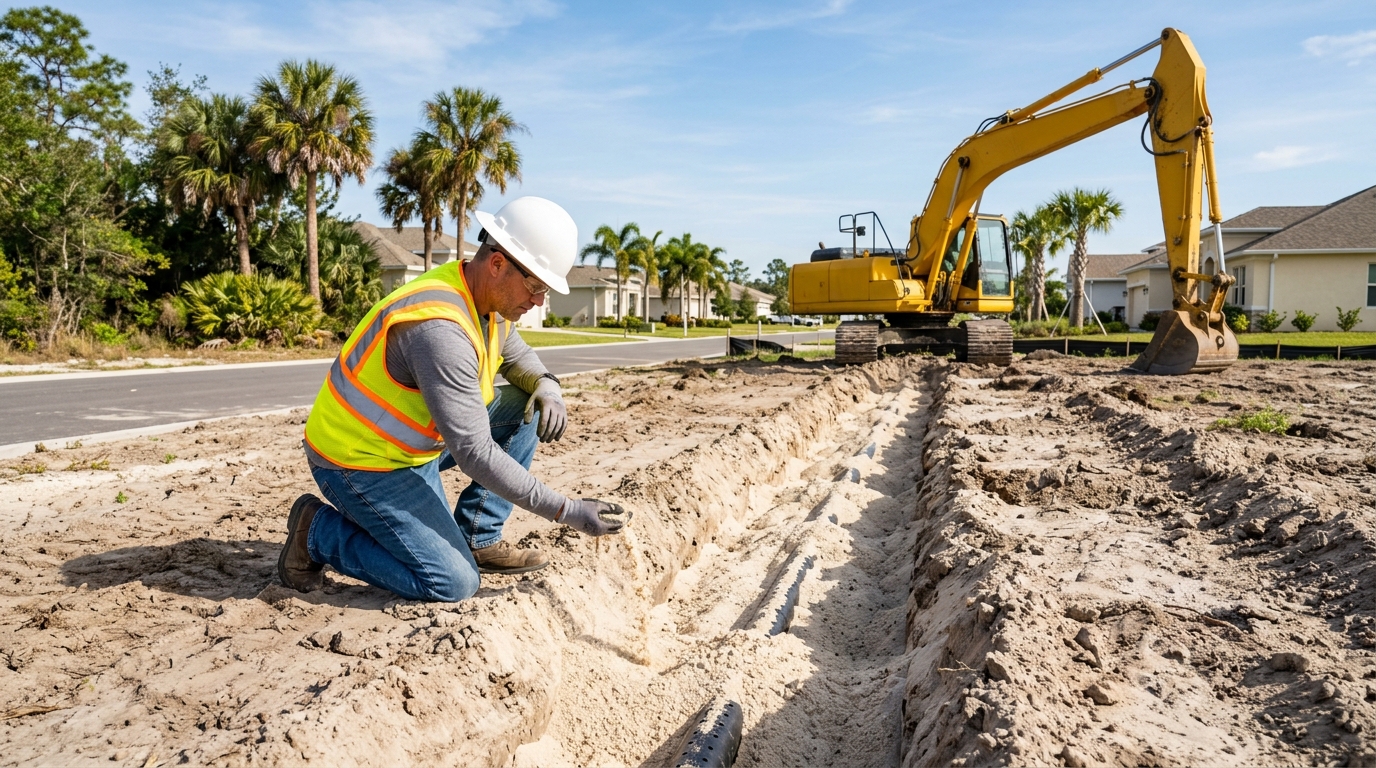
Operating heavy tracked excavators or loaded dump trucks directly over placed septic sand compacts grain structures, reducing void space and destroying percolation capacity. Installers must spread sand using low-ground-pressure equipment and work from outside the bed perimeter.
Visual Field Inspections for Silty Organic Contaminants
Site superintendents should inspect delivered sand loads for dark organic streaks, clay balls, or fine silt dust. Delivering un-washed sand to a drain field site risks health inspector rejection and costly bed re-excavation.
Where to Source Qualifying Septic Sand in Florida
Sourcing compliant filter sand requires partnering with washed silica sand quarries and established aggregate suppliers across regional Florida markets.
Project managers and septic installers looking for qualifying materials can use digital platforms to search nearby fill materials to locate washed sand pits, review certified sieve lab reports, and confirm pit locations before scheduling trucks. On-demand access also allows earthwork contractors with clean excavated sand to list excess construction dirt online to connect with regional buyers, streamlining material logistics across Florida development projects.
Final Engineering Procurement Takeaway
Specifying washed, coarse septic sand in Florida construction projects is essential for long-term wastewater performance, public health, and regulatory compliance. By verifying grain size distribution, enforcing low fines limits, and installing material according to FDOH standards, contractors protect drain fields from premature failure. Sourcing certified sand through BorrowPit guarantees that project teams secure health-department-approved media from verified regional suppliers across Florida.
Frequently Asked Questions
What is the difference between fill sand and septic sand in Florida?
Fill sand contains variable silt and clay fines used for general site grading. Septic sand is washed coarse silica sand with less than 3 percent fines, engineered specifically for rapid water percolation and effluent filtration.
What happens if un-washed sand is used in a septic drain field?
Un-washed sand containing high silt or clay fines clogs soil pores, preventing water percolation and causing sewage effluent to back up into homes or break out onto the lawn.
How deep must the septic sand layer be under a Florida drain field?
Florida health codes (Rule 64E-6) require a minimum 6-inch layer of approved septic sand directly beneath absorption drain field lines, with additional depth required for elevated mound systems over high water tables.
What percolation rate is required for approved septic sand?
Approved septic sand must demonstrate an acceptable percolation rate, typically between 2 and 15 minutes per inch, ensuring rapid drainage without bypassing biological filtration.
Who inspects septic sand placement on Florida construction sites?
County Health Department environmental health inspectors conduct visual inspections and verify material lab test sheets before approving backfill covering over drain field lines.