When evaluating borrow pit vendors for a building pad in San Antonio, choosing lower prices without verifying credentials can turn into an expensive mistake. A vendor offering cheap dirt becomes a financial liability if soil contains organic topsoil or high-plasticity clay. In spec-driven civil earthwork, subgrade rejections happen when a project team fails to qualify a fill dirt supplier prior to executing material delivery contracts.
Proper vendor qualification requires analyzing geotechnical laboratory test reports, reviewing pit excavation depth maps, and inspecting daily truck load-out capabilities. Establishing clear procurement standards enables superintendents to qualify a fill dirt supplier based on verified soil mechanics, ensuring dump trucks meet engineering specs.
Essential Documentation to Request from Every Soil Supplier
Before issuing a purchase order for imported soil, contractors must demand a geotechnical submittal package directly from the borrow pit operator.
Third-Party Laboratory Test Certifications
Request certified soil test sheets generated by an accredited third-party materials laboratory. Test reports must identify the borrow pit owner, geographic location, excavation face quadrant, and sampling date.
Grain Size Sieve Gradation Curves
Require a mechanical sieve analysis report (ASTM C136) demonstrating particle size distribution. Gradation curves show percentages of coarse gravel, fine sand, silt, and clay particles present within the imported soil batch.
Plasticity Index and Atterberg Limits Documentation
Atterberg limits testing (ASTM D4318) establishes Liquid Limit, Plastic Limit, and Plasticity Index (PI). For structural select fill, engineering specifications mandate a controlled PI range (typically 7 to 20). Requesting recent Atterberg reports is essential to qualify a fill dirt supplier before delivering material to building pads.
Major Red Flags That Indicate a Supplier Cannot Meet Specifications
Field superintendents must recognize operational warning signs that signal a borrow pit vendor poses high quality risks:
1. Stale or Outdated Soil Test Reports
If a supplier offers lab reports older than six months, reject them. Soil strata inside active borrow pits shift as excavators dig deeper into the bank face. Relying on outdated paperwork makes it impossible to evaluate pit vendors for spec-driven engineering projects.
2. Un-Stripped Overburden Contaminating Pit Faces
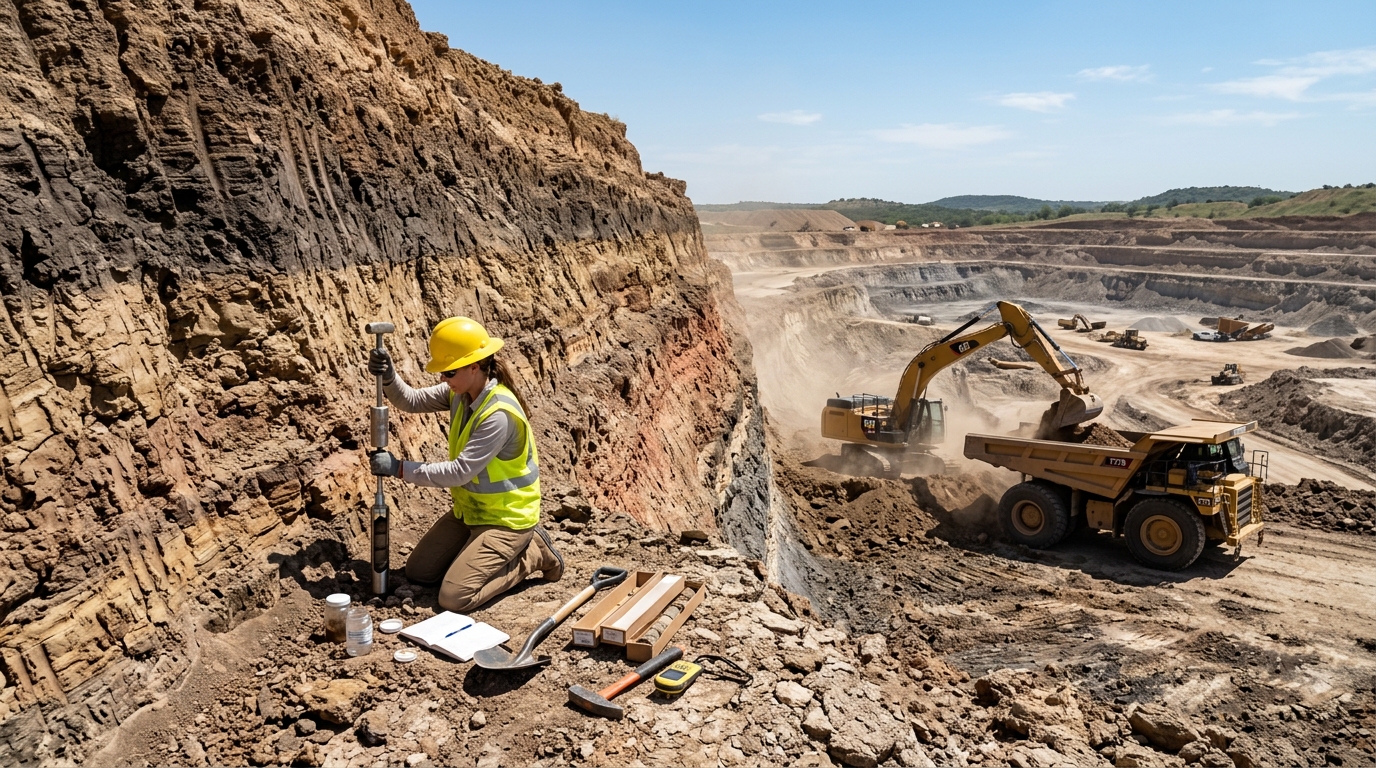
Visual inspection of the pit loading zone reveals supplier standards. If topsoil, roots, or vegetation clods hang over the active excavation face, organic overburden mixes into the commercial dirt stream. Buried organic matter decomposes over time, leaving voids that lead to foundation cracking.
3. Un-Calibrated Scales and Limited Loader Dispatch Capacity
A pit is useless if it lacks wheel loaders and certified scales to dispatch trucks. Pit bottlenecks lead to expensive truck queuing fees and delayed compaction lifts.
How to Read a Basic Geotechnical Soil Test Report
Superintendents do not need an engineering degree to interpret key metrics on a standard laboratory test sheet:
Step 1: Inspecting the Plasticity Index (PI) Value
Locate Atterberg limits on the lab sheet. Find the Plasticity Index (PI) number. If project specs require a PI between 7 and 20, a reported PI of 28 indicates expansive clay that will swell when wet and fail engineering inspection.
Step 2: Checking Fines Content Passing the No. 200 Sieve
Look at the sieve analysis table. Note soil passing the No. 200 sieve (particles smaller than 0.075 mm). Structural fill specifications typically limit No. 200 fines to between 15 and 45 percent. High fines content over 50 percent indicates silty, moisture-sensitive soil.
Step 3: Evaluating the Moisture-Density Proctor Curve
Review the Moisture-Density Proctor curve (ASTM D698 or D1557). Locate the peak of the curve to find Maximum Dry Density and Optimum Moisture Content percentage. Field inspectors use baseline numbers to verify compaction on site.
Why Qualifying Early Saves Time and Money on Large Civil Projects
Proactive material qualification eliminates financial risks before mass site excavation and fill placement begin.
Preventing Job-Site Truck Demurrage and Idle Equipment Fees
When un-tested soil arrives on site and fails field density checks, work halts immediately. Idle haul trucks charge standby demurrage fees ranging from 85to85to125 per hour per truck. Taking time to qualify a fill dirt supplier weeks before delivery prevents these expensive field bottlenecks.
Protecting Subgrade Compaction Schedules Across Downstream Trades
Securing pre-approved soil sources guarantees continuous deliveries, keeping building pad compaction on schedule and preventing cascading delay claims from subcontractors.
Modern Digital Tools for Evaluating Pit Quality in Texas
Digital technology has simplified how civil contractors evaluate pit sources and manage bulk earthwork logistics across regional Texas markets.
Project managers who need compliant soil can evaluate certified pit listings through a construction material marketplace platform like BorrowPit. Using digital tools allows superintendents to evaluate verified pit profiles on BorrowPit and search regional dirt suppliers in Texas to inspect lab test reports and pit locations before sending trucks. On-demand access allows contractors managing site cuts to list excess construction dirt online to connect directly with pre-screened buyers, optimizing dirt logistics and reducing haul costs.
Final Engineering Procurement Takeaway
Taking systematic steps to qualify a fill dirt supplier protects project budgets, prevents material rejections, and keeps earthwork schedules moving forward. By auditing pit operations, reviewing recent lab tests, and verifying daily load capacity, contractors protect bottom lines. Sourcing tested pit material through BorrowPit guarantees civil contractors secure compliant soil from pre-screened suppliers across Texas.
Frequently Asked Questions
Why is it important to qualify a fill dirt supplier before bidding?
Qualifying a supplier early ensures imported soil meets engineering specs, eliminating costly submittal rejections and truck haul delays during active construction.
How old can soil lab test reports be for structural fill?
Geotechnical engineers typically require lab test reports to be less than 6 months old, or generated from soil samples taken within the last 5,000 cubic yards of excavation.
What is the most critical lab metric when evaluating fill dirt?
The Plasticity Index (PI) is the most critical metric. Structural fill requires a controlled PI (typically 7 to 20) to ensure high compaction density without expansive clay swelling.
What happens if a supplier delivers non-compliant dirt to the job site?
If delivered dirt fails field nuclear density or lab testing, the contractor must excavate non-compliant material, haul it off site, and replace it at their own expense.
How do digital platforms assist contractors in qualifying dirt suppliers?
Digital platforms provide transparent access to pit locations, certified lab test documents, and verified supplier profiles, allowing contractors to qualify vendors quickly online.