A retaining wall can survive bad weather, heavy traffic, and years of pressure from surrounding soil but water is usually what causes problems first. That reality is shaping how contractors approach drainage across Florida construction projects. In places like Tampa, Fort Lauderdale, and Orlando, crews are not just thinking about compaction anymore. They are thinking about how water moves through the ground weeks, months, and even years after construction ends.
That shift is one reason MSE backfill materials have become much more common on retaining walls, roadway expansions, commercial developments, and coastal infrastructure work throughout Florida.
The challenge is simple: Florida gets a lot of water, and poorly draining fill creates expensive problems fast.
The Material Often Looks Fine Until the First Major Storm
Many drainage issues do not appear during construction. A site may compact properly, inspections may pass, and the retaining wall may initially look stable. Then heavy rain hits, groundwater levels rise, and pressure starts building behind the structure. Contractors across Florida have seen this happen repeatedly on projects using unsuitable fill.
Traditional dirt with excessive fines or moisture-sensitive material can trap water instead of allowing it to flow through the system. Once that happens, retaining walls begin carrying pressure they were never meant to hold long term.
Around coastal corridors near I-95 and development zones outside Naples, drainage failures have become one of the most common reasons contractors shift toward engineered fill solutions.
The issue is not always dramatic collapse. Sometimes the warning signs are smaller:
- surface movement
- cracking pavement
- soft spots near walls
- erosion around drainage outlets
- gradual settlement
These problems usually trace back to poor water movement inside the fill system itself.
Why Florida Contractors Prioritize Drainage More Than Ever
Florida construction conditions create challenges that many inland states simply do not deal with regularly. High rainfall, hurricanes, coastal moisture, and elevated groundwater levels place constant stress on retaining systems. Because of that, contractors increasingly treat drainage as part of the structure, not just an afterthought.
Water Pressure Is the Real Enemy
A retaining wall is designed to resist soil pressure. What often creates trouble is hydrostatic pressure caused by trapped water behind the wall. That pressure increases gradually over time.
When traditional fill materials hold moisture, the wall experiences additional force that engineers may not have intended during design calculations.
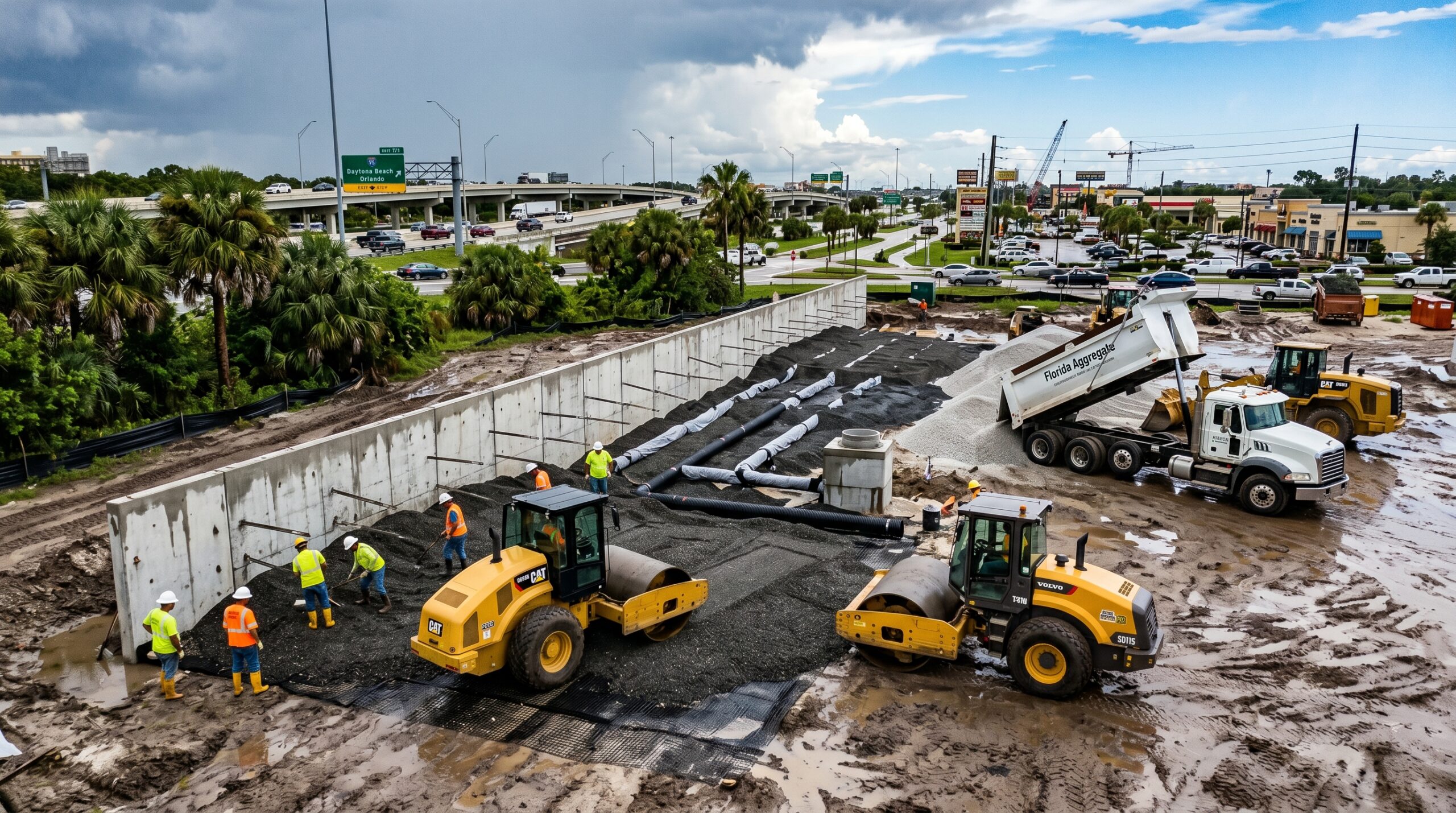
This is where retaining wall drainage materials become critical. Proper engineered fill allows water to move more freely through the system, reducing long-term pressure buildup.
Contractors working on roadway expansions along Florida’s Turnpike and Interstate 4 increasingly rely on granular backfill systems specifically because drainage performance affects long-term wall stability.
The Florida Department of Transportation continues emphasizing drainage performance and structural fill quality in reinforced soil applications throughout statewide infrastructure projects.
Heavy Rain Changes Everything Quickly
Florida weather can overwhelm poor drainage systems fast. A dry project site can become saturated after a single storm cycle, especially during hurricane season. Contractors know that once water starts collecting behind retaining structures, repairs become far more expensive than proper material selection upfront.
That reality has pushed many Florida builders toward engineered fill materials Florida projects now commonly specify for reinforced wall systems.
Contractors Are Starting to Think More Like Logistics Managers
Drainage performance matters, but getting the right material onsite efficiently is becoming just as important.
A project outside Jacksonville may need engineered fill immediately after grading crews encounter unstable soil conditions. Waiting several extra days for distant suppliers can throw entire schedules off balance. That is why sourcing strategy has become a bigger conversation in Florida construction.
Nearby Material Sources Reduce Delays
Long-distance hauling creates more than transportation costs. It creates uncertainty. Traffic congestion around Miami, Orlando, and Tampa regularly impacts delivery schedules, especially during peak development periods. Contractors working on large retaining wall systems often prefer nearby suppliers because shorter haul routes create more flexibility when schedules shift unexpectedly.
Some project managers now prioritize:
- supplier proximity
- consistent material availability
- faster delivery adjustments
- drainage-compatible fill
- reliable trucking coordination
Digital Marketplaces Are Changing How Material Gets Sourced
Contractors no longer rely entirely on phone networks and old supplier lists to locate engineered fill. Some Florida companies now use marketplaces like BorrowPit to compare nearby material availability before coordinating large hauling operations across multiple counties. The platform helps contractors connect with suppliers, brokers, and construction material listings in one place, especially when schedules move quickly.
BorrowPit’s sourcing model is explained further on the About page.
For some contractors, the biggest advantage is visibility. Instead of spending hours calling suppliers individually, they can identify available fill sources faster and respond to changing project conditions more efficiently.
The Best Drainage Systems Usually Start Underground
Most people never see the material behind a retaining wall after construction finishes. But contractors understand that hidden layers often determine whether the structure performs properly long term.
That is why experienced site teams pay close attention to fill quality before compaction even begins.
Drainage Performance Depends on Material Selection
Good drainage systems are not created by pipes alone.
The fill itself must allow water movement throughout the reinforced earth structure. Granular MSE backfill Florida contractors use today is specifically selected to improve:
- water runoff management
- compaction consistency
- erosion resistance
- structural stability
- long-term drainage performance
This becomes especially important on:
- commercial retaining walls
- bridge approaches
- waterfront developments
- elevated roadway systems
- large residential grading projects
The Texas A&M identifies engineered backfill performance as a major factor in reinforced soil wall durability because drainage directly affects long-term structural behavior.
Experienced Contractors Usually Spot Problems Early
Contractors who regularly build retaining systems often identify poor fill material quickly. If the material retains too much moisture during compaction or behaves inconsistently from load to load, crews know drainage problems may appear later.
That experience has made many Florida contractors more selective about sourcing decisions than they were several years ago.
For supplier coordination and material sourcing communication, contractors can also use BorrowPit’s contact page.
Florida Construction Is Moving Toward Smarter Water Management
Drainage is no longer treated as a secondary concern on major construction projects. As Florida continues expanding through highway improvements, mixed-use developments, coastal construction, and infrastructure growth, contractors are placing more emphasis on long-term water management from the beginning of the project.
That shift explains why MSE backfill materials continue gaining traction across retaining wall and reinforced earth applications statewide.
The goal is not simply building walls faster. The goal is building systems that continue performing after years of rain, groundwater pressure, and changing site conditions.
Final Thoughts
Florida contractors are paying closer attention to drainage because water-related failures are expensive, disruptive, and difficult to repair after construction finishes.
Using engineered MSE backfill materials helps improve drainage performance, reduce hydrostatic pressure, and support stronger long-term retaining wall stability across demanding Florida environments.
Contractors managing retaining wall or grading projects can explore nearby material availability through BorrowPit’s marketplace or post excess fill to connect with active buyers across Florida.
FAQs
Why are MSE backfill materials important for drainage?
They allow water to move through retaining systems more efficiently, reducing hydrostatic pressure behind walls.
What happens if retaining wall fill does not drain properly?
Poor drainage can lead to settlement, erosion, wall movement, and long-term structural problems.
Where are engineered backfill materials commonly used in Florida?
They are often used on retaining walls, highway embankments, bridge approaches, and commercial developments.
Why do Florida projects require better drainage planning?
Heavy rainfall, coastal moisture, and high groundwater conditions place extra stress on retaining systems.
How do contractors source drainage-friendly backfill materials?
Many contractors work with suppliers, brokers, and digital construction material marketplaces.