Retaining wall projects in Florida deal with challenges that contractors in other states do not always face. Heavy rainfall, coastal moisture, sandy subgrades, and changing groundwater conditions can all affect how a wall performs over time. Because of that, choosing the right MSE backfill material for Florida retaining walls is not just an engineering decision, it is a long-term durability decision.
A retaining wall might look perfectly stable during construction, then develop drainage pressure or settlement problems a year later because the wrong fill material was placed behind it. That is why Florida contractors are paying closer attention to engineered fill selection, especially on highway projects, commercial developments, waterfront construction, and large residential expansions.
The conversation has shifted from simply finding available dirt to finding material that performs consistently under Florida’s environmental conditions.
Why Florida Retaining Walls Require Better Backfill Planning
Florida construction operates in a much different environment compared to states with drier soil conditions. Moisture plays a role in almost every project.
In cities like Tampa, Orlando, and Jacksonville, contractors regularly deal with sudden rain events, high water tables, and drainage-sensitive sites. These conditions place extra pressure on retaining systems, especially when unsuitable fill material traps water behind the wall.
That is one reason engineered backfill has become increasingly common across Florida infrastructure projects.
Drainage Performance Matters More in Florida
One of the biggest problems with poor-quality fill is water retention. Traditional fill containing excessive fines or clay-heavy material can hold moisture instead of allowing water to pass through the system. Over time, this creates hydrostatic pressure behind retaining walls.
That pressure can lead to:
- wall movement
- erosion issues
- settlement problems
- cracking
- drainage failure
Using proper retaining wall fill materials Florida contractors trust helps reduce those risks significantly.
Granular engineered backfill materials allow water to move more efficiently through reinforced earth systems, improving long-term wall stability.
Coastal Conditions Create Additional Stress
Projects near Miami, Fort Lauderdale, and other coastal areas face even more environmental pressure because of salt exposure and fluctuating groundwater conditions.
Retaining systems near waterfront developments or highway corridors along I-95 often require carefully selected structural fill materials capable of maintaining stability under wet conditions.
According to ResearchGate emphasizes engineered soil and drainage performance in retaining wall construction because poor backfill selection directly impacts long-term infrastructure reliability.
What Contractors Look for in MSE Backfill Materials
Choosing the right MSE backfill material for Florida retaining walls usually starts with performance consistency. Contractors want fill that behaves predictably during compaction and continues performing years after installation.
Consistency Is More Important Than Cheap Pricing
A low-cost fill source may save money upfront, but inconsistency often creates expensive problems later.
If material quality changes from load to load, crews may struggle with:
- uneven compaction
- failed density tests
- drainage inconsistencies
- unstable reinforcement zones
On larger retaining wall systems, those issues slow down construction quickly. Contractors working on commercial developments near Orlando’s expanding tourism corridor or mixed-use projects around Tampa often prioritize reliable material quality over the absolute lowest price. The reasoning is simple: rework costs more than proper sourcing.
Engineered Fill Helps Reinforced Systems Perform Properly
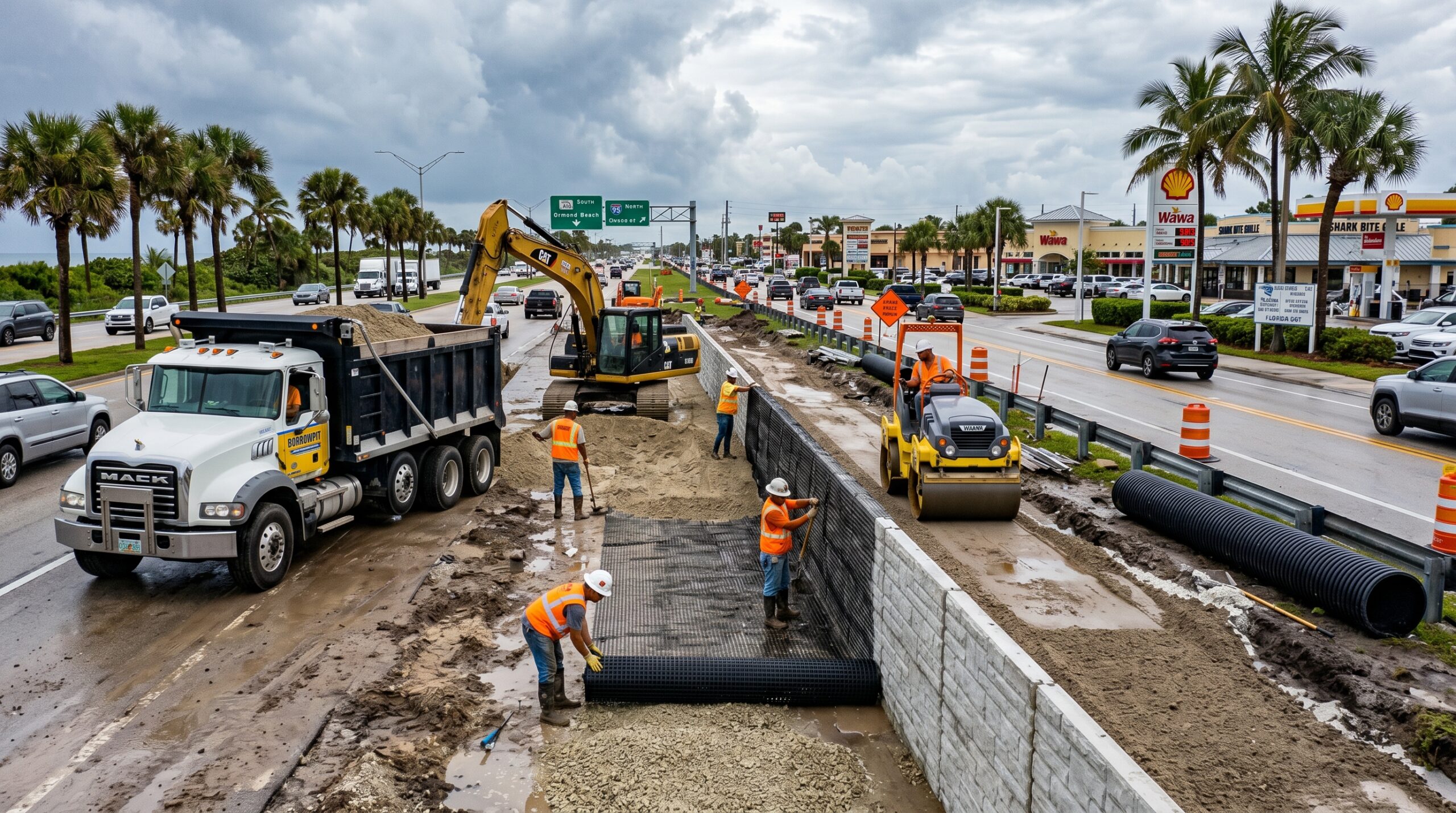
MSE walls rely on interaction between reinforcement layers and compacted fill. That means the backfill itself becomes part of the structural system.
Proper engineered fill materials Florida projects require typically offer:
- controlled gradation
- improved drainage
- stronger compaction behavior
- better long-term stability
Those characteristics are especially important for:
- bridge approaches
- highway retaining walls
- elevated commercial pads
- reinforced slopes
- waterfront developments
The Federal Highway Administration continues identifying engineered backfill quality as a critical factor in reinforced earth system performance.
How Florida Contractors Balance Cost and Logistics
Material performance matters, but logistics still drive many sourcing decisions. Florida contractors often manage projects in dense urban corridors where transportation delays affect schedules quickly. A retaining wall project near Interstate 4 in Orlando or along I-75 near Naples may require hundreds of coordinated truck deliveries over several weeks. That creates pressure to source material efficiently.
Local Availability Can Reduce Major Costs
Hauling distance significantly impacts total project cost. A supplier offering slightly cheaper fill from across the state may actually become more expensive once fuel, driver time, and delivery coordination are factored in.
That is why many contractors prioritize:
- nearby suppliers
- consistent delivery schedules
- reliable hauling access
- faster response times
Project Timing Is Just as Important as Material Quality
Construction schedules in Florida move aggressively, especially on commercial and infrastructure projects tied to tourism growth and population expansion.
Delays caused by rejected fill material or inconsistent deliveries can affect:
- grading operations
- retaining wall installation
- inspection timelines
- concrete scheduling
- paving work
That operational pressure has pushed more contractors toward structured sourcing strategies instead of relying solely on traditional supplier relationships.
How Digital Platforms Are Changing Fill Material Sourcing
Contractors no longer depend entirely on phone networks and local referrals to locate engineered backfill materials.
Digital sourcing platforms are creating more visibility into available material and supplier options across regional markets.
BorrowPit Helps Contractors Improve Material Visibility
BorrowPit connects contractors, suppliers, brokers, and material listings in one centralized marketplace.
Some contractors use the platform for direct brokering support when they need help locating engineered fill quickly for active projects. Others advertise available material through marketplace listings and connect directly with buyers or suppliers.
That flexibility has become useful for contractors managing projects across multiple Florida regions.
BorrowPit explains more about its sourcing approach on the About page.
The Industry Is Moving Toward Smarter Procurement
Construction sourcing is becoming more strategic.
Contractors now focus heavily on:
- hauling efficiency
- supplier reliability
- drainage compatibility
- logistics coordination
- long-term performance
For sourcing coordination and supplier communication, contractors can also use BorrowPit’s contact page.
Why Proper Backfill Selection Impacts Long-Term Performance
Many retaining wall issues do not appear immediately after construction. Problems often develop gradually as moisture conditions change and soil pressure increases over time.
That is why proper MSE backfill Florida contractors use has become more important on long-term infrastructure and commercial projects.
Better backfill selection helps improve:
- wall stability
- drainage performance
- erosion resistance
- compaction reliability
- structural lifespan
As Florida continues expanding through highway improvements, residential growth, and coastal development, engineered fill materials will likely become even more important across retaining wall construction.
Final Thoughts
Choosing the right MSE backfill material for Florida retaining walls involves much more than finding available dirt. Contractors must balance drainage performance, structural stability, hauling logistics, and long-term reliability while working under demanding environmental conditions.
Engineered fill materials continue gaining traction because they help reduce risk on retaining wall systems exposed to Florida’s heavy rainfall, groundwater pressure, and infrastructure demands.
Teams looking to improve sourcing visibility can search listings near you for available engineered fill materials or list your material to connect with contractors and suppliers across Florida.
FAQs
What is MSE backfill used for in Florida construction?
MSE backfill is commonly used behind retaining walls, reinforced slopes, highway embankments, and structural earth systems.
Why is drainage important for Florida retaining walls?
Florida’s heavy rainfall and groundwater conditions can create pressure behind retaining systems if fill material does not drain properly.
What materials are commonly used for engineered backfill?
Granular aggregates and processed structural fill materials are commonly used because they compact consistently and improve drainage.
How do contractors source retaining wall backfill in Florida?
Many contractors work with engineered fill suppliers, brokers, and construction material marketplaces.
Can poor backfill cause retaining wall failure?
Yes. Improper fill material can contribute to settlement, drainage issues, and structural movement over time.