Ask three contractors in Florida what kind of sand they prefer on a project, and you will probably get three different answers. Some swear by A-3 material for compaction and drainage. Others stick with standard fill sand because it is cheaper, easier to source, and works fine for general grading.
The truth is that both materials have a place in Florida construction. The problem starts when the wrong one gets used for the wrong application.
That happens more often than people think, especially on fast-moving residential developments around Orlando, roadway expansions near Tampa, or commercial pad sites outside Jacksonville where sourcing decisions get rushed.
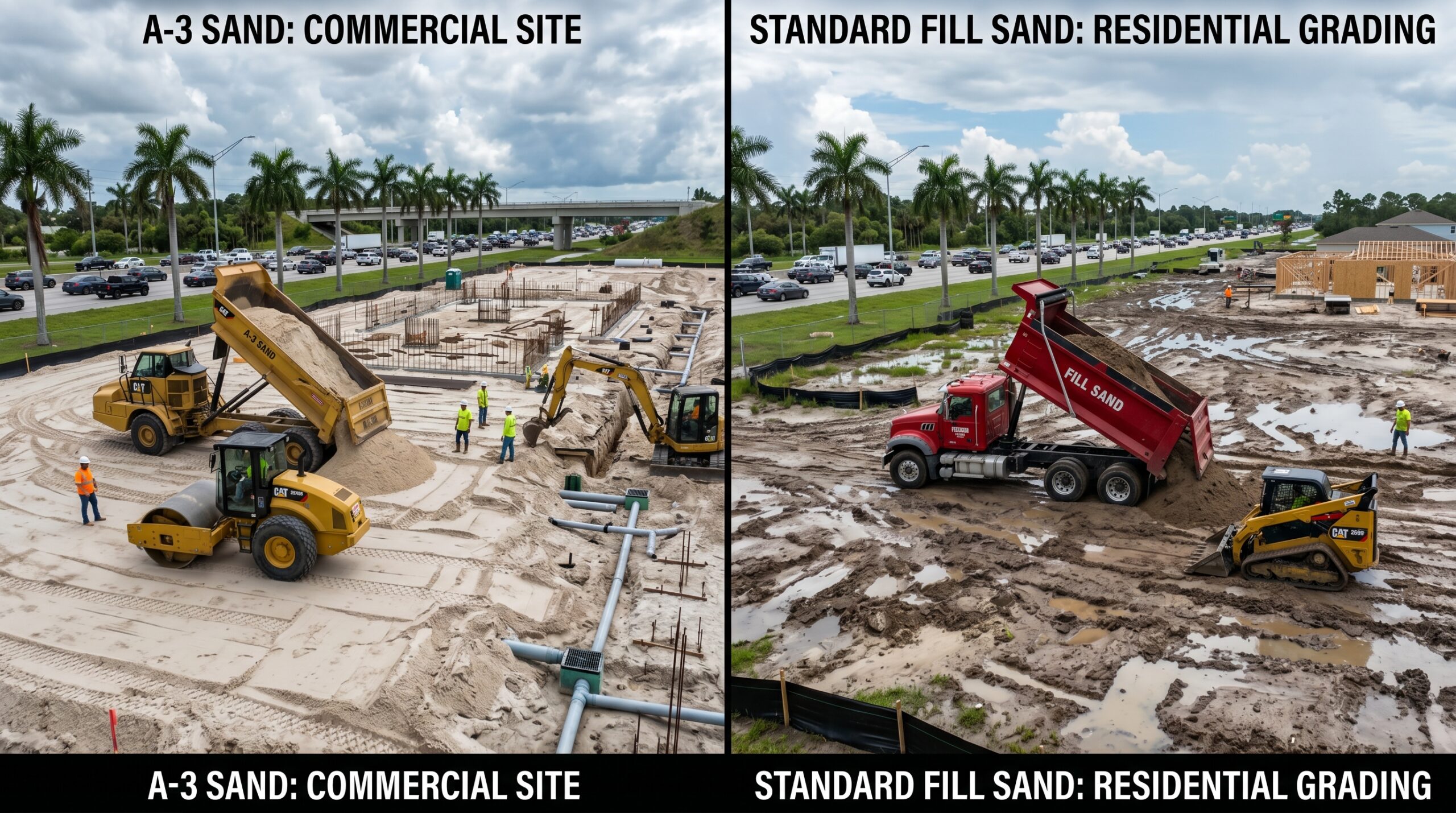
Understanding the difference between A-3 sand vs fill sand in Florida can save contractors from drainage issues, failed compaction tests, unstable grading, and unnecessary hauling costs later in the project.
Most Florida Contractors Choose Sand Based on the Jobsite – Not the Price
On paper, fill sand and A-3 sand can look similar. Both are used in site preparation, grading, and structural fill work. Both are commonly available throughout Florida. But once moisture, drainage, and compaction enter the conversation, the differences become much more noticeable.
A contractor preparing a warehouse site near Lakeland may need a material that compacts predictably under heavy equipment traffic. Meanwhile, a crew handling drainage improvements along I-75 may prioritize permeability and water movement instead.
That is usually where A-3 material starts becoming part of the discussion.
What Makes A-3 Sand Different?
A-3 sand is generally considered a cleaner, finer aggregate material with lower plasticity and strong drainage characteristics. It is commonly used in applications where stable compaction and water movement both matter.
In Florida construction, A-3 material often appears on:
- roadway subgrades
- retaining wall systems
- utility trench backfill
- commercial pad preparation
- drainage-sensitive projects
Compared to some general fill sands, A-3 material typically contains fewer problematic fines that can trap moisture after heavy rainfall. That matters in Florida.
The Federal highway Administration frequently emphasizes proper soil classification and drainage behavior for roadway and infrastructure materials because poor-performing fill can impact long-term stability.
Fill Sand Still Has a Major Role Across Florida
Despite the growing attention around engineered materials, standard fill sand remains one of the most widely used fill products in Florida construction.
It is commonly selected for:
- bulk grading
- leveling work
- landscape elevation
- residential site prep
- non-structural fill applications
The biggest advantage is often cost and availability.
In rapidly growing areas like Cape Coral or Palm Bay, contractors moving large volumes of material sometimes prioritize locally available fill sand simply because trucking costs can escalate quickly when sourcing specialty material from farther away.
Drainage Problems Usually Reveal the Difference Later
The biggest separation in the A-3 sand vs fill sand in Florida conversation often shows up after the project is already built.
A material may compact adequately during installation but behave very differently once Florida’s weather patterns begin affecting the site long term.
Heavy Rainfall Changes Material Performance
Florida contractors know how quickly weather conditions can shift. A week of dry conditions can suddenly turn into several inches of rain, especially during hurricane season. Once moisture starts moving through the site, drainage characteristics become extremely important.
Some lower-quality fill sands retain moisture longer than expected. That can create:
- soft spots
- settlement issues
- drainage delays
- unstable grading conditions
A-3 sand is often preferred on drainage-sensitive projects because its gradation supports more efficient water movement through the material.
This becomes especially important near coastal developments or flood-prone areas around Fort Myers and Miami where groundwater conditions remain unpredictable throughout the year.
Compaction Consistency Also Matters
Contractors dealing with structural pads or roadway preparation usually care less about appearance and more about predictable compaction.
If one truckload compacts differently than the next, production slows down immediately.
Experienced crews working on industrial developments near Port Tampa Bay or logistics facilities outside Orlando often choose engineered or classified fill materials because consistency helps avoid failed density tests and rework.
That operational reliability is one reason many contractors are becoming more selective about fill sourcing instead of simply choosing the cheapest available material.
Material Availability Is Changing How Contractors Source Sand
A few years ago, sourcing sand often came down to local supplier relationships and phone calls. That process is changing as Florida construction activity continues accelerating.
Large infrastructure projects, population growth, and commercial expansion have increased pressure on material supply chains statewide.
Hauling Distance Is Becoming a Bigger Cost Factor
Transportation affects total project cost more than many people realize. A cheaper fill source located two counties away may end up costing significantly more once trucking time, fuel, and scheduling delays get added into the equation.
This is especially true across South Florida, where congestion along I-95 and Florida’s Turnpike can slow deliveries dramatically during peak construction periods.
That is why many contractors now focus on balancing:
- material quality
- supplier proximity
- hauling logistics
- schedule flexibility
- drainage performance
Digital Sourcing Is Becoming More Common
Some contractors now use platforms like BorrowPit to compare local material availability before coordinating large hauling operations. Others use the platform more like a marketplace by advertising available fill directly to nearby buyers and contractors.
For suppliers moving material regularly, listing opportunities through BorrowPit start at $249 per month and allow buyers or sellers to connect directly without relying entirely on brokers.
The company explains its sourcing network and marketplace approach further on the About page.
For contractors trying to coordinate deliveries or locate nearby suppliers quickly, digital visibility is becoming increasingly valuable as competition for quality material continues growing.
So Which Material Actually Works Better?
There is no universal answer because the project itself usually determines the right choice.
A-3 sand often performs better when:
- drainage matters
- compaction consistency is critical
- structural performance matters
- water movement affects long-term stability
Fill sand may still make more sense when:
- large bulk volumes are needed
- structural demands are lower
- cost control becomes the main priority
- grading work is relatively simple
The mistake is assuming all sand behaves the same once weather and site conditions change. Contractors who understand the difference between material behavior usually avoid expensive corrections later.
For supplier coordination or sourcing questions, contractors can also connect through BorrowPit’s contact page.
FAQs
What is A-3 sand commonly used for in Florida?
A-3 sand is often used for roadway preparation, structural fill, retaining walls, and drainage-sensitive construction projects.
Is A-3 sand better than standard fill sand?
It depends on the project. A-3 material generally offers better drainage and compaction consistency, while fill sand is often more economical for basic grading work.
Why does drainage matter so much in Florida construction?
Florida experiences heavy rainfall and fluctuating groundwater conditions that can affect long-term soil stability and site performance.
Can fill sand cause compaction problems?
Lower-quality fill sands with inconsistent gradation or excessive fines can sometimes create moisture retention and compaction challenges.
How are contractors sourcing sand materials today?
Many contractors now combine traditional supplier relationships with digital marketplaces and sourcing platforms to improve visibility and delivery coordination.