Retaining walls across Texas highways, commercial developments, and industrial projects rely heavily on one critical component: MSE backfill. Short for mechanically stabilized earth backfill, this engineered material helps retaining walls stay stable under heavy loads while improving drainage and reducing soil movement.
From roadway expansions along I-35 to large warehouse developments near Dallas–Fort Worth, contractors use MSE backfill for retaining walls because it performs better than standard fill dirt in demanding construction conditions. Proper backfill selection plays a major role in preventing settlement issues, erosion, and structural instability over time.
As infrastructure projects continue growing throughout the state, understanding how mechanically stabilized earth backfill works has become increasingly important for Texas contractors, developers, and material suppliers.
What Makes MSE Backfill Different From Standard Fill Dirt?
Not all soil can be used behind retaining walls. Standard excavation dirt often contains clay, organic matter, or moisture-sensitive material that can weaken wall performance over time.
That’s why contractors use engineered retaining wall backfill materials specifically designed for stability and drainage.
Designed for Strength and Drainage
One of the biggest advantages of MSE backfill Texas projects rely on is its ability to handle both structural pressure and water movement at the same time.
MSE backfill typically includes:
- Crushed stone
- Granular aggregate blends
- Engineered structural fill
These materials compact more consistently than regular dirt and allow water to drain efficiently behind retaining walls.
Poor drainage is one of the leading causes of retaining wall failure. Water buildup creates hydrostatic pressure that pushes against the structure over time. Using properly graded aggregate backfill helps reduce that risk significantly.
The Federal Highway Administration highlights MSE retaining systems as one of the most effective solutions for modern transportation infrastructure because of their long-term stability and drainage performance.
Supports Soil Reinforcement Systems
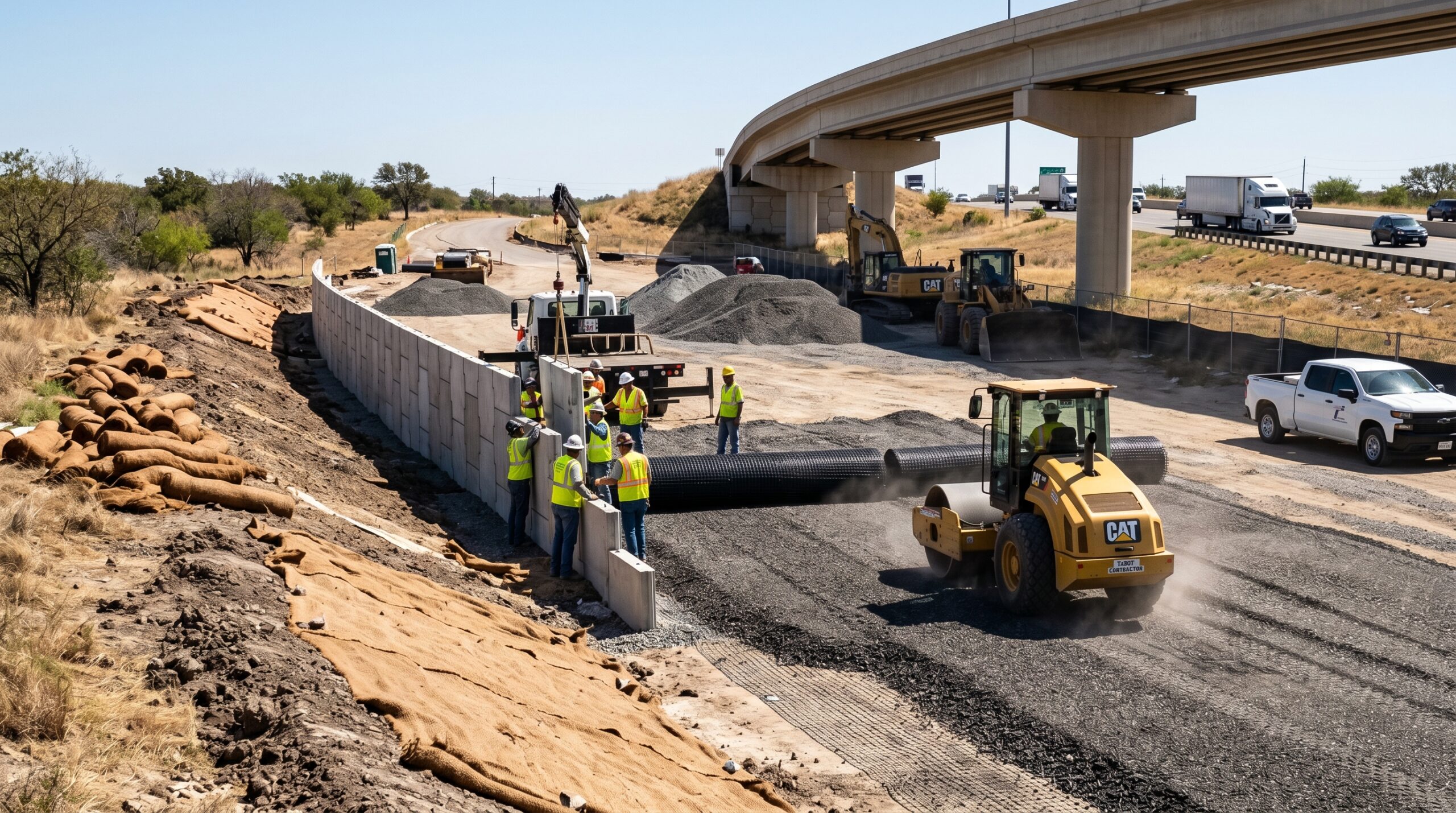
MSE retaining walls rely on reinforcement layers like geogrids or steel strips that extend into the compacted soil mass.
The backfill material must work together with these reinforcement systems to create a stable structure capable of supporting roads, slopes, and elevated surfaces.
This is why choosing the right MSE backfill material is such an important part of geotechnical engineering and infrastructure construction.
Why Texas Contractors Use MSE Backfill for Retaining Walls
Texas presents difficult construction conditions that make retaining wall performance especially important. Expansive clay soils, heavy traffic loads, and flash flooding all create pressure on retaining systems across the state.
Improving Stability on Large Infrastructure Projects
Projects throughout Texas often involve major elevation changes and heavy structural demands.
For example:
All require stable retaining systems capable of handling long-term soil pressure. Using MSE backfill for retaining walls helps contractors improve soil reinforcement while reducing settlement risks. This becomes especially important in areas with unstable natural soil conditions where traditional retaining methods may struggle.
According to the Texas Department of Transportation, retaining structures are widely used across transportation projects to improve roadway safety and land stability.
Reducing Erosion and Water Pressure
Texas weather can shift quickly from dry conditions to intense rainfall events. Poorly designed retaining systems often fail because trapped water increases pressure behind the wall. MSE systems reduce this risk by improving drainage performance and helping control erosion.
That’s one reason benefits of MSE backfill in Texas infrastructure projects continue driving adoption across both public and private developments.
How Contractors Source MSE Backfill Materials in Texas
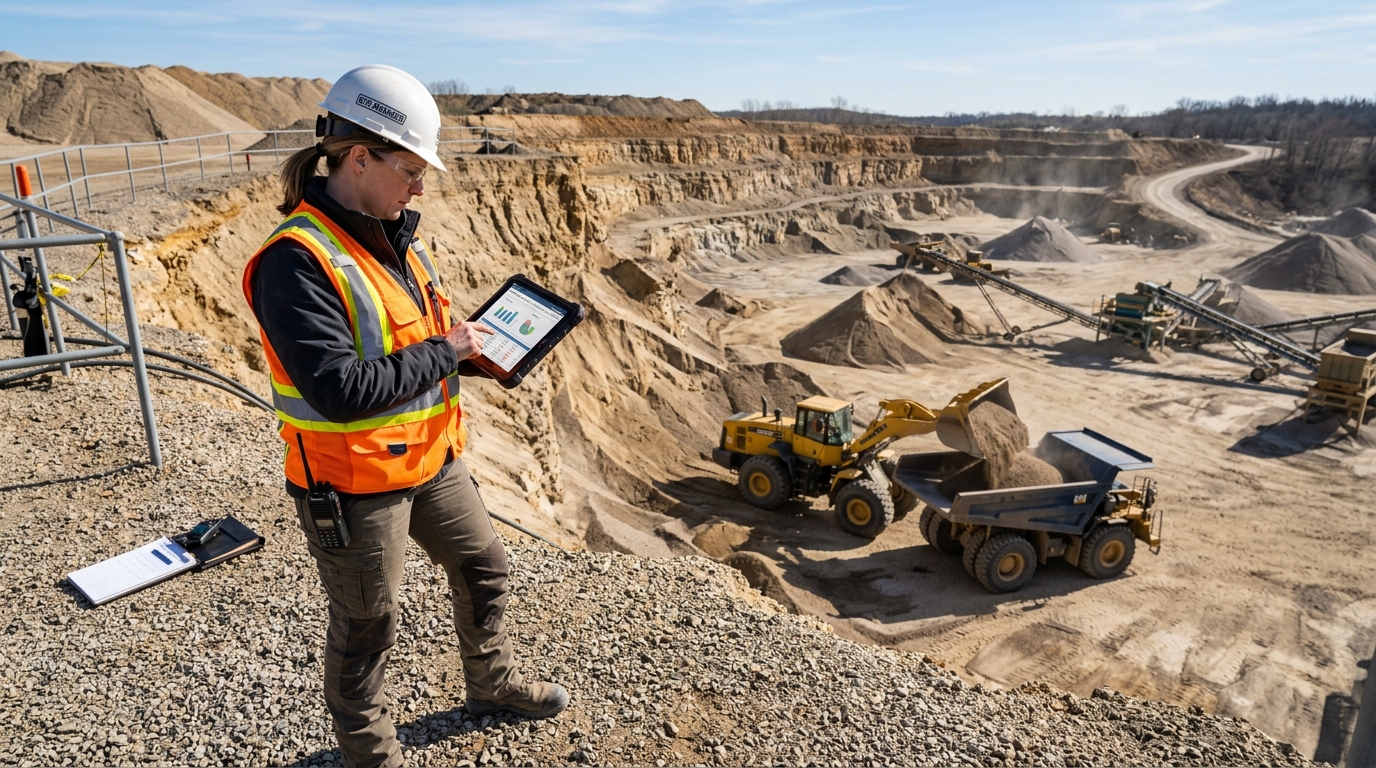
Finding reliable engineered fill material can be challenging, especially on large projects requiring significant quantities.
The Shift Toward Smarter Material Coordination
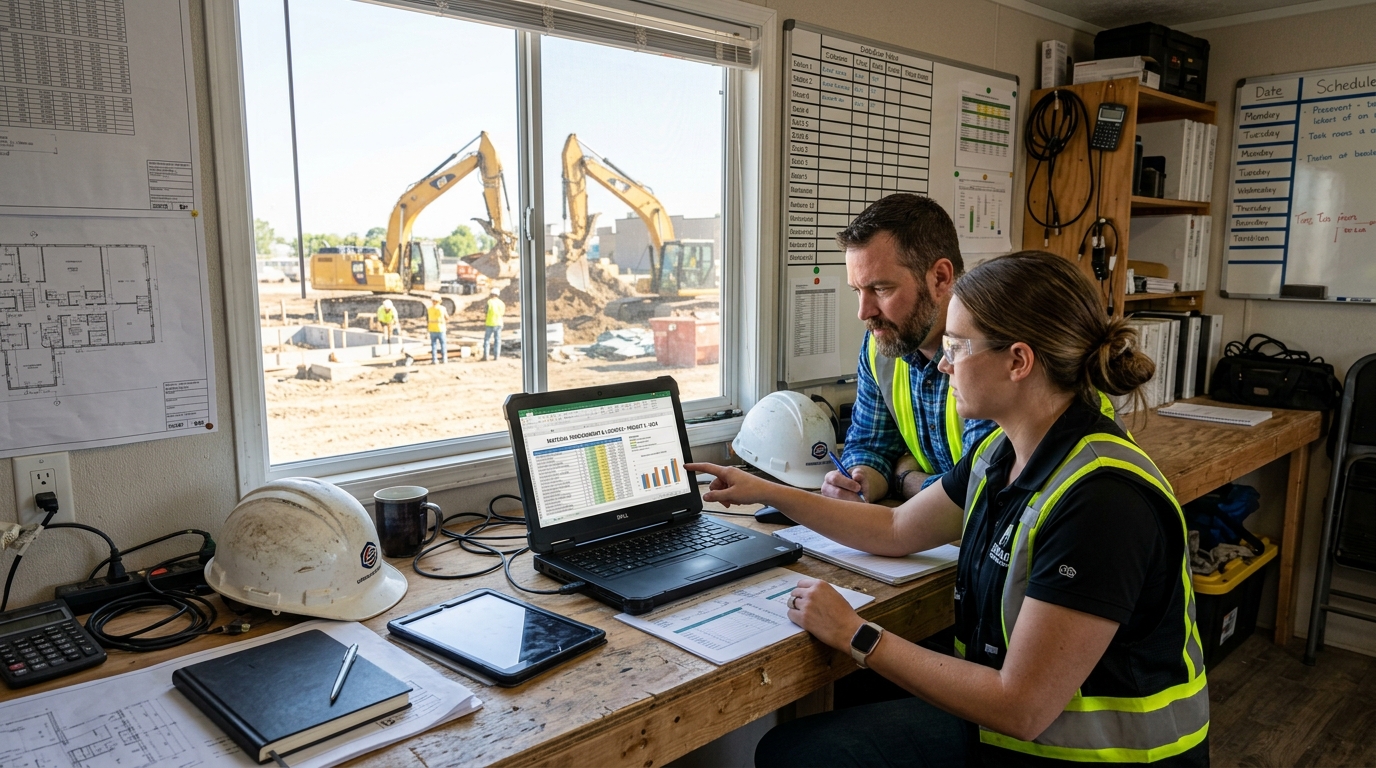
Contractors increasingly use digital sourcing platforms to improve visibility into available material and reduce procurement delays.
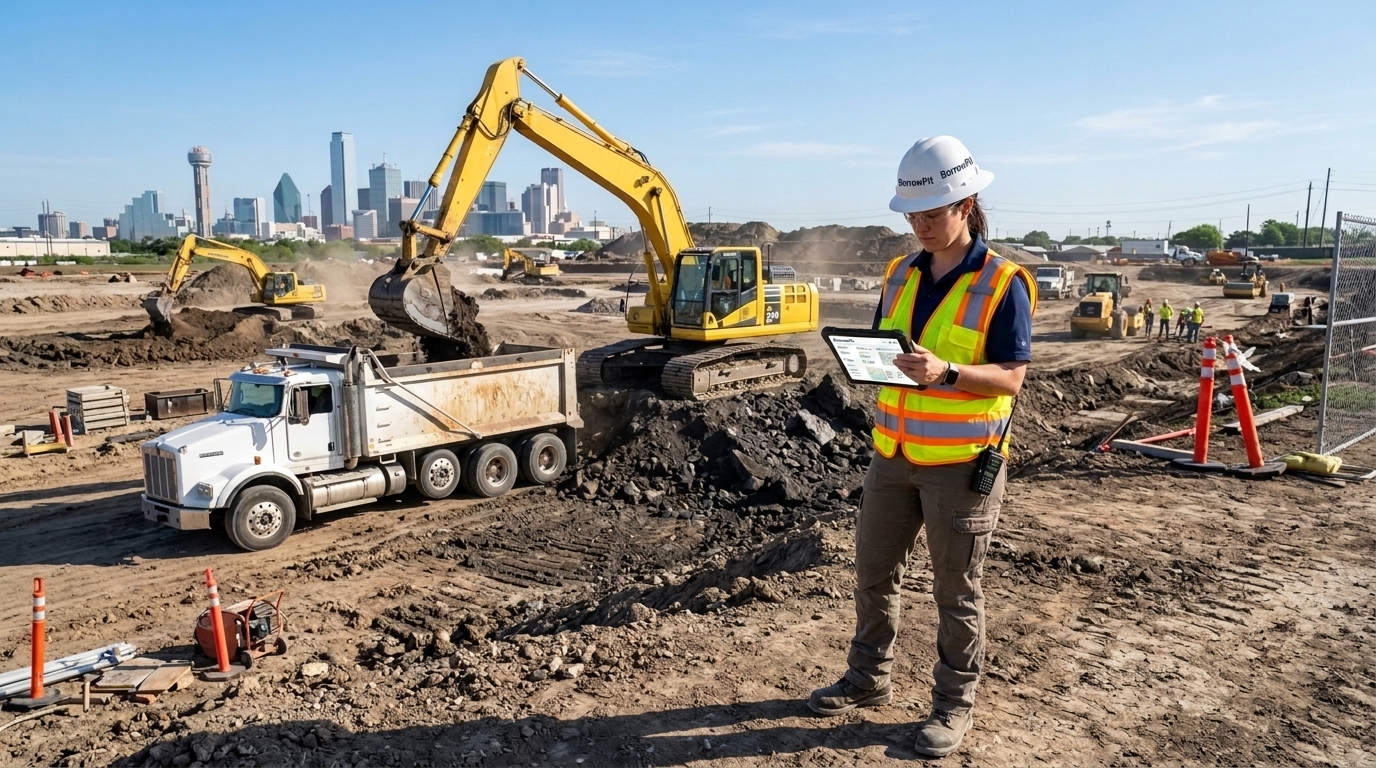
BorrowPit helps contractors connect with suppliers offering aggregates, fill dirt, and engineered construction materials through its marketplace model. The platform also supports direct brokering services for contractors needing assistance sourcing specialized fill material for retaining wall or infrastructure projects.
BorrowPit explains its sourcing approach further on its About page, where the focus is on improving construction material coordination and supply chain efficiency.
Balancing Cost and Material Quality
Contractors sourcing bulk backfill materials Texas projects require must balance:
- Material availability
- Engineering specifications
- Delivery timelines
- Transportation costs
This is especially important on highway and commercial projects where delays in material sourcing can impact grading and wall installation schedules.
For project coordination and sourcing inquiries, contractors can also connect through BorrowPit’s contact page.
Where MSE Retaining Walls Are Commonly Used
The use of MSE backfill Texas contractors rely on continues expanding because retaining walls are now common across multiple construction sectors.
Transportation Infrastructure
MSE retaining systems are heavily used along:
for bridge approaches, embankments, and roadway widening projects.
Commercial and Industrial Construction
Large warehouse and industrial developments frequently use retaining walls to stabilize graded building pads and maximize usable land.
Slope Stabilization and Erosion Control
MSE systems are also widely used for erosion control on sloped properties and drainage-sensitive developments across Texas.
Final Thoughts
The growing demand for MSE backfill reflects the increasing complexity of Texas construction projects. Contractors need retaining wall systems that provide strong soil reinforcement, reliable drainage, and long-term durability under heavy infrastructure loads.
By using engineered backfill materials instead of standard excavation dirt, contractors improve retaining wall performance while reducing the risk of settlement and erosion problems.
For contractors looking to improve sourcing efficiency, opportunities are available to search listings near you for available fill materials or list your material to connect with active buyers and suppliers across Texas.
FAQs
What is MSE backfill used for?
MSE backfill is used behind retaining walls to improve structural stability and drainage performance.
Why is MSE backfill important in Texas?
Texas soil conditions and heavy infrastructure demands require engineered backfill materials for long-term retaining wall performance.
What materials are commonly used for MSE backfill?
Crushed stone, gravel, and engineered granular fill are commonly used.
Can standard dirt be used behind retaining walls?
In many cases, no. Standard dirt may contain clay or moisture-sensitive material that reduces stability.
Where are MSE retaining walls commonly installed?
They are widely used on highways, bridge approaches, industrial developments, and slope stabilization projects.