Florida’s infrastructure faces a unique combination of challenges. High groundwater levels, heavy rainfall, coastal erosion, and soft soil conditions make long-term structural stability a major concern for contractors and engineers. Whether it’s highway expansion near Orlando, bridge construction in Tampa, or retaining wall systems along I-95 in Miami, proper soil reinforcement plays a critical role in project performance.
That’s one reason MSE backfill is important for Florida infrastructure projects.
Mechanically stabilized earth systems use engineered backfill materials combined with reinforcement layers to create stable retaining structures capable of supporting roads, embankments, and elevated transportation systems. Compared to traditional fill dirt, MSE backfill Florida contractors use provides better drainage, stronger compaction, and improved long-term stability in moisture-sensitive environments.
As Florida continues investing in large-scale transportation and coastal infrastructure, demand for reliable mechanically stabilized earth backfill materials continues growing across the state.
Why Florida Infrastructure Requires Engineered Backfill Systems
Florida construction projects deal with environmental conditions that differ significantly from many other regions in the United States.
Soft soils, frequent stormwater exposure, and erosion risks create serious challenges for retaining wall and roadway systems.
Managing High Moisture and Drainage Conditions
One of the biggest reasons MSE backfill is important for Florida infrastructure projects is water management. Heavy rainfall and high groundwater levels can place enormous pressure on retaining structures if drainage is not handled properly. Standard fill dirt often traps moisture, which increases hydrostatic pressure behind walls and weakens soil stability over time.
That’s why contractors prefer engineered retaining wall backfill Florida projects can rely on for better drainage performance.
Common materials include:
- Crushed aggregates
- Granular structural fill
- Washed drainage stone
- Engineered select fill
These materials allow water to move through the soil mass more efficiently while maintaining compaction strength.
The Federal Highway Administration identifies MSE retaining systems as one of the most effective solutions for transportation infrastructure requiring reinforced soil stability and drainage control.
Improving Stability on Soft Florida Soils
Many areas across Florida contain sandy or moisture-sensitive soil conditions that can shift under heavy loads.
Infrastructure projects near:
- Miami
- Tampa
- Jacksonville
- Fort Lauderdale
Often require reinforced soil systems capable of improving long-term stability in challenging ground conditions.
Using infrastructure backfill materials Florida contractors trust helps reduce settlement risks while improving support beneath highways, ramps, and retaining walls.
How MSE Backfill Improves Infrastructure Performance
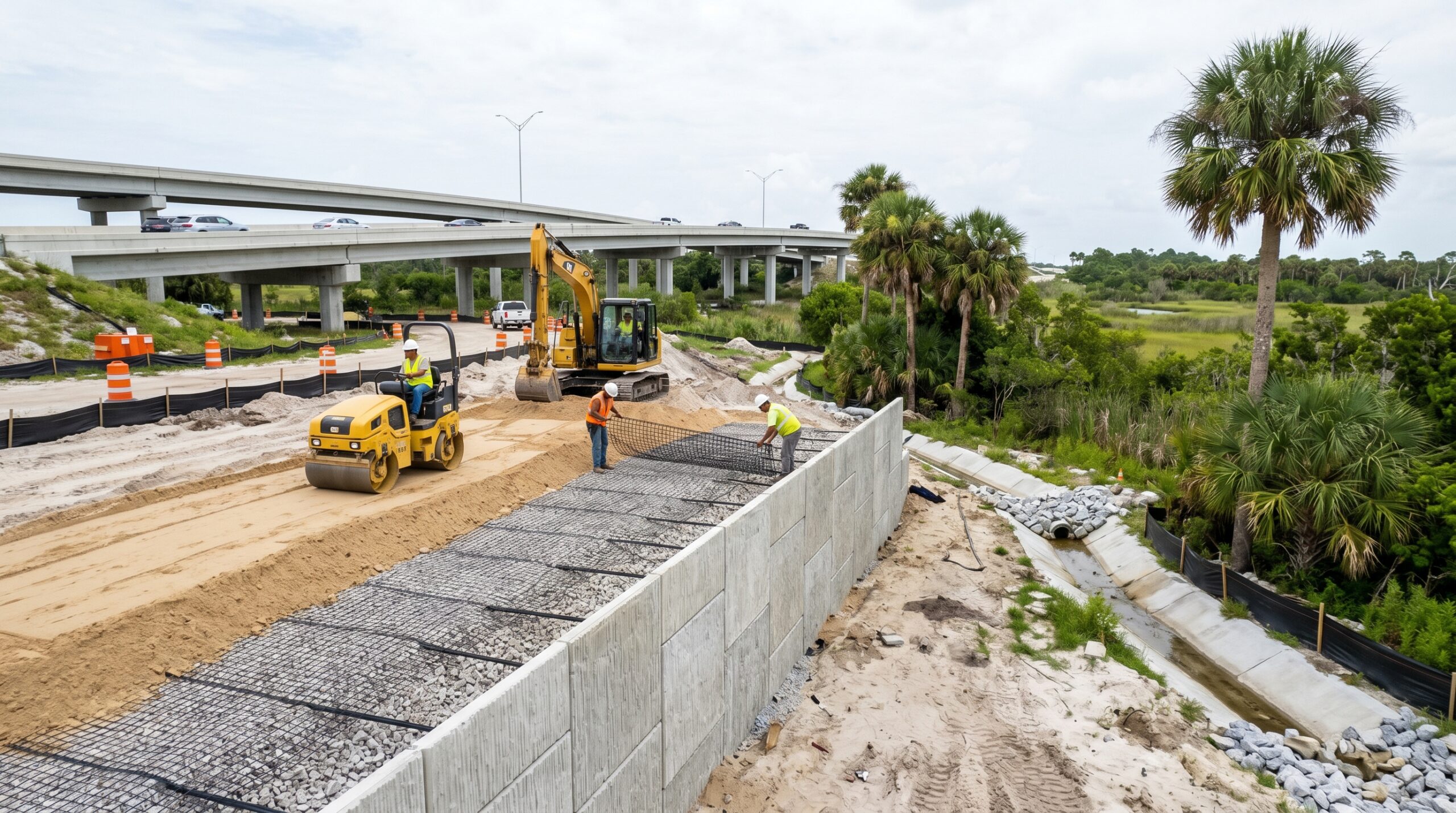
MSE retaining systems are designed to distribute structural loads through layers of reinforced soil and compacted aggregate. The backfill material itself plays a major role in how the entire system performs over time.
Supporting Reinforced Soil Wall Systems
Modern retaining structures rely on reinforcement materials such as:
- Geogrids
- Steel strips
- Reinforcement mesh systems
These components extend into the compacted backfill to create a reinforced soil mass capable of supporting heavy infrastructure loads.
Proper mechanically stabilized earth backfill improves interaction between the soil and reinforcement layers, helping stabilize embankments and retaining walls.
This is especially important for highway projects involving elevated ramps and bridge approaches where long-term settlement control matters.
Reducing Erosion and Maintenance Issues
Florida’s climate creates constant erosion pressure on infrastructure systems. Stormwater runoff, hurricanes, and coastal weather conditions can gradually weaken poorly designed retaining structures. MSE systems help reduce these risks by combining:
- Structural fill systems
- Drainage aggregates
- Reinforced soil stabilization
- Erosion protection layers
This approach improves durability while reducing future maintenance costs.
According to the Florida Department of Transportation, reinforced soil wall systems are widely used throughout transportation infrastructure because they improve flexibility and structural performance under difficult environmental conditions.
Best Materials Used for MSE Backfill in Florida
Contractors sourcing MSE backfill Florida projects require typically focus on materials that balance drainage, compaction, and structural strength.
Crushed Stone and Drainage Aggregates
Crushed limestone and washed stone are commonly used because they:
- Compact consistently
- Allow strong drainage performance
- Resist moisture-related weakening
These materials are widely used on highway retaining wall systems throughout Central and South Florida.
Granular Structural Fill
Granular engineered fill provides additional stability while maintaining lower moisture sensitivity compared to clay-heavy soils.
Projects along I-4 and Florida’s Turnpike frequently rely on engineered fill materials for reinforced embankments and retaining systems.
Balancing Material Availability and Project Timelines
One challenge contractors face is sourcing large quantities of engineered fill material without slowing down construction schedules.
Digital sourcing platforms are helping simplify procurement by improving visibility into available materials and suppliers.
BorrowPit supports both direct material brokering and marketplace advertising for contractors and suppliers. Some users contact the platform directly for sourcing assistance and material coordination, while others advertise materials through monthly listings to connect directly with buyers and sellers.
BorrowPit explains its sourcing approach further on its About page, where the focus is on improving material visibility and construction logistics efficiency.
Where MSE Backfill Is Commonly Used in Florida
The use of MSE backfill is important for Florida infrastructure projects because retaining systems are now used across a wide range of transportation and development work.
Highway Expansion Projects
Highway corridors like:
- I-95
- I-75
- I-4
- Florida’s Turnpike
frequently use reinforced soil walls for roadway widening, embankment stabilization, and bridge ramps.
Coastal Infrastructure and Flood Protection
Many coastal projects use MSE systems to improve erosion protection and stabilize land near water-sensitive areas. This becomes especially important in regions vulnerable to flooding and storm surge conditions.
Commercial and Industrial Development
Large warehouse developments and distribution centers across Florida also use reinforced retaining systems to maximize usable land while improving grading stability.
How Contractors Are Modernizing Material Sourcing
Infrastructure projects now require faster sourcing coordination and more reliable supplier visibility.
Using Digital Platforms for Material Procurement
Instead of relying entirely on local supplier networks, contractors increasingly use construction marketplaces to improve sourcing efficiency and reduce delays.
BorrowPit helps contractors connect with:
- Bulk aggregate suppliers
- Engineered fill providers
- Retaining wall material suppliers
- Excavation material sources
This flexibility supports both direct brokering services and listing-based advertising depending on project requirements.
For sourcing coordination and project inquiries, contractors can also connect through BorrowPit’s contact page.
Final Thoughts
The reason MSE backfill is important for Florida infrastructure projects comes down to long-term performance, drainage control, and structural stability. Florida’s environmental conditions create unique engineering challenges that require reinforced soil systems capable of handling moisture, erosion, and heavy transportation loads.
By using engineered backfill materials instead of standard fill dirt, contractors improve retaining wall durability, reduce settlement risks, and strengthen critical infrastructure systems across the state.
For contractors looking to improve sourcing efficiency, opportunities are available to search listings near you for available fill materials or list your material to connect with active buyers and suppliers across Florida.
FAQs
What is MSE backfill used for in Florida projects?
MSE backfill is used behind retaining walls and reinforced soil systems to improve stability and drainage.
Why is drainage important for Florida retaining walls?
Florida’s high rainfall and groundwater levels increase hydrostatic pressure risks behind retaining structures.
What materials are commonly used for MSE backfill?
Crushed stone, washed aggregates, and engineered granular fill are commonly used.
Where are MSE retaining systems used in Florida?
They are commonly installed on highways, bridge approaches, coastal infrastructure, and commercial developments.
Can MSE systems help reduce erosion?
Yes, reinforced soil systems improve erosion protection and long-term infrastructure stability.