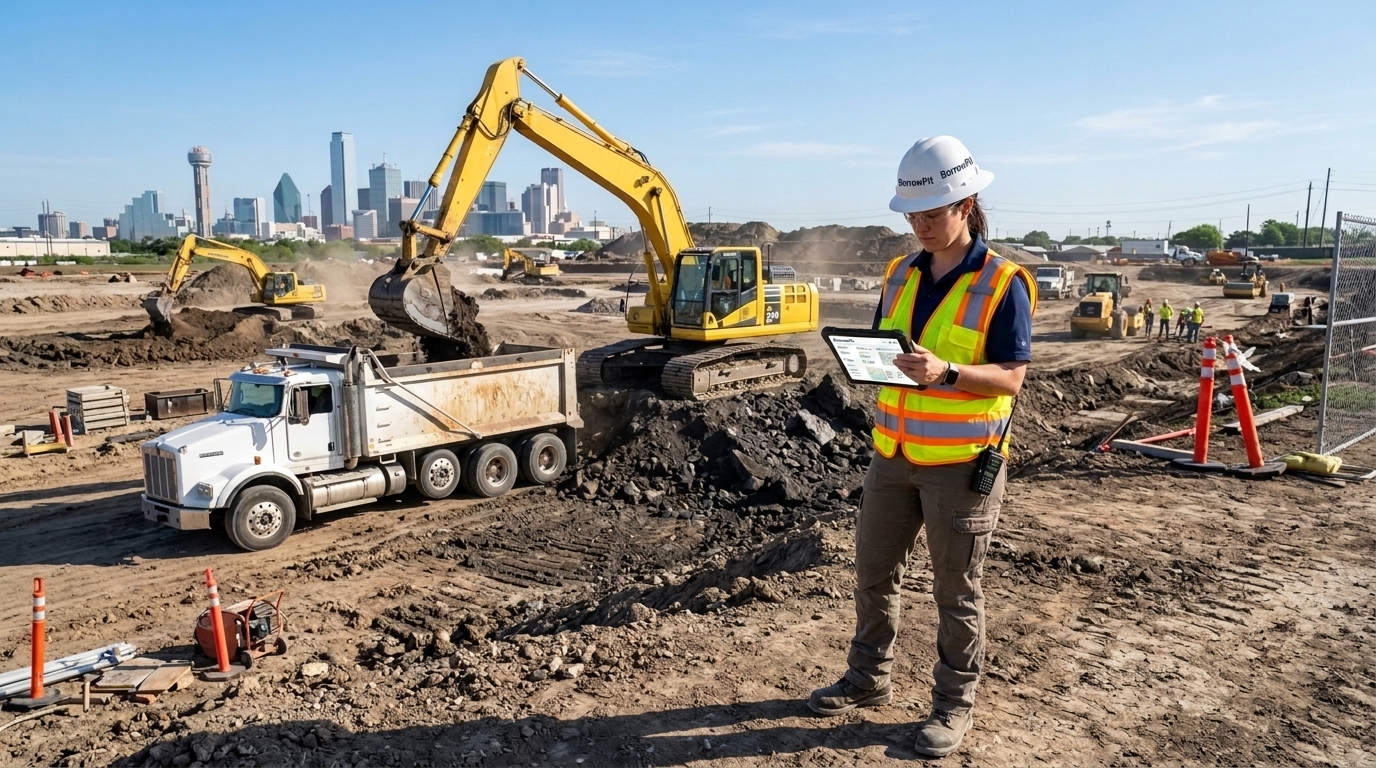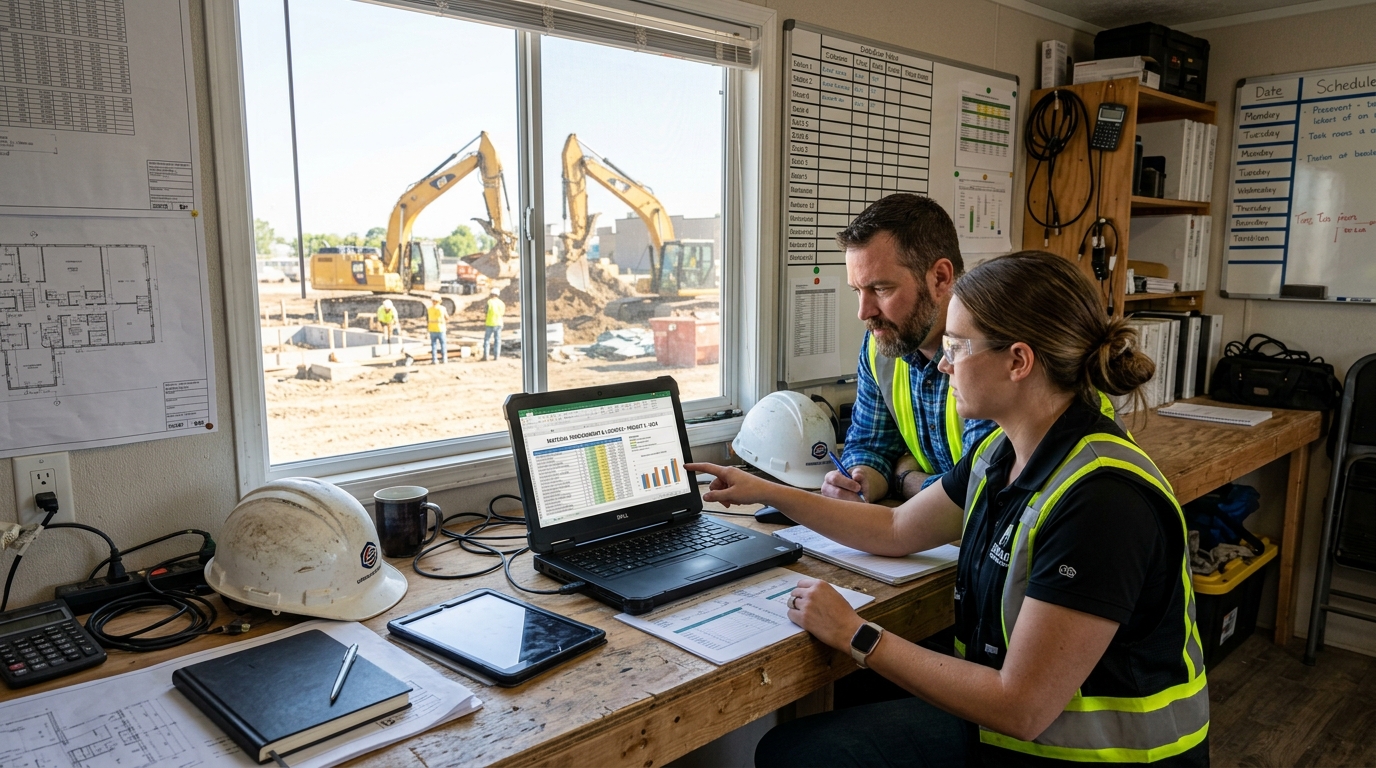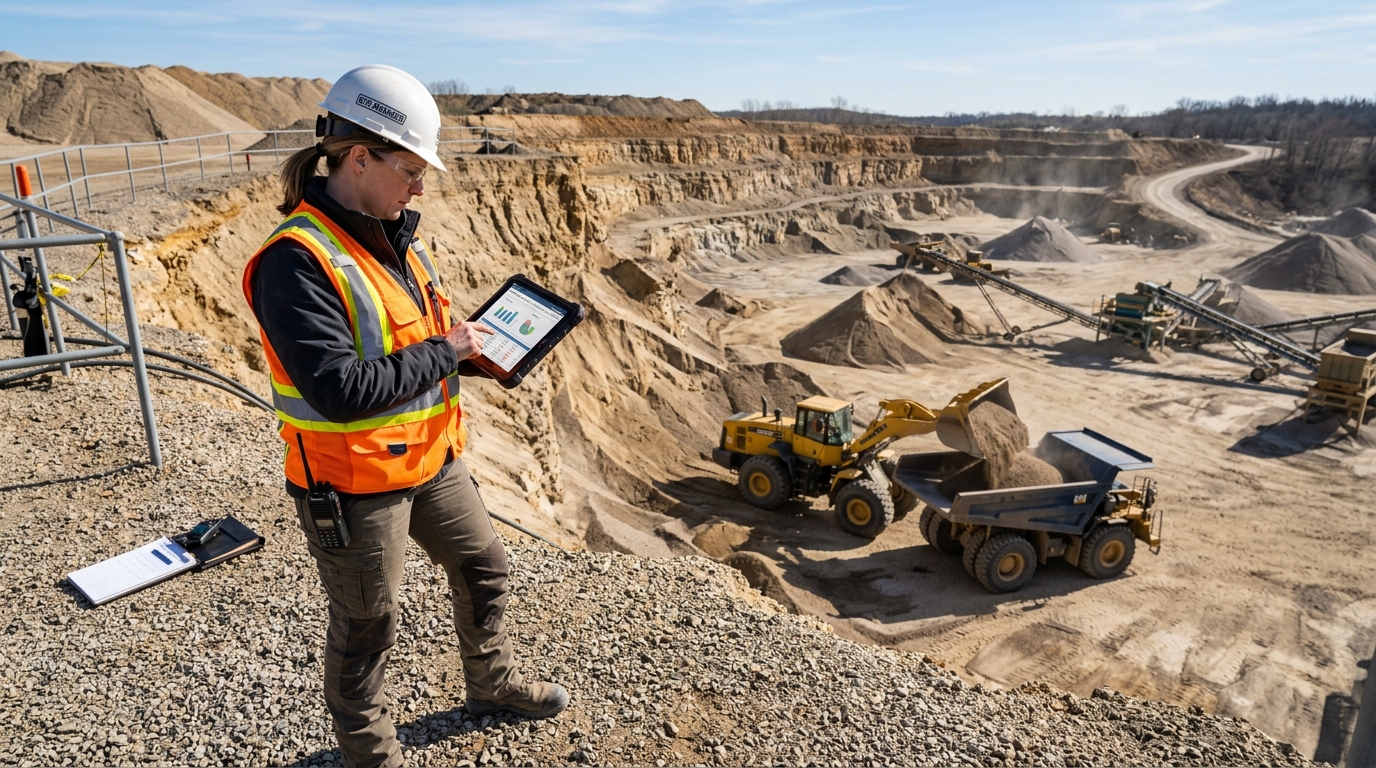

Texas highway projects can move hundreds of thousands of cubic yards of earth, but before a single load of borrow material reaches the site, contractors must satisfy the TxDOT Embankment Item 132 approval process. A material source that performs well on a commercial pad site may never be accepted on a TxDOT project if it fails laboratory testing or lacks proper documentation.
Whether you’re supplying embankment for an I-35 expansion near Austin, a bridge approach on US-281 in San Antonio, or a frontage road reconstruction in the Dallas-Fort Worth Metroplex, understanding the TxDOT Embankment Item 132 submittal process helps avoid rejected materials, project delays, and unexpected costs.
What Is TxDOT Embankment Item 132?
Unlike private developments where project engineers often have flexibility in approving local fill, TxDOT Embankment Item 132 establishes statewide requirements for embankment construction on transportation projects. The specification covers the materials, placement methods, moisture conditioning, and compaction requirements used to construct roadway embankments, shoulders, bridge approaches, and other structural earthwork.
The specification applies to both excavation generated within the project limits and imported borrow material. Regardless of where the material originates, it must meet the project’s requirements before it becomes an approved source.
On major Texas infrastructure projects, approval is not based on visual inspection alone. Material must demonstrate acceptable engineering properties through laboratory testing and field verification. Contractors that secure approved sources early generally experience fewer schedule disruptions than those waiting until earthwork operations have already begun.
Current specifications can always be verified through the official TxDOT Standard Specifications webpage.
The TxDOT Embankment Item 132 Material Submittal Process
Getting material approved under TxDOT Embankment Item 132 is a structured process that begins long before earthwork operations start. Each step, from selecting a borrow source to submitting laboratory reports, helps TxDOT verify that the proposed material will meet long-term performance requirements.
From Borrow Source Selection to Final Approval
The TxDOT Embankment Item 132 approval process begins well before excavation equipment mobilizes.
The contractor first identifies a proposed borrow pit, commercial supplier, or on-site excavation area capable of producing sufficient quantities throughout the project. Consistency is critical because TxDOT expects the approved material source to remain representative during production.
Representative samples are collected throughout the borrow area rather than from surface material alone. These samples are then delivered to an approved laboratory for testing.
A typical TxDOT embankment material submittal includes:
- Borrow source location
- Material description
- Laboratory testing reports
- Gradation analysis
- Atterberg Limits
- Moisture-density relationship (Proctor)
- Any additional documentation required by the project engineer
The completed package is submitted to the Engineer responsible for the project. Depending on the district and contract requirements, the review may involve the Area Office, District Materials Laboratory, or TxDOT Geotechnical personnel before material receives final approval.
Contractors looking for available borrow sources can reduce sourcing time by browsing the BorrowPit Dirt Marketplace, where suppliers advertise available fill material throughout Texas.
Required Testing Under TxDOT Embankment Item 132
Every proposed embankment source must be supported by laboratory data before it can be incorporated into a TxDOT project. These tests evaluate the engineering properties of the material and confirm whether it complies with Item 132 requirements.
Gradation, Atterberg Limits and Compaction Requirements
One of the biggest misconceptions among contractors is that “good-looking dirt” automatically qualifies as embankment material. Under TxDOT Embankment Item 132, acceptance depends on engineering performance rather than appearance.
Gradation Testing
Gradation determines how soil particles are distributed by size.
Proper gradation affects:
- Density
- Stability
- Drainage
- Long-term settlement
Excessive fines can create moisture-sensitive soils, while oversized particles may prevent proper compaction.
Atterberg Limits
TxDOT also evaluates soil consistency using Atterberg Limits, which include:
- Liquid Limit (LL)
- Plastic Limit (PL)
- Plasticity Index (PI)
The Plasticity Index (PI) is particularly important because it measures the soil’s potential to shrink and swell with changing moisture conditions. Highly plastic soils are more susceptible to movement, making them unsuitable for many roadway embankment applications.
Moisture-Density Relationship
Laboratories establish:
These values become the benchmark for field compaction during construction.
Field Compaction Testing
Even after laboratory approval, embankment placement must achieve the required field density. Inspectors typically verify compaction using nuclear density gauges or other approved testing methods throughout construction, not just at project completion.
Who Reviews and Approves Fill Material on a TxDOT Project?
Approval authority depends on the specific project, but the review process generally follows the same path.
The contractor submits the material package to the Engineer administering the contract. Supporting laboratory reports may then be reviewed by TxDOT’s District Materials Laboratory, geotechnical staff, or other designated reviewers to verify compliance with Item 132 embankment TxDOT specifications.
Approval considers more than laboratory numbers. Reviewers also evaluate:
- Source consistency
- Material quality
- Documentation completeness
- Sampling methods
- Compliance with project specifications
If a contractor changes borrow pits or begins hauling from a different portion of the property that produces different material characteristics, additional testing and approval may be required before production continues.
What Happens When TxDOT Rejects Fill Material?
Material rejection affects much more than laboratory paperwork.
If testing identifies unacceptable gradation, excessive Plasticity Index values, contamination, or inconsistent material quality, TxDOT may reject the source until corrective action is completed.
Typical consequences include:
| Issue | Potential Impact |
| Failed laboratory testing | New sampling and retesting |
| High Plasticity Index | Soil stabilization or replacement |
| Poor gradation | Material blending or rejection |
| Failed field compaction | Rework and additional roller passes |
| Unapproved borrow source | Hauling delays and schedule impacts |
For contractors working on high-volume projects like SH-99 near Houston or IH-35 corridor improvements in Central Texas, even a few days of delay can affect paving schedules, subcontractor coordination, and overall project costs.
Planning ahead by securing reliable suppliers with documented material quality significantly reduces these risks.
Planning ahead by securing reliable suppliers with documented material quality helps reduce approval risks. Contractors can use BorrowPit to find borrow pit operators and fill dirt suppliers across Texas or work with its brokering team to source specific materials. Material owners can also advertise available inventory for $249 per month, making it easier to connect with qualified buyers. Learn more on the About Us page or contact the BorrowPit team to discuss your project or listing options.
Conclusion
Successfully meeting TxDOT Embankment Item 132 requirements requires more than finding available fill dirt. Contractors must identify a reliable borrow source, complete laboratory testing, prepare accurate submittals, obtain engineer approval, and maintain compliance throughout construction. Understanding the approval process before procurement begins helps reduce rejected materials, protect project schedules, and avoid unnecessary hauling costs. On today’s large Texas infrastructure projects, early planning and qualified material sourcing remain some of the most valuable investments a contractor can make.
FAQs
How long does the TxDOT Embankment Item 132 approval process usually take?
The timeline varies by project and district, but laboratory testing, documentation review, and engineer approval can take several days to a few weeks. Starting the process early helps avoid delays once earthwork begins.
Can one approved borrow pit supply multiple TxDOT projects?
Not automatically. Material approval is typically tied to a specific project, and a new contract may require additional testing and approval even if the source has been accepted elsewhere.
Does TxDOT inspect borrow pits before approving material?
Depending on the project, TxDOT representatives or project personnel may visit the proposed borrow source to verify sampling locations, material consistency, and production conditions.
What causes the most TxDOT embankment material rejections?
The most common reasons include high Plasticity Index values, failed gradation tests, contaminated material, inconsistent borrow sources, and failure to meet field compaction requirements.
Can BorrowPit help locate TxDOT-compliant fill material?
BorrowPit helps contractors connect with borrow pit operators and fill suppliers across Texas. While compliance must still be verified through project testing and approval, the platform simplifies finding potential material sources and also offers brokering services for contractors seeking specific materials.