On paper, fill material can seem like a small decision. In the field, it can completely change how a project performs years after construction wraps up. Across Texas, contractors working on retaining walls, elevated pads, highway expansions, and commercial developments regularly face the same question: should they use engineered MSE backfill or rely on traditional fill material already available nearby?
The answer usually depends on the type of project, the soil conditions, and how much long-term performance matters. A small rural grading job may not require highly engineered material. But a retaining wall beside a busy highway in Dallas or a commercial site near Houston often demands something much more reliable.
The conversation around MSE backfill vs traditional fill materials has grown because Texas construction itself has changed. Projects are moving faster, engineering standards are tighter, and developers expect fewer problems after completion. What worked twenty years ago on basic site work does not always hold up under modern infrastructure demands.
Why Contractors Still Use Traditional Fill Material
Traditional fill remains common throughout Texas construction because it is convenient, widely available, and often cheaper upfront. On many projects, contractors simply reuse dirt excavated onsite or source material from a nearby cut operation. This keeps hauling costs low and reduces scheduling delays.
In areas around Waco, Lubbock, and parts of East Texas, crews still rely heavily on native soil for grading and non-structural applications. For basic fill situations, this approach can work perfectly fine. The issue is that traditional fill materials are rarely consistent from one load to the next.
Some loads may contain stable granular soil, while others carry moisture-heavy clay or organic debris that affects compaction. That inconsistency becomes risky once the material is placed behind retaining walls or beneath structures carrying heavy loads.
Contractors sometimes discover these problems too late. A fill source that looked acceptable during dry weather may behave completely differently after weeks of rain. Moisture retention, settlement, and poor drainage often create issues long after the project appears complete.
The upfront savings can quickly disappear once crews need to rework sections, stabilize slopes, or address wall movement later.
Why MSE Backfill Has Become More Common in Texas
Engineered backfill has gained traction because contractors and engineers want predictable performance. Unlike traditional fill, MSE backfill is designed specifically for reinforced soil systems and structural applications.
Engineered Fill Performs More Consistently
Consistency is one of the biggest advantages of MSE backfill Texas contractors use today. The material is selected and processed to meet specific gradation, drainage, and compaction requirements.
That matters because retaining wall systems depend heavily on the behavior of the soil behind them. If the fill shifts, traps moisture, or settles unevenly, the entire structure can experience stress over time.
Engineered backfill materials are commonly used for:
- retaining walls
- bridge approaches
- reinforced slopes
- commercial developments
- roadway embankments
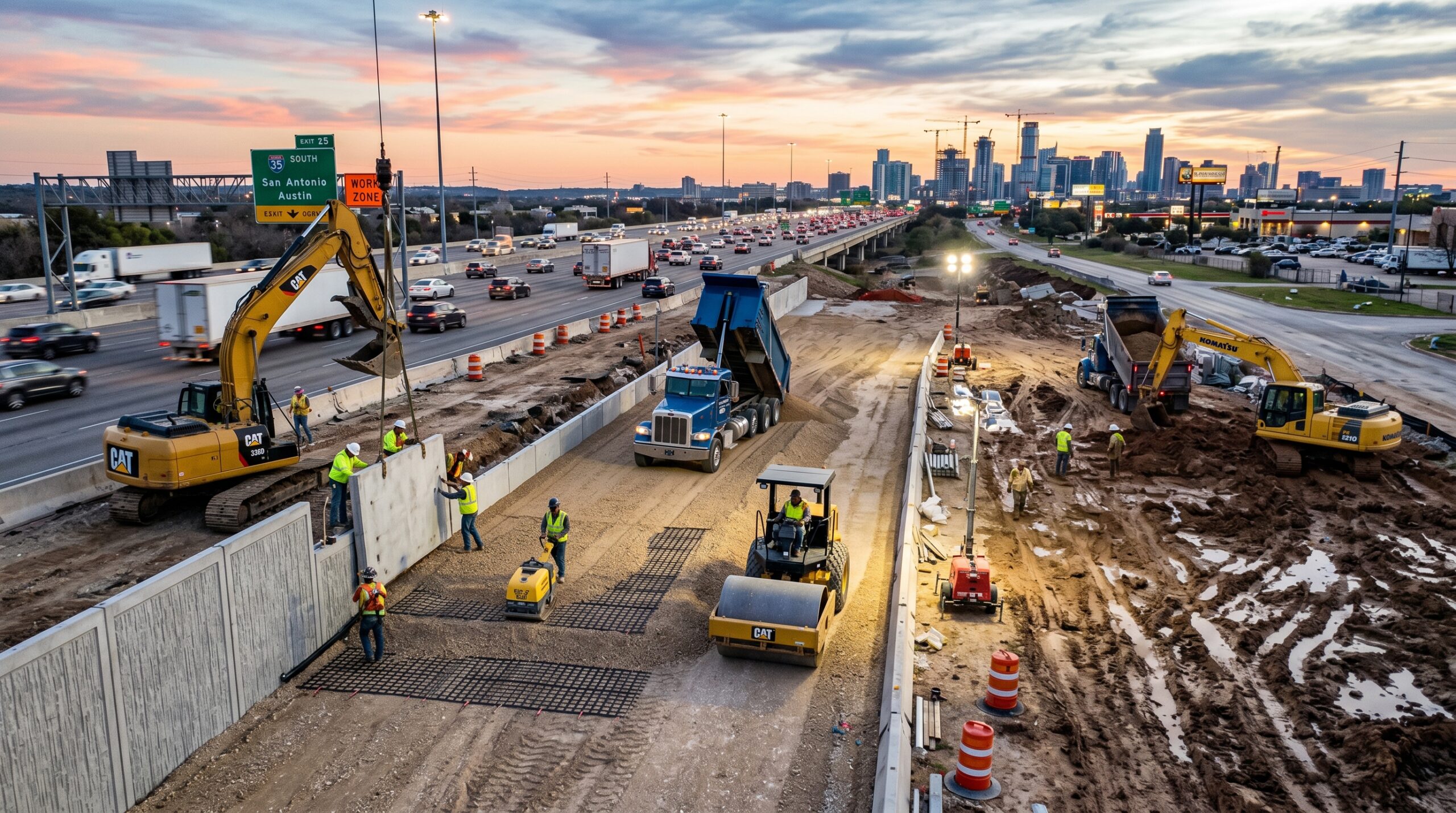
Projects along I-35, SH 130, and major Dallas–Fort Worth expansion corridors frequently rely on reinforced earth systems because they maximize usable land while maintaining slope stability.
Drainage Is a Major Factor
Water creates problems on almost every construction site eventually. Traditional clay-heavy fill materials often hold moisture, increasing hydrostatic pressure behind walls and reinforced structures.
MSE backfill allows water to move through the system more effectively. Better drainage reduces pressure buildup and lowers the chances of long-term structural movement.
This is especially important in Gulf Coast regions where heavy rainfall and flood-prone conditions regularly affect commercial construction.
The Federal Highway Administration highlights proper engineered fill selection as a critical component of reinforced soil performance in transportation infrastructure projects.
The Real Debate Usually Comes Down to Cost and Logistics
Most contractors are not debating whether engineered fill works better. They already know it does in many structural applications. The real challenge is balancing performance against cost, hauling distance, and project schedules.
Hauling Distance Can Change Everything
Texas projects cover massive geographic areas. A contractor in San Antonio may find suitable traditional fill only ten miles away while engineered aggregate sources sit much farther out. At that point, trucking becomes a serious financial consideration.
Fuel costs, truck availability, traffic delays, and delivery timing all affect sourcing decisions. Sometimes the cheaper material on paper becomes more expensive once transportation is factored in.
That is why many contractors evaluate:
- material availability
- hauling distance
- compaction requirements
- drainage performance
- inspection risk
rather than focusing only on price per ton.
Project Delays Are Expensive Too
A project running behind schedule can lose money quickly. If inspectors reject fill material or compaction repeatedly fails testing, operations slow down immediately.
Large commercial projects around Houston’s Energy Corridor or Dallas industrial developments cannot afford repeated material problems. Delays affect subcontractors, equipment scheduling, and concrete operations downstream.
This is one reason more contractors are moving toward engineered fill solutions despite higher upfront material pricing.
How Contractors Source Better Fill Materials Today
The way contractors source material has changed significantly over the last few years. Previously, many sourcing decisions depended on existing phone contacts or local hauling relationships.
Now, contractors increasingly want faster visibility into available materials and supplier options.
Digital Marketplaces Are Changing Material Procurement
Platforms like BorrowPit help contractors connect with suppliers, brokers, and available fill sources in one place. Some companies use direct brokering support when they need help locating material quickly. Others advertise material through marketplace listings and communicate directly with buyers or sellers. That flexibility has become valuable for contractors managing multiple projects across Texas.
BorrowPit explains more about its sourcing model on the About page.
The Goal Is Reducing Friction
Construction sourcing is no longer just about buying dirt. Contractors now focus heavily on:
- reducing delays
- shortening haul routes
- improving delivery coordination
- finding consistent suppliers
- minimizing rejected loads
This shift is pushing the industry toward smarter procurement strategies rather than reactive sourcing decisions.
For sourcing coordination and supplier communication, contractors can also use BorrowPit’s contact page.
Traditional Fill Still Has a Place in Texas Construction
Even with the growth of engineered systems, traditional fill materials are not disappearing. They still make sense for many non-structural applications where drainage and reinforcement are less critical.
Basic grading work, temporary pads, rural developments, and low-risk site preparation often continue using locally available material successfully.
The difference today is that contractors are becoming more selective about where traditional fill gets used. On retaining walls, infrastructure corridors, and high-value commercial developments, the tolerance for inconsistent material has dropped significantly.
That shift explains why discussions around MSE backfill vs traditional fill materials continue growing across Texas construction markets.
Final Thoughts
The choice between MSE backfill and traditional fill materials affects more than initial material costs. It impacts drainage performance, long-term stability, inspection outcomes, hauling logistics, and future maintenance risk.
For Texas contractors working on retaining walls, roadway systems, and commercial developments, engineered fill solutions are becoming increasingly common because the cost of failure is much higher than the cost of proper sourcing.
Teams looking to improve sourcing visibility can search listings near you to explore available fill materials or list your material to connect with contractors and suppliers across Texas.
FAQs
What is MSE backfill used for?
MSE backfill is commonly used behind retaining walls, reinforced slopes, bridge approaches, and infrastructure embankments.
Why is engineered fill better than traditional fill?
Engineered fill offers more consistent compaction, improved drainage, and better long-term structural performance.
Can traditional fill still be used on construction projects?
Yes. Traditional fill is still widely used for basic grading and non-structural applications.
Why does drainage matter behind retaining walls?
Poor drainage creates pressure buildup that can weaken retaining systems over time.
How do contractors source engineered backfill in Texas?
Many contractors use suppliers, brokers, and construction material marketplaces to locate engineered fill materials efficiently.