Local vs regional material sourcing in Texas is a decision most contractors face sooner or later. Whether you’re building a subdivision outside Dallas, expanding a warehouse near Houston, or working on highway improvements around San Antonio, where your materials come from can have a major impact on costs, scheduling, and overall project performance.
For years, many contractors focused primarily on material pricing. Today, transportation costs, supply chain disruptions, and project timelines are changing that mindset. A supplier with the lowest unit price may not always be the best option if materials must travel hundreds of miles across Texas.
The reality is that both local and regional sourcing strategies have advantages. The right approach often depends on the project type, material requirements, and logistics involved. Understanding the differences can help contractors make smarter sourcing decisions and improve profitability.
Understanding Local vs Regional Material Sourcing in Texas
When discussing local vs regional material sourcing in Texas, the distinction usually comes down to distance.
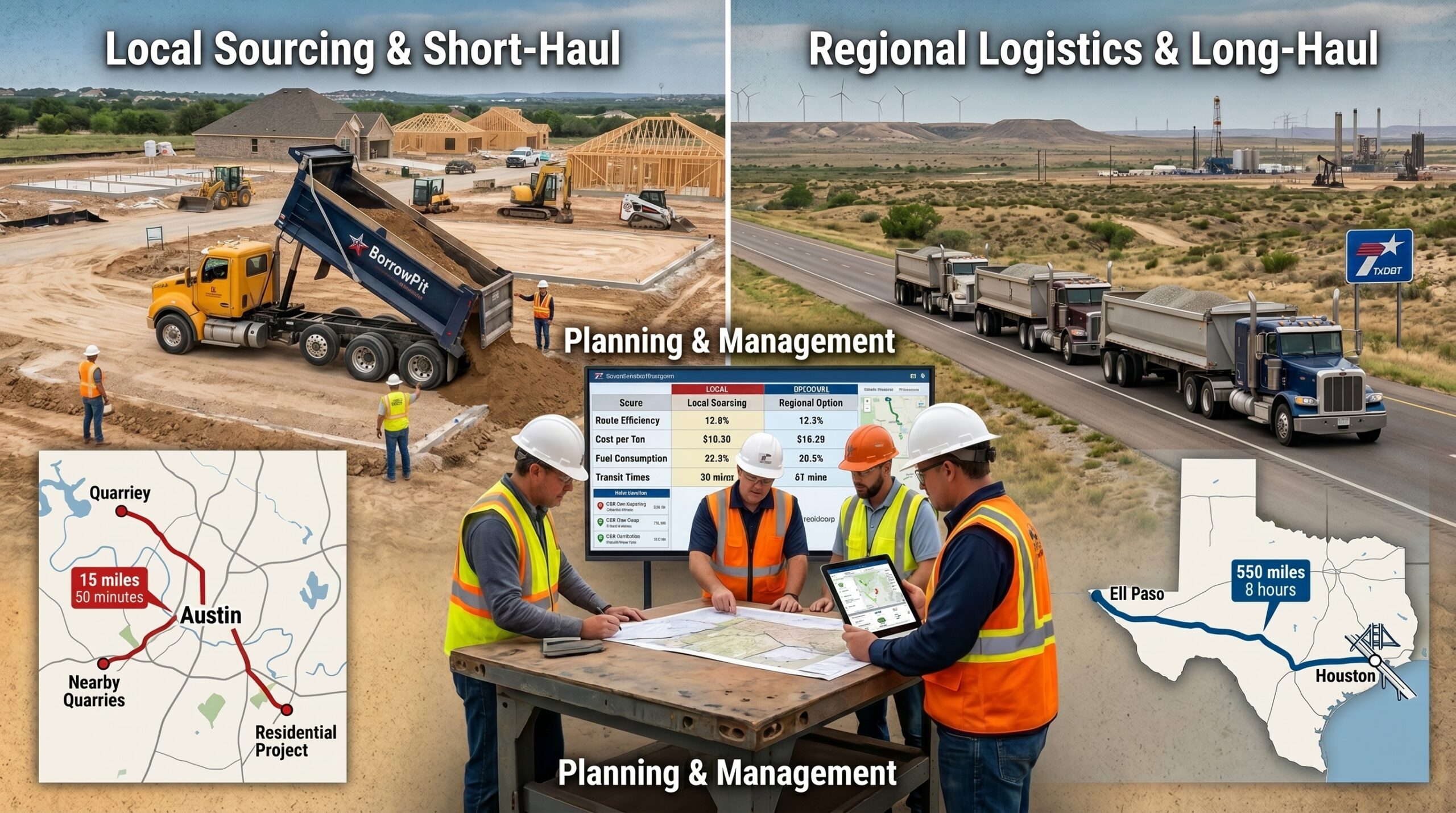
Local sourcing generally means obtaining materials from suppliers located near the project site, while regional sourcing involves materials transported from broader areas across Texas or neighboring states. Neither strategy is automatically better than the other.
The most successful contractors evaluate both options based on project goals rather than relying on a single sourcing model.
What Counts as Local Material Sourcing?
A contractor building in Austin might consider suppliers in Round Rock, Georgetown, Pflugerville, or Buda to be local sources. The primary benefit is proximity.
Materials sourced locally often provide:
- Shorter haul distances
- Faster deliveries
- Reduced fuel expenses
- Better schedule flexibility
- Easier supplier communication
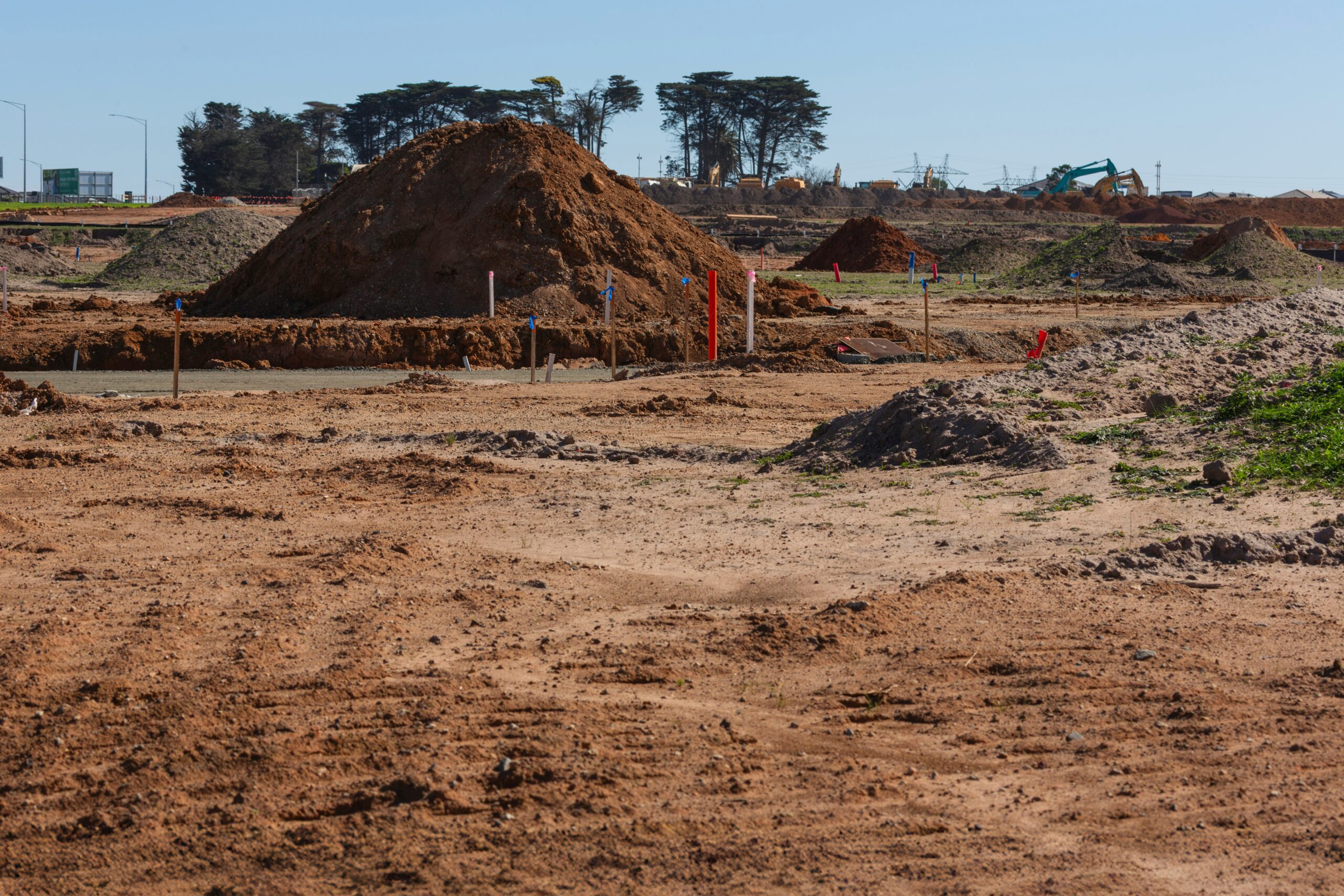
For projects requiring large quantities of fill dirt, aggregates, or site development materials, transportation savings alone can become significant.
What Is Regional Material Sourcing?
Regional sourcing expands the search area. Instead of focusing only on nearby suppliers, contractors may source materials from larger operations located elsewhere in Texas.
For example:
- A Dallas project may source aggregates from Central Texas.
- A Houston project may obtain specialty fill materials from another region.
- A San Antonio contractor may purchase engineered materials from suppliers serving multiple markets.
Regional sourcing can provide access to materials that may not be readily available locally.
When Local Material Suppliers Texas Contractors Use Make the Most Sense
There are situations where local sourcing offers clear advantages. This is particularly true for earthwork-heavy projects where hauling costs play a major role.
Transportation Often Costs More Than Expected
Many contractors underestimate how quickly hauling expenses add up. Fuel, driver availability, truck maintenance, and traffic delays all contribute to total project costs.
A project along Interstate 35 in Austin may save thousands simply by sourcing fill dirt from a nearby excavation project rather than transporting material from a distant supplier.
The Texas A&M continues emphasizing efficient transportation planning as a critical component of successful construction operations across the state.
This is one reason local vs regional material sourcing in Texas often comes down to logistics rather than material pricing alone.
Local Suppliers Can Improve Schedule Flexibility
Construction schedules change constantly. Weather delays, permitting issues, and utility conflicts can shift timelines with little warning.
Local suppliers often provide:
- Faster response times
- More flexible delivery schedules
- Better communication
- Easier problem resolution
For contractors managing multiple active projects, that flexibility can be extremely valuable.
Why Regional Material Suppliers Texas Contractors Still Rely On
While local sourcing offers many advantages, regional suppliers remain important for several reasons. Not every material is available in every market.
Some Materials Require Broader Supply Networks
Certain engineered fills, specialty aggregates, and large-volume products may only be available through regional operations.
A contractor building a retaining wall system or large infrastructure project may require materials that local suppliers simply do not stock. In those situations, regional sourcing becomes necessary.
The Federal Highway Administration notes that transportation infrastructure projects often depend on specialized construction materials sourced through broader supply networks.
Regional Suppliers May Offer Greater Volume Capacity
Large-scale projects often require consistent access to substantial quantities of material.
Regional suppliers frequently operate larger facilities capable of supporting:
- Highway projects
- Industrial developments
- Distribution centers
- Large residential communities
When material demand exceeds local availability, regional sourcing can help maintain production schedules.
The Best Contractors Combine Both Strategies
One of the biggest misconceptions surrounding local vs regional material sourcing in Texas is the idea that contractors must choose one approach exclusively. Many successful projects use both.
Local Materials for Everyday Needs
Materials such as:
- Fill dirt
- Common aggregates
- General site development materials
This helps reduce hauling costs and improve project logistics.
Regional Sources for Specialized Requirements
At the same time, contractors may rely on regional suppliers for:
- Engineered fill
- Specialty aggregates
- Unique project specifications
- High-volume supply needs
The goal is not to commit to one sourcing method. The goal is to balance cost, availability, quality, and transportation efficiency.
How Construction Marketplaces Are Changing Material Sourcing Texas
Technology is giving contractors more visibility into available materials than ever before. Instead of relying solely on established supplier networks, contractors increasingly explore marketplace-based sourcing options.
Platforms like BorrowPit help contractors identify material opportunities across multiple markets while supporting both local and regional sourcing strategies.
Some users leverage BorrowPit’s brokering services when they need help locating materials or obtaining pricing. Others choose to advertise available material directly to potential buyers through marketplace listings.
Businesses interested in understanding the platform can learn more through BorrowPit’s About Us page.
Listings currently start at $249 per month, allowing suppliers, contractors, and property owners to connect directly with construction professionals searching for materials.
Greater Visibility Creates More Options
One advantage of modern sourcing platforms is flexibility.
Instead of being limited to a small supplier network, contractors can evaluate:
- Local opportunities
- Regional suppliers
- Available excavation materials
- Disposal sites
- Marketplace listings
This broader visibility helps improve procurement strategy and supply chain efficiency.
For questions regarding sourcing opportunities or marketplace participation, contractors can connect through BorrowPit’s Contact Us page.
What Works Best Depends on the Project
The answer to local vs regional material sourcing in Texas is rarely one-size-fits-all.
A residential development in Fort Worth may benefit heavily from local sourcing due to transportation costs. A large infrastructure project near Houston may require regional suppliers capable of meeting specialized material specifications.
The most effective sourcing strategy usually combines:
- Local supplier relationships
- Regional sourcing options
- Logistics planning
- Flexible procurement methods
Contractors who evaluate sourcing through both a cost and logistics lens are often better positioned to keep projects on schedule while controlling expenses.
Explore More Material Sourcing Opportunities
Every project has different material requirements. Some contractors focus on reducing haul distances through local sourcing, while others need access to broader supply networks. BorrowPit helps construction professionals discover available materials, advertise surplus inventory, and connect with sourcing opportunities across Texas and beyond.
FAQs
What is the difference between local and regional material sourcing?
Local sourcing focuses on nearby suppliers, while regional sourcing involves materials sourced from broader geographic areas across Texas or neighboring regions.
Does local sourcing always cost less?
Not always. While transportation costs may be lower, material pricing and availability can vary depending on market conditions.
When should contractors use regional suppliers?
Regional suppliers are often useful when projects require specialized materials, large volumes, or products not available locally.
Can contractors combine local and regional sourcing strategies?
Yes. Many successful projects use local suppliers for common materials and regional suppliers for specialty products.
How does BorrowPit support material sourcing?
BorrowPit helps connect buyers and sellers of construction materials through marketplace listings and brokering services, providing more sourcing options for contractors.