Dirt brokering helps manage excess fill dirt by solving one of the most common challenges in Texas construction: figuring out what to do with surplus material. On almost every excavation project, there is a chance that more dirt is removed than needed. At the same time, another project across town may be searching for thousands of cubic yards of fill dirt for grading, site preparation, or elevation work.
Without a system to connect those two projects, contractors often face unnecessary hauling expenses, disposal fees, and scheduling delays. This is why dirt brokering helps manage excess fill dirt more efficiently than traditional disposal methods. Instead of treating surplus dirt as waste, brokers help transform it into a usable resource.
Across growing Texas markets such as Houston, Dallas-Fort Worth, Austin, and San Antonio, dirt brokering is becoming an increasingly valuable tool for contractors, developers, and property owners looking to improve project economics while reducing material waste.
Why Dirt Brokering Helps Manage Excess Fill Dirt More Efficiently
Every major construction project creates material challenges. Some sites require large amounts of imported fill, while others generate excess material that must be removed.
Traditionally, contractors handled these situations separately. Dirt would be hauled away from one project and fresh material would be purchased for another. The result was additional trucking, higher costs, and unnecessary waste.
This is where dirt brokering helps manage excess fill dirt differently. Instead of viewing projects independently, brokering creates a connection between supply and demand.
The Growing Challenge of Excess Dirt in Texas
Texas continues to experience rapid growth across residential, commercial, and infrastructure sectors.
According to the Texas Demographic Center, the state’s population growth continues driving significant development activity throughout major metropolitan regions.
Every new subdivision, roadway expansion, industrial park, and commercial development generates earthmoving activity.
These projects often create:
- Surplus excavation material
- Site grading requirements
- Fill dirt shortages
- Disposal challenges
- Transportation logistics issues
As project volume increases, so does the need for efficient fill dirt management.
Turning Surplus Material Into a Resource
One contractor’s excess dirt can be another contractor’s solution. A project excavating for a new commercial development in Plano may generate thousands of cubic yards of clean fill dirt. Meanwhile, a residential development nearby may require that exact material for grading and elevation work.
Instead of hauling dirt to a disposal location, dirt brokers help connect both parties. This approach reduces waste while creating value from material that may otherwise be discarded.
How Dirt Brokering Helps Manage Excess Fill Dirt Through Better Connections
At its core, dirt brokering is about information. The biggest challenge isn’t usually finding dirt. It’s finding the right dirt, in the right quantity, at the right time.
This is where dirt brokering helps manage excess fill dirt more effectively than traditional sourcing methods.
Matching Buyers and Sellers Faster
Contractors often spend valuable time searching for:
- Fill dirt suppliers
- Disposal sites
- Buyers for excess material
- Available hauling options
Dirt brokers simplify this process by helping identify projects that complement each other.
For example:
A highway expansion near Interstate 35 may require large quantities of imported fill. At the same time, a nearby commercial excavation project may have excess material available.
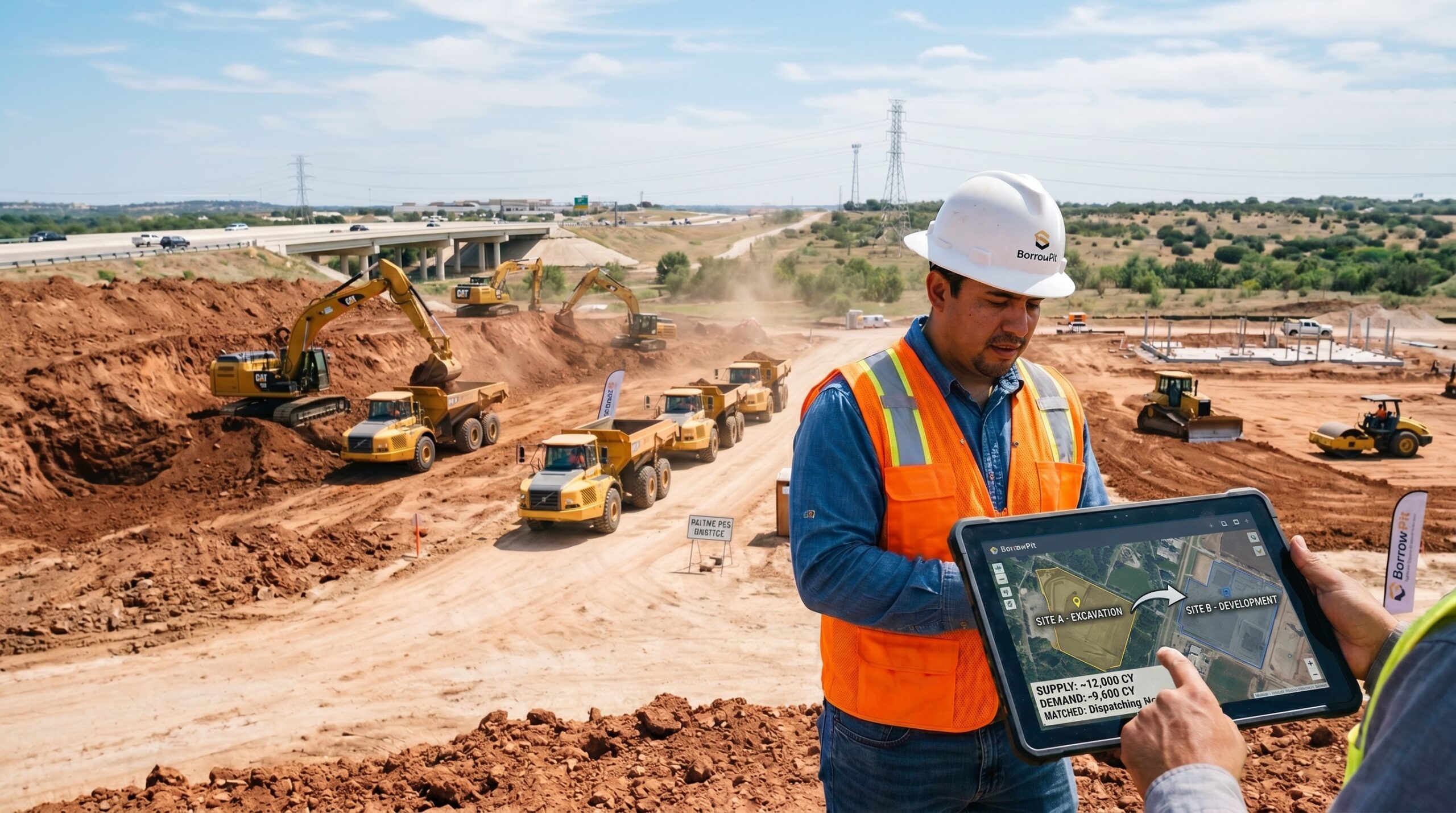
Rather than both parties operating independently, a broker can help facilitate a connection that benefits everyone involved. This type of supply and demand matching improves construction logistics while reducing project costs.
Reducing Transportation and Disposal Costs
Transportation frequently represents one of the largest expenses associated with fill dirt management. The Federal Highway Administration recognizes transportation efficiency as an important factor in construction productivity and environmental performance.
When dirt must travel long distances, costs increase through:
- Fuel consumption
- Equipment wear
- Driver labor
- Trucking availability constraints
Because dirt brokering helps manage excess fill dirt locally whenever possible, hauling distances can often be reduced significantly. Shorter haul routes typically result in faster deliveries and lower transportation expenses.
Texas Construction Growth Is Increasing Demand for Fill Dirt
Demand for fill dirt remains strong throughout Texas due to ongoing development activity. The need for effective dirt brokering continues growing as projects become larger and more complex.
Dallas-Fort Worth Development Projects
The Dallas-Fort Worth metroplex continues adding residential communities, commercial developments, and industrial facilities. Cities such as Frisco, Prosper, McKinney, and Fort Worth frequently require substantial quantities of fill dirt for site preparation and grading.
At the same time, excavation projects across the region generate excess material that can often be reused elsewhere. This creates ideal conditions for dirt brokering.
Houston Elevation and Flood Control Needs
Houston presents unique challenges due to elevation requirements and floodplain considerations. Many projects require imported fill to meet site development standards and drainage requirements.
The City of Houston continues investing in infrastructure and resilience improvements throughout the region. Because fill demand remains high, connecting available material with active projects can create significant savings opportunities.
Austin and San Antonio Expansion
Central Texas continues experiencing rapid population growth. Projects along SH 130, Interstate 35, and expanding suburban corridors frequently involve substantial earthmoving operations.
Contractors working in Austin and San Antonio often benefit from sourcing material locally whenever possible, making dirt brokering an attractive solution for managing surplus dirt.
Two Ways Contractors Use BorrowPit
As the need for efficient fill dirt management grows, contractors increasingly seek better ways to connect supply and demand. BorrowPit supports this process through two primary options. Some users choose the brokering route.
In these situations, contractors contact BorrowPit regarding available material or project needs. BorrowPit then helps identify potential opportunities and connections within the marketplace. Others prefer direct advertising.
Companies can advertise available material, disposal capacity, or sourcing needs directly on the platform. Current listing plans start at $249 per month, allowing buyers and sellers to connect independently. Businesses interested in learning more about the platform can visit the About Us page.
Questions regarding listings, brokering opportunities, or project requirements can be submitted through the Contact Us page.
Both approaches support the same objective: helping construction professionals move material more efficiently.
Why Dirt Brokering Is Becoming a Standard Industry Practice
Construction projects are becoming more data-driven and logistics-focused.
Contractors are paying closer attention to:
- Transportation costs
- Material utilization
- Project efficiency
- Supply chain visibility
- Environmental impact
Because dirt brokering helps manage excess fill dirt while reducing waste and improving coordination, it aligns well with these priorities.
What was once handled through phone calls and local contacts is increasingly being managed through organized marketplaces and professional brokering services.
As Texas development continues expanding, the ability to connect surplus material with active demand will likely become even more important.
For contractors looking to improve material visibility, identify sourcing opportunities, or promote available inventory, participating in a construction marketplace can provide access to a broader network of buyers, sellers, and project stakeholders.
FAQs
What does a dirt broker do?
A dirt broker helps connect parties that have excess fill dirt with contractors or projects that need material, improving efficiency and reducing waste.
How does dirt brokering reduce costs?
Dirt brokering can lower disposal expenses, reduce hauling distances, and help contractors locate material closer to project sites.
Can contractors sell excess fill dirt in Texas?
Yes. Many contractors use dirt brokers or online marketplaces to connect with buyers interested in clean fill dirt and excavation materials.
Is dirt brokering only useful for large projects?
No. Projects of various sizes can benefit from improved material coordination and sourcing opportunities.
Does BorrowPit offer both brokering and advertising services?
Yes. Contractors can contact BorrowPit regarding brokering opportunities or advertise materials directly through marketplace listings starting at $249 per month.