Civil contractors, excavator operators, and site developers across Texas regularly handle various dirt classifications during mass grading and earthwork operations. While high-spec building pads require strictly engineered select fill, many general site prep jobs call for a more economical material. Understanding how sandy clay fill in construction functions allows project managers to select the right material for non-structural applications without overspending on expensive import dirt.
Sandy clay strikes a practical balance between the workability of coarse sand and the binding strength of clay. When properly placed, it compacts efficiently and handles moisture better than pure clay soils. However, knowing where sandy clay fill in construction fits best and where its engineering limits lie is necessary to avoid site rejections on strict public works projects.
Defining Sandy Clay: SC Classification Under USCS and ASTM D2487
To identify sandy clay soil, geotechnical engineers turn to standard soil classification testing under ASTM D2487. Under the Unified Soil Classification System (USCS), sandy clay is designated as an SC soil classification. The S indicates a primary sand fraction, while C confirms the presence of clay binder.
For a soil to receive an SC classification, sand particles (coarse to fine) must make up 50 percent or more of the coarse fraction, while fine-grained clay particles account for 12 to 50 percent of the total soil mass.
Soil Composition and Particle Distribution
In field applications, SC soil displays distinct physical properties:
- Sand Granules: Coarse and medium sand grains provide a gritty feel, increasing friction between particles and enhancing shear strength when compacted.
- Clay Binder: Fine clay particles fill internal voids between sand grains, providing cohesive binding that holds the soil together under light traffic.
- Plasticity Index (PI): Typically falls between 7 and 20, depending on the exact ratio of clay to sand in the borrow pit deposit.
This balanced composition makes SC soil easier to place and compact than heavy plastic clays, while avoiding the wash-out tendencies of clean sand.
How Sandy Clay Differs from Lean Clay and Select Fill
Earthwork contractors often compare SC soil to other common dirt categories. Recognizing how sandy clay material differs from lean clay and certified select fill ensures appropriate placement on site.
Sandy Clay vs. Lean Clay (CL Soil)
Lean clay (CL soil) contains a much higher percentage of fine clay and silt particles with less sand. While lean clay forms an effective impermeable seal for utility trench caps or pond liners, it retains moisture longer and dries slowly after rain. In contrast, sandy clay drains excess moisture faster and allows machinery to resume work sooner after heavy weather.
Sandy Clay vs. Engineer-Certified Select Fill
Select fill is a tightly specified soil mixture engineered for building foundations, typically requiring a PI between 7 and 20 with specific sieve gradations. While some natural SC soils meet these exact parameters, un-tested pit-run sandy clay may contain variable sand ratios or organic pockets. Therefore, un-verified SC soil cannot automatically substitute for certified select fill under structural slabs.
Common Applications for Sandy Clay Soil in Earthwork
Contractors rely on sandy clay fill in construction for cost-effective earthwork where strict structural load requirements do not apply.
General Site Grading and Lot Levelling
For commercial site development in Dallas, Houston, and San Antonio, contractors use SC soil to bring low areas up to subgrade elevation across parking lots, industrial yards, and wide open acreage. The material spreads smoothly and holds its shape under heavy haul trucks.
Subgrade Lawn Prep and Site Contouring
Grounds contractors and residential developers prefer SC soil as subgrade fill beneath topsoil. The sand content prevents severe compaction crusting, while the clay fraction retains enough moisture to support grass root growth once topsoil is placed above.
Backfilling Non-Structural Yards and Berms
When building noise abatement berms, filling low-lying site pockets, or grading perimeter drainage slopes, using sandy clay fill in construction provides an affordable, stable earthwork option.
Limitations on Spec-Driven Municipal Projects
Despite its versatility, using sandy clay fill in construction has limitations on public works projects. Highways managed by the Texas Department of Transportation and municipal street departments enforce strict embankment specifications under Item 132.
If an SC deposit contains variable clay pockets or excessive silt fines, field technicians running nuclear density gauge tests may find inconsistent Proctor results. On spec-driven jobs, engineers require lab test reports for every 1,000 cubic yards to confirm that plasticity and moisture-density parameters match project plans.
Sourcing Tested Soil and Managing Site Dirt
When managing large site prep jobs, earthwork superintendents must balance material costs with project specifications. Importing certified select fill for non-structural areas wastes project budget, while using raw site cut without lab testing risks compaction failure.
Testing pit deposits early allows contractors to match soil types to specific site zones. When extra fill is needed or excess site cut must be moved, project managers can browse local options through a dedicated construction material marketplace Texas platform like BorrowPit. Connecting directly with regional pits lets contractors search listings near them for tested SC soil or list their excess material to connect with regional buyers needing bulk grading dirt.
Conclusion
Understanding where sandy clay fill in construction performs best allows earthwork teams to manage site budgets effectively. While SC soil lacks the certified guarantees required for structural building pads, its workability, cohesion, and moisture resistance make it an excellent choice for general site grading, lot levelling, and non-structural embankments. Utilizing digital material platforms like BorrowPit helps contractors source tested SC soil or list their excess site dirt, keeping earthwork projects moving efficiently across Texas.
Frequently Asked Questions
What is the USCS classification for sandy clay fill?
Sandy clay is classified as SC under the Unified Soil Classification System (USCS) per ASTM D2487, indicating a mixture dominated by sand with sufficient clay binder to display cohesion.
Can sandy clay fill be used under concrete building pads?
Un-tested sandy clay should not be placed directly under structural building slabs unless lab testing confirms that the specific deposit meets engineer specifications for liquid limit, plasticity index, and gradation.
Is sandy clay better than pure sand for fill?
Yes, for general grading. Pure sand lacks cohesion and can shift or wash out under water flow, whereas the clay in sandy clay binds the particles together for better surface stability.
How does sand content affect soil compaction?
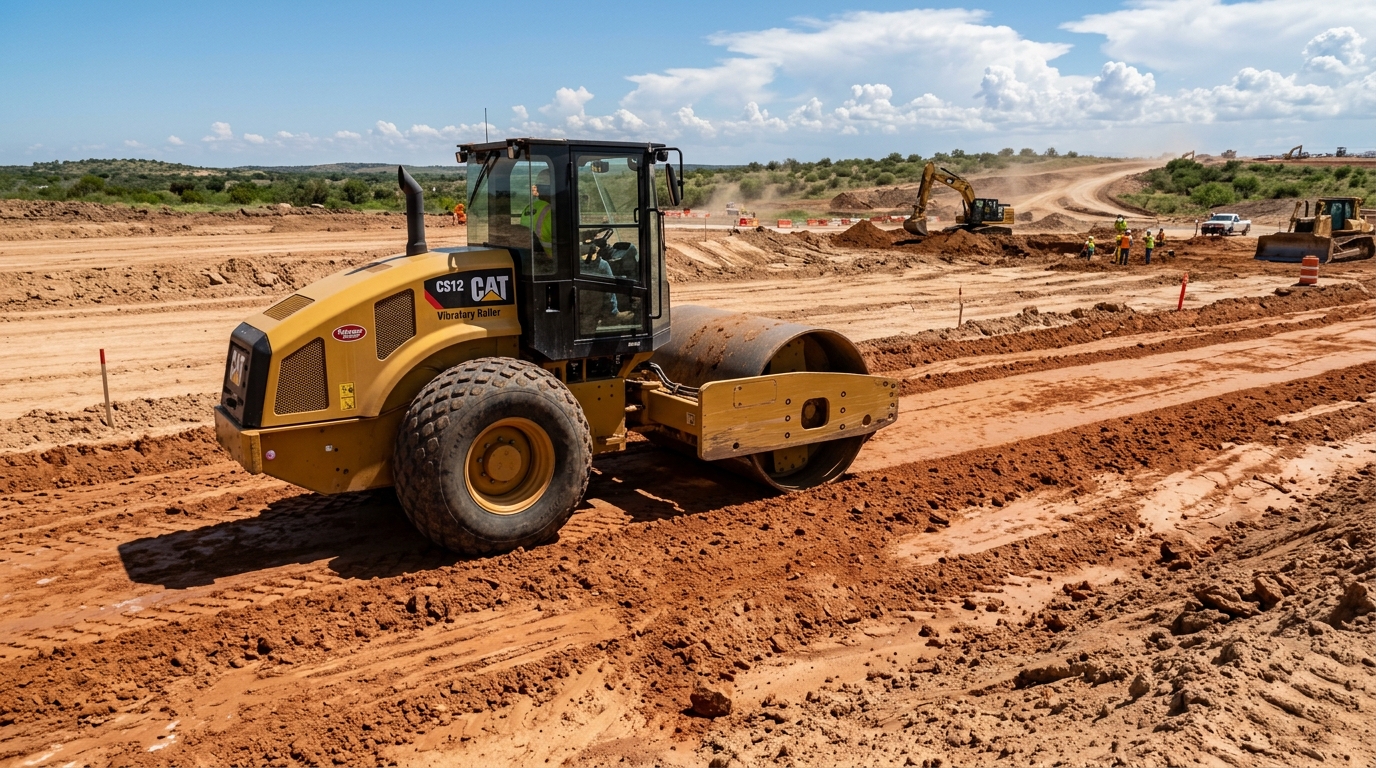
Higher sand content increases internal soil friction and speeds up drainage, making the material easier to compact with vibratory smooth-drum rollers compared to sticky clay soils.
Where can contractors buy bulk sandy clay fill in Texas?
Contractors can locate verified SC soil suppliers by searching material listings on specialized digital platforms like BorrowPit.