Civil contractors, foundation crews, and utility superintendents across Texas routinely rely on specialized sand gradations during site preparation. When pouring concrete slabs or laying utility lines, placing the proper bedding material prevents point-load stress and concrete moisture loss. Understanding how cushion sand in Texas construction performs ensures foundation stability across commercial and residential builds.
Cushion sand is a fine-grained, un-washed sand that creates a smooth, level sub-base beneath concrete slabs and utility pipes. While it lacks the structural load capacity of select fill, utilizing cushion sand in Texas construction projects protects moisture barrier membranes from puncture and allows contractors to achieve precise subgrade elevation.
Defining Cushion Sand and Its Role in Site Preparation
Geotechnical engineers classify cushion sand as a fine aggregate under Unified Soil Classification System (USCS) per ASTM D2487 standards, typically falling into the SP (poorly graded sand) or SM (sandy silt) categories. It contains a high percentage of fine sand grains with a small fraction of silt or clay binder.
The primary purpose of cushion sand in Texas construction is to act as a workable leveling cushion rather than a high-strength structural base.
Role Under Concrete Slabs and Vapor Barriers
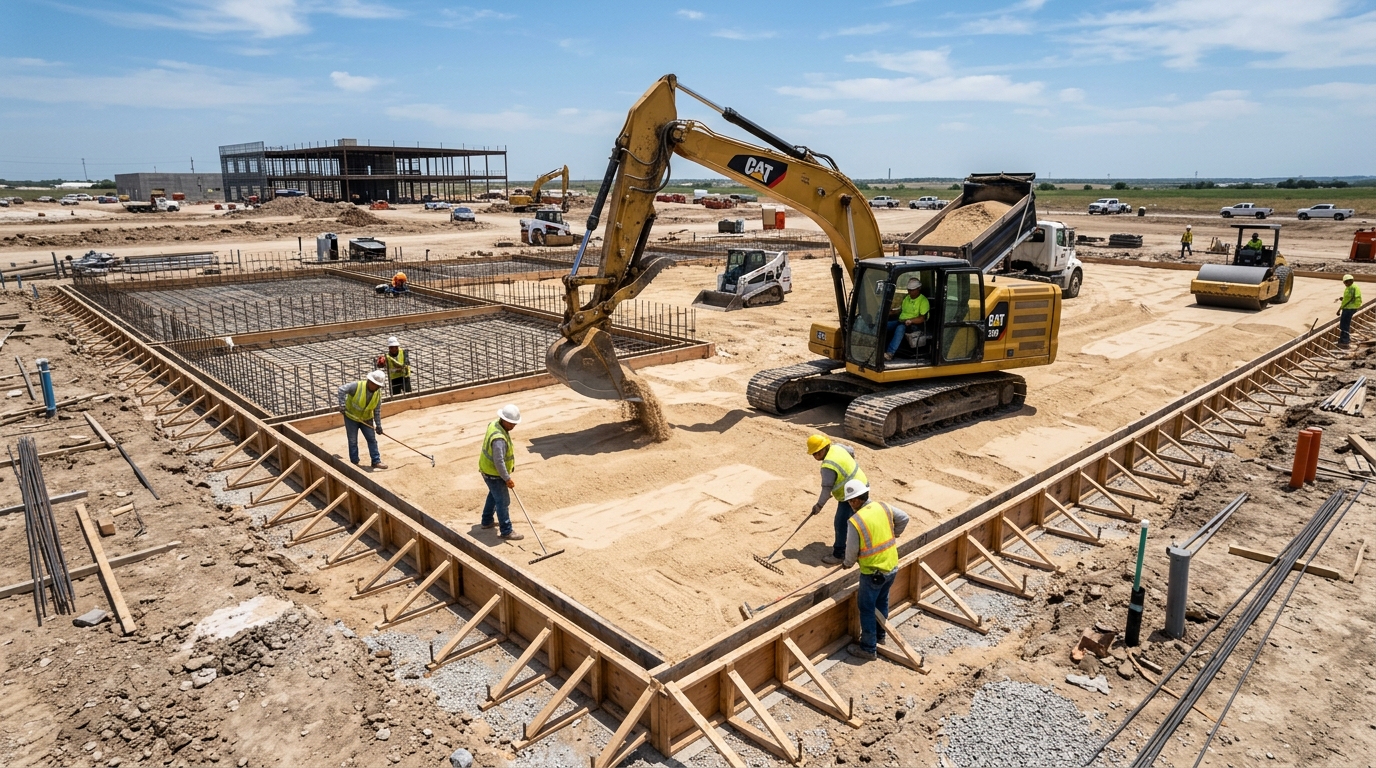
Before pouring residential foundations or commercial slab-on-grade floors in Dallas, crews place a 2-inch to 4-inch layer of cushion sand over compacted fill. This sand layer fills micro-gaps in the subgrade, creating a uniform, flat surface. Crucially, it cushions plastic vapor barrier poly-sheeting, preventing sharp crushed rock or clay clods from tearing the membrane during rebar placement.
Utility Pipe Bedding and Trench Capping
Placing utilities requires protecting PVC, copper, and electrical conduit from rigid rock edges. Using cushion sand in Texas construction utility trenches surrounds pipes with a compressible, non-corrosive cushion that distributes earth pressure evenly.
How Cushion Sand Differs from Select Fill and Mason Sand
Earthwork superintendents must distinguish cushion sand from other site aggregates to avoid placement errors.
Cushion Sand vs. Select Fill
Select fill is an engineered clay-sand mix with a controlled Plasticity Index (PI) between 7 and 20, designed for structural compaction under building pads. Cushion sand has little to no plasticity and cannot serve as structural fill under heavy building footings.
Cushion Sand vs. Mason Sand
Mason sand is thoroughly washed and screened to remove all silt and clay, creating uniform fine grains for mortar mixing. Cushion sand is un-washed pit sand containing minor silt fines, making it significantly less expensive for bulk earthwork.
Where Cushion Sand Is Sourced Across Texas Markets
Texas river basins provide abundant natural sand deposits:
- DFW Metroplex: Sourced extensively along the Trinity River basin and alluvial pits in Wise, Denton, and Ellis counties.
- Houston and Gulf Coast: Mined from San Jacinto and Brazos river deposits, supplying low-cost bedding material for regional utility contractors.
- San Antonio and Central Texas: Excavated from alluvial pits along the Guadalupe and San Antonio river valleys.
Typical Pricing and Project Applications
Because cushion sand requires minimal processing compared to washed aggregates, bulk prices range from 12 to 22 dollars per ton at the pit. Contractors specify cushion sand in Texas construction for plumbing trench backfill, flatwork sub-bedding, and electrical conduit wrapping.
Sourcing Cushion Sand and Managing Material Logistics
Sourcing bulk sand for fast-moving jobs requires coordinating truck logistics. Project managers looking to source tested bedding material can browse regional pits using a dedicated construction material marketplace Texas platform like BorrowPit. Using digital marketplaces allows contractors to BorrowPit to search listings near them for low-cost cushion sand or list their excess material to connect directly with regional buyers.
Conclusion
Utilizing cushion sand in Texas construction provides a reliable, cost-effective solution for slab sub-bedding and utility pipe protection. While it cannot replace structural select fill, its workability and protective qualities make it an essential material for foundation crews. Connecting with verified suppliers through BorrowPit ensures projects receive steady material delivery to keep job sites on schedule.
Frequently Asked Questions
Can cushion sand be used under slab-on-grade foundations?
Yes, cushion sand is placed as a thin leveling cushion (typically 2 to 4 inches) over compacted structural fill to protect vapor barriers and level the sub-base before concrete placement.
Is cushion sand washed?
No, cushion sand is un-washed pit sand containing small amounts of silt, which keeps production costs low compared to washed mason sand.
How does cushion sand protect utility pipes?
Its fine particle size creates a uniform cushion around PVC and conduit, preventing sharp rocks from cracking pipes during backfill compaction.
What is the typical weight per cubic yard of cushion sand?
Cushion sand weighs approximately 2,400 to 2,700 pounds per cubic yard (1.2 to 1.35 tons), depending on moisture content.
Where can contractors buy bulk cushion sand in Texas?
Contractors can locate verified sand suppliers by browsing bulk listings on specialized digital platforms like BorrowPit.