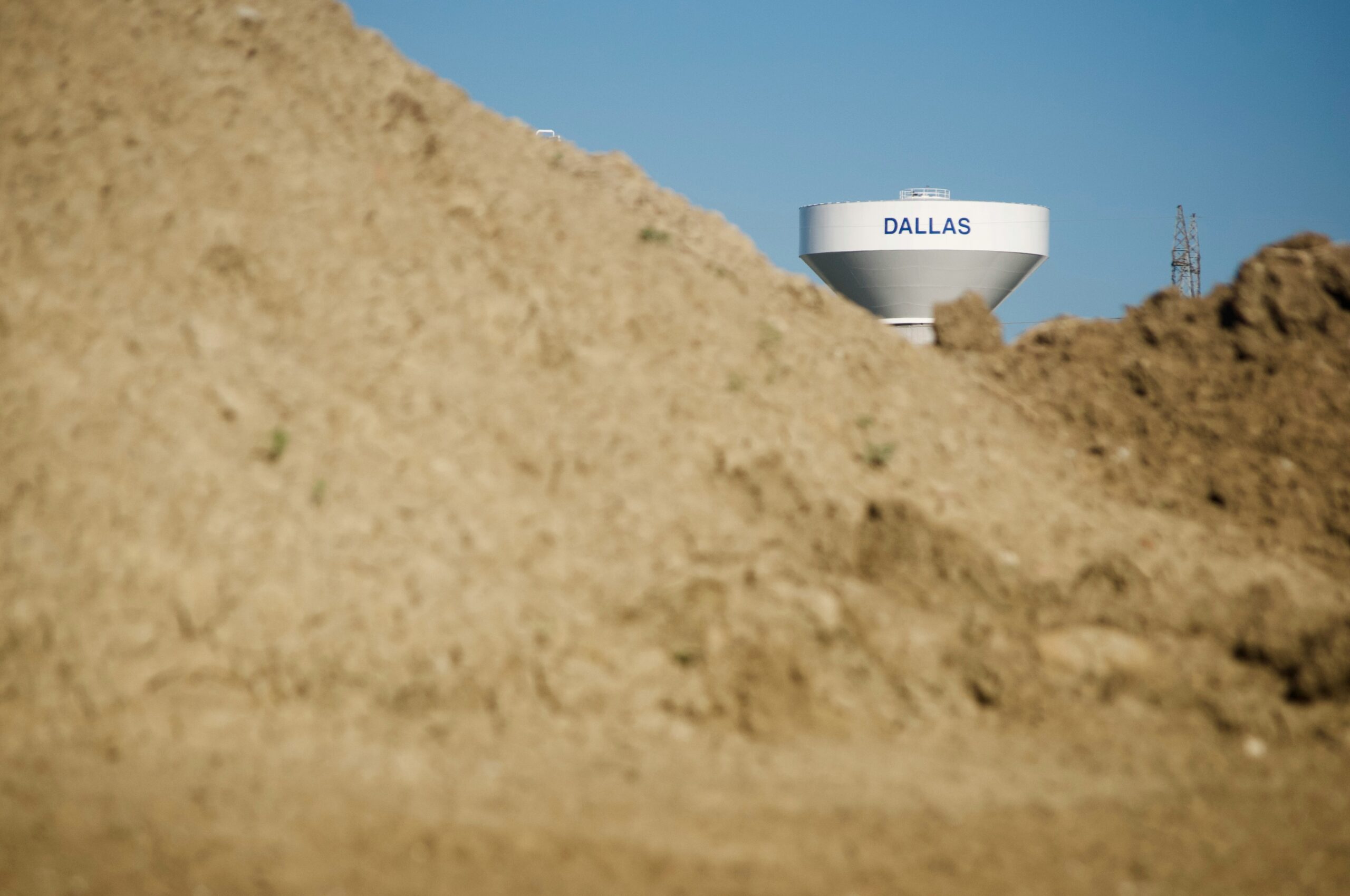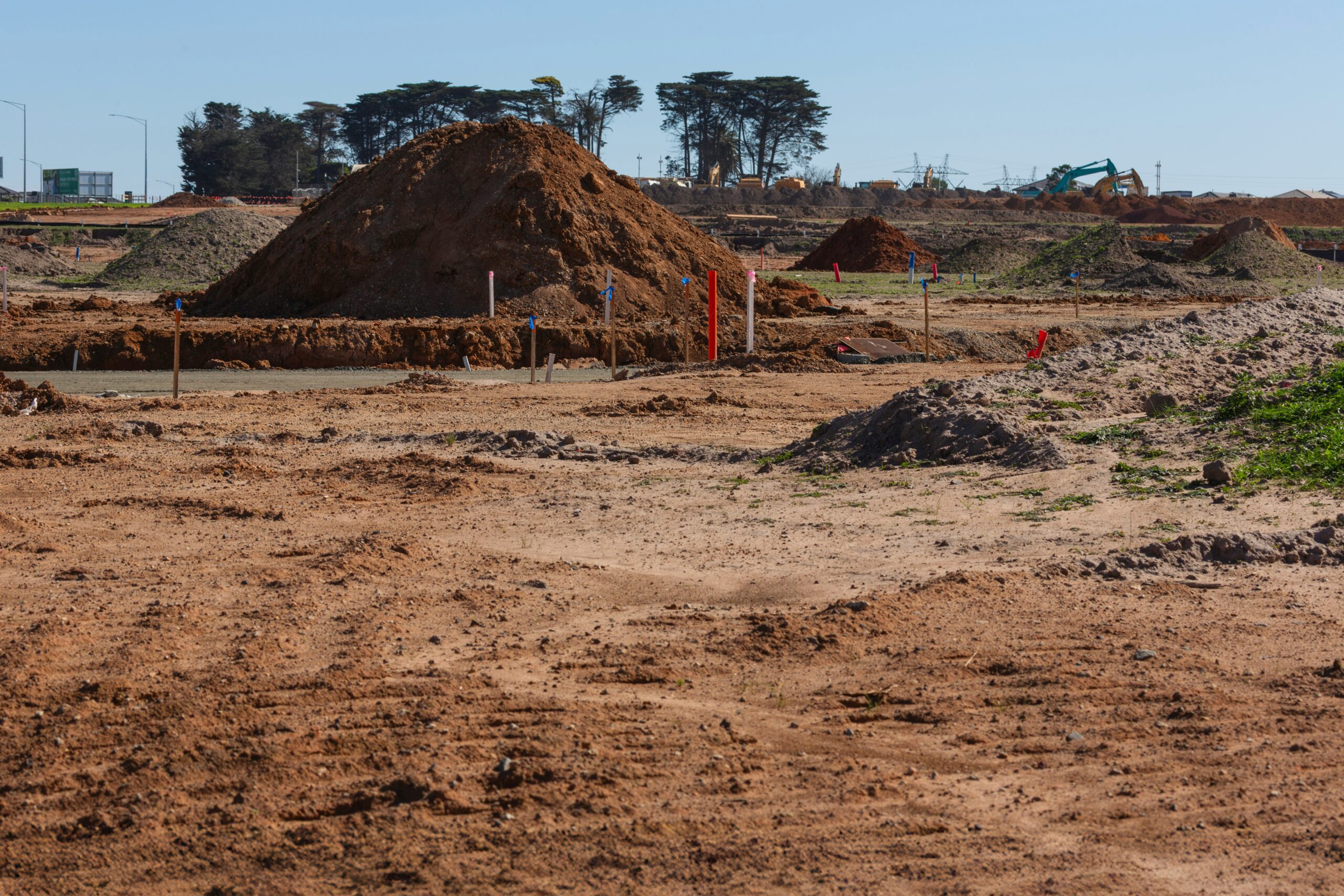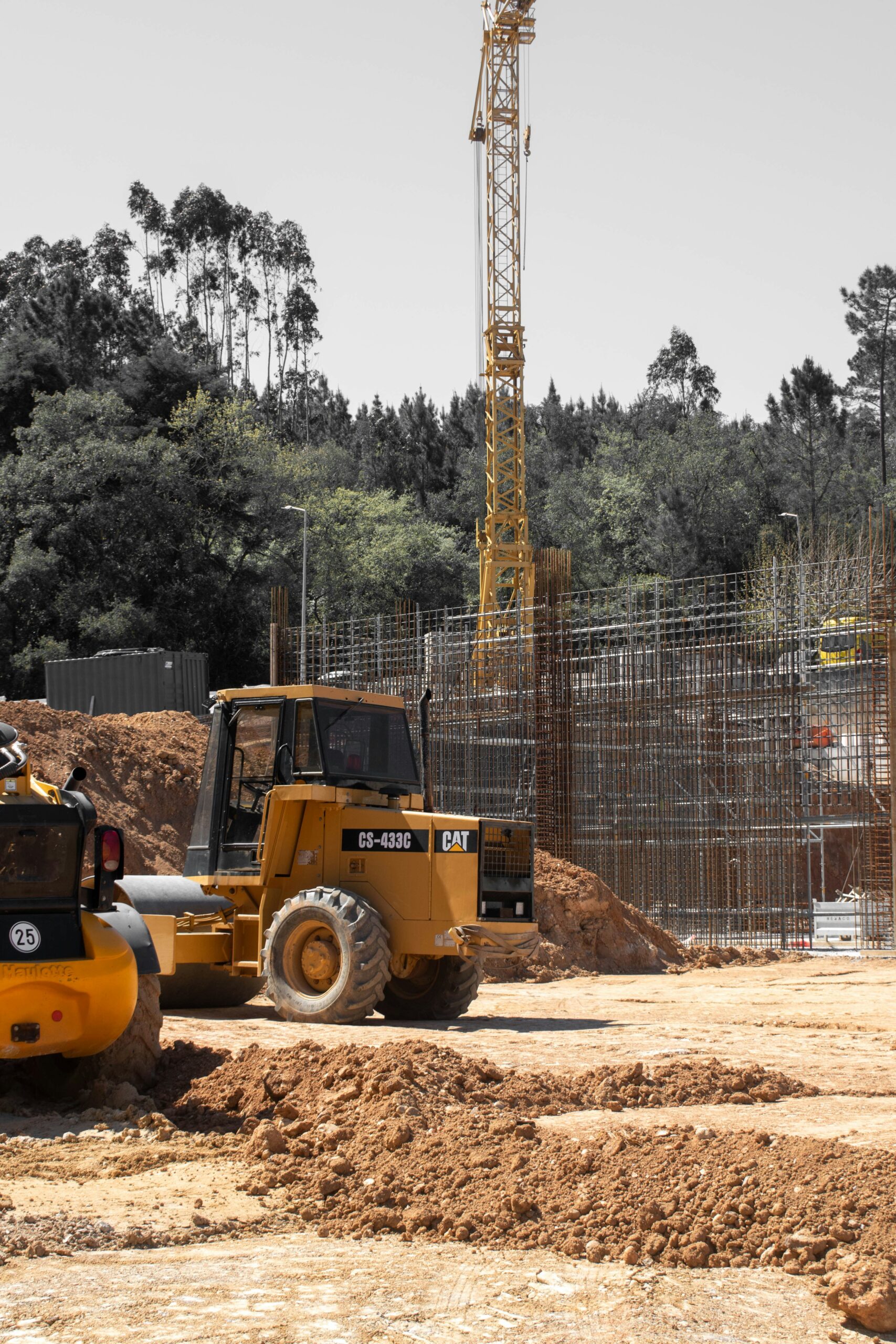
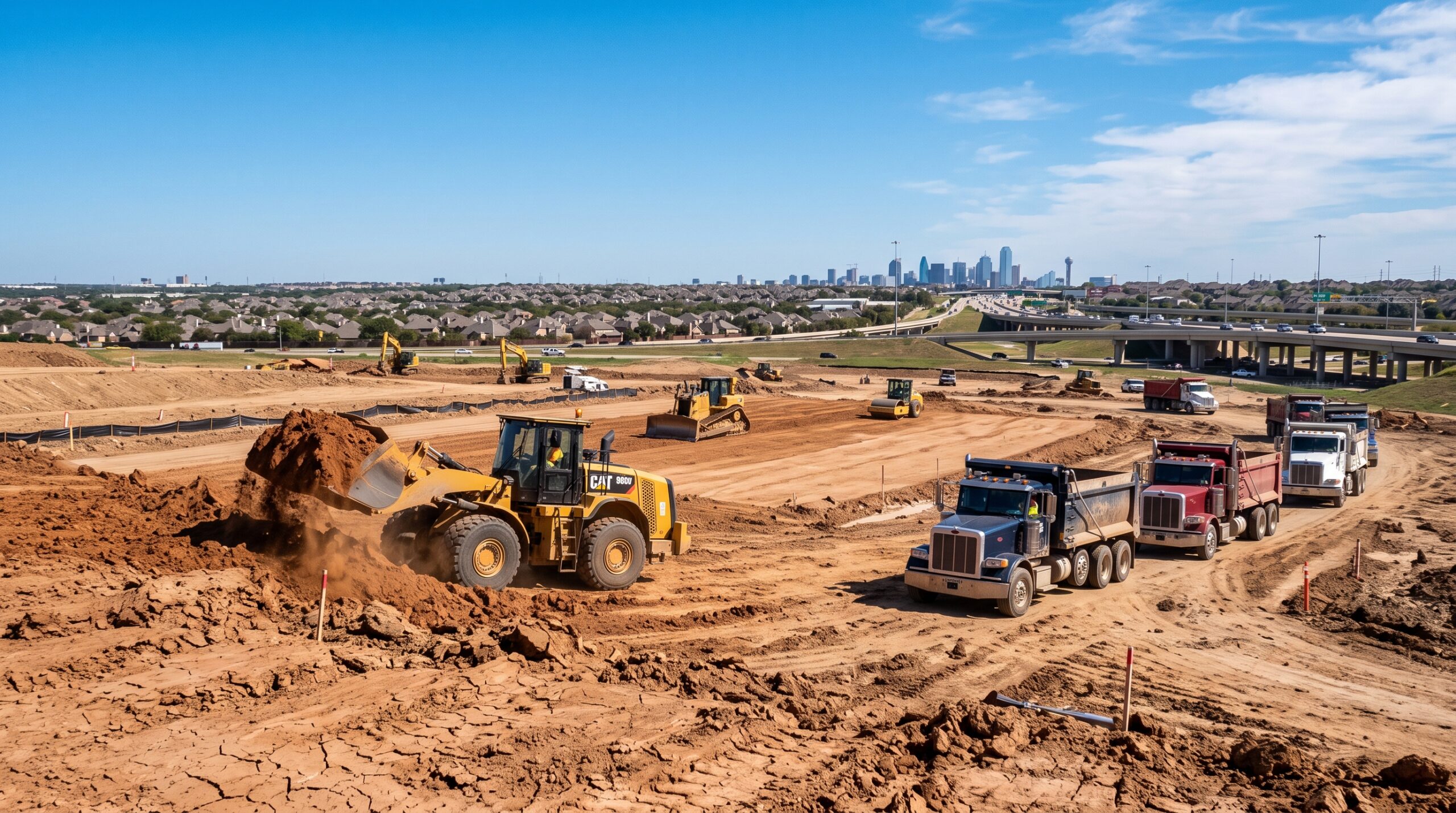
Land development across the Dallas-Fort Worth metroplex doesn’t slow down, and neither does the demand for material to move it. Whether you’re pad-grading a master-planned community in Celina or balancing cut-and-fill on a commercial pad site in Fort Worth, sourcing fill dirt for land development in North Texas is one of the first logistical problems a project team has to solve. Get it wrong and you’re not accounting for local soil behavior, volume timing, or supplier reliability.
This guide breaks down what civil contractors, project managers, and developers actually need to know before the first truck rolls onto site.
Soil Types Common in North Texas and How They Affect Fill Selection
North Texas isn’t one uniform soil region, and the material under your site changes what “fill dirt” should actually mean for your project. Knowing what you’re building on shapes every sourcing decision that follows.
Blackland Prairie Clay vs. Sandier Formations
Most of the DFW region sits on Blackland Prairie soils, dark, calcareous clays with high shrink-swell potential, while areas farther west and north transition into sandier, more granular formations tied to the Eagle Ford and Woodbine outcrops. This matters enormously for fill selection. Native Blackland clay is highly expansive: it swells when saturated and shrinks dramatically during dry Texas summers, which can crack slabs, buckle pavement, and undermine foundations if it isn’t managed correctly.
Common Fill, Select Fill, and Engineered Fill
For that reason, North Texas fill dirt projects typically fall into a few material categories:
- Common fill: general-purpose material for mass grading, elevation building, and non-structural areas, often a native or blended clay-and-rock mix.
- Select fill: cleaner, more uniform material with lower plasticity, used where compaction consistency matters more, like utility trenches or building pads.
- Engineered fill: material tested and certified to meet a specific geotechnical spec, usually required for structural pads, retaining walls, or anywhere a geotech engineer has issued compaction and PI (plasticity index) requirements.
Developers working in high-PI clay areas, which cover much of Collin, Dallas, Tarrant, and Denton counties, often need to blend in select fill or sand to bring plasticity down to a workable range. Skipping geotechnical testing to save time on a large site almost always costs more later in re-work, so requesting a lab report or testing summary from your supplier before committing to volume is worth the extra step.
Volume Requirements for Large Residential and Master Planned Communities
Master-planned communities in growth corridors like Frisco, Prosper, Melissa, and Forney are rarely small jobs. A single phase of a residential subdivision can require anywhere from 20,000 to several hundred thousand cubic yards of fill, depending on how much cut-and-fill balancing is already achieved on-site versus how much needs to be imported.
Planning Considerations for High-Volume Projects
A few planning considerations specific to land development fill dirt Texas projects:
- Phase your sourcing. Locking in one supplier for an entire multi-phase community is risky if their pit runs dry or their production schedule slips. Many developers split volume across two or three sources to de-risk the timeline.
- Confirm haul distance early. Trucking cost, not material cost, is usually the largest line item on a large fill order. A source 10 miles away at a slightly higher per-yard price often beats a “free” pit 40 miles out once hauling is factored in.
- Build in seasonal buffer. Spring rains in North Texas routinely shut down haul roads and staging areas for days at a time. Padding your schedule around wet months protects your grading timeline.
TxDOT Proximity Considerations: Road Base and Fill Near State Projects
A meaningful share of fill and base material demand in North Texas is tied directly to state and regional roadway work. Widening projects on the Sam Rayburn Tollway, US-380 corridor improvements, and ongoing I-35E and I-30 work all generate demand for material and, at times, surplus material available for reuse.
Working Near Active State Corridors
If your development sits near an active TxDOT corridor, a few things are worth knowing:
- Material used on any TxDOT-let project must meet the department’s material specifications, which set requirements for gradation, plasticity, and compaction for items like base course and embankment fill. These specs are published and updated by TxDOT and are the reference point contractors use when qualifying a source for state work.
- Surplus cut material from a nearby TxDOT project can sometimes be sourced cheaply or for free, but confirm it meets your geotechnical requirements before accepting it. TxDOT-suitable material isn’t automatically suitable for residential subgrade or vice versa.
- Coordinate haul routes carefully near active work zones. Lane closures and detours around ongoing state projects can add real time and cost to a hauling plan that looked fine on paper.
For current specification requirements, TxDOT maintains its official specifications resource page, which is the most reliable reference for material and construction standards used on Texas highway and roadway projects.
How to Source and Qualify Suppliers in the DFW Market
The DFW market has no shortage of pits, haulers, and excavation contractors with surplus material. The challenge is finding one that can deliver the right material, in the right volume, on your timeline. A short qualifying process up front saves far more time than it costs.
Questions to Ask Before You Commit to a Supplier
- Can they document material quality? Ask for a lab testing report or geotechnical summary, especially for select or engineered fill.
- What’s their real production capacity? A supplier quoting 50,000 CY should be able to show they can actually move that volume on a schedule that matches your grading plan.
- Where is the material coming from? Active cut-and-fill sites (subdivisions, commercial pads, road projects) tend to produce more consistent, better-documented material than stockpiled or unknown-origin sources.
- Who handles hauling? Some listings are buyer-hauls only; others include loading or delivery. Clarify this before pricing out your logistics.
Finding Material on Borrow Pit
This is exactly the sourcing gap Borrow Pit was built to close. Rather than cold-calling pits across Collin, Dallas, Tarrant, and Denton counties, developers and contractors can browse active, location-tagged listings, with quantity, pricing, and lab-testing status shown up front, and contact sellers directly. Browse current material near your project on the Dirt listings page, covering common fill, select fill, clay, sand, and topsoil across North Texas and beyond.
Search listings near you, or if you’re sitting on surplus material from an active cut, list your material and put it in front of contractors and developers actively sourcing fill across the DFW metroplex.
Conclusion
Sourcing fill dirt for land development in North Texas comes down to three things: understanding the soil you’re working with, planning volume and logistics well ahead of mobilization, and vetting suppliers who can actually deliver at scale. Developers who treat material sourcing as part of preconstruction planning, rather than a last-minute scramble, consistently avoid the schedule slips and cost overruns that catch less-prepared teams off guard.
FAQs
How much does bulk fill dirt cost in North Texas?
Anywhere from free (buyer-hauls surplus) to $10+ per cubic yard for tested, engineered fill; trucking often adds more than the material itself.
What’s the difference between common fill and select fill?
Common fill suits general grading, while select fill is cleaner and lower-plasticity, ideal for pads and trenches.
Do I need lab-tested fill dirt for a residential subdivision?
Structural areas like pads and roadways usually require tested fill; non-structural grading often doesn’t.
How far in advance should I secure fill dirt for a large development?
Start sourcing as soon as your grading plan is final, often several months before mobilization.
Can I use surplus material from a nearby TxDOT project?
Sometimes, but confirm it meets your project’s plasticity and gradation requirements first.