Dirt brokering vs traditional material sourcing is becoming a common discussion among Texas contractors as material costs, hauling expenses, and project timelines continue to face pressure. Whether you’re managing a subdivision in Dallas-Fort Worth, a highway expansion near Austin, or a commercial development in Houston, getting the right material at the right time can make or break a project’s budget.
For decades, contractors relied on traditional supplier networks to source fill dirt, aggregates, and excavation materials. Today, dirt brokering and digital marketplaces are creating new ways to connect material buyers and sellers. Understanding the differences between these two approaches can help contractors choose the most efficient sourcing strategy for their projects.
Understanding Dirt Brokering vs Traditional Material Sourcing
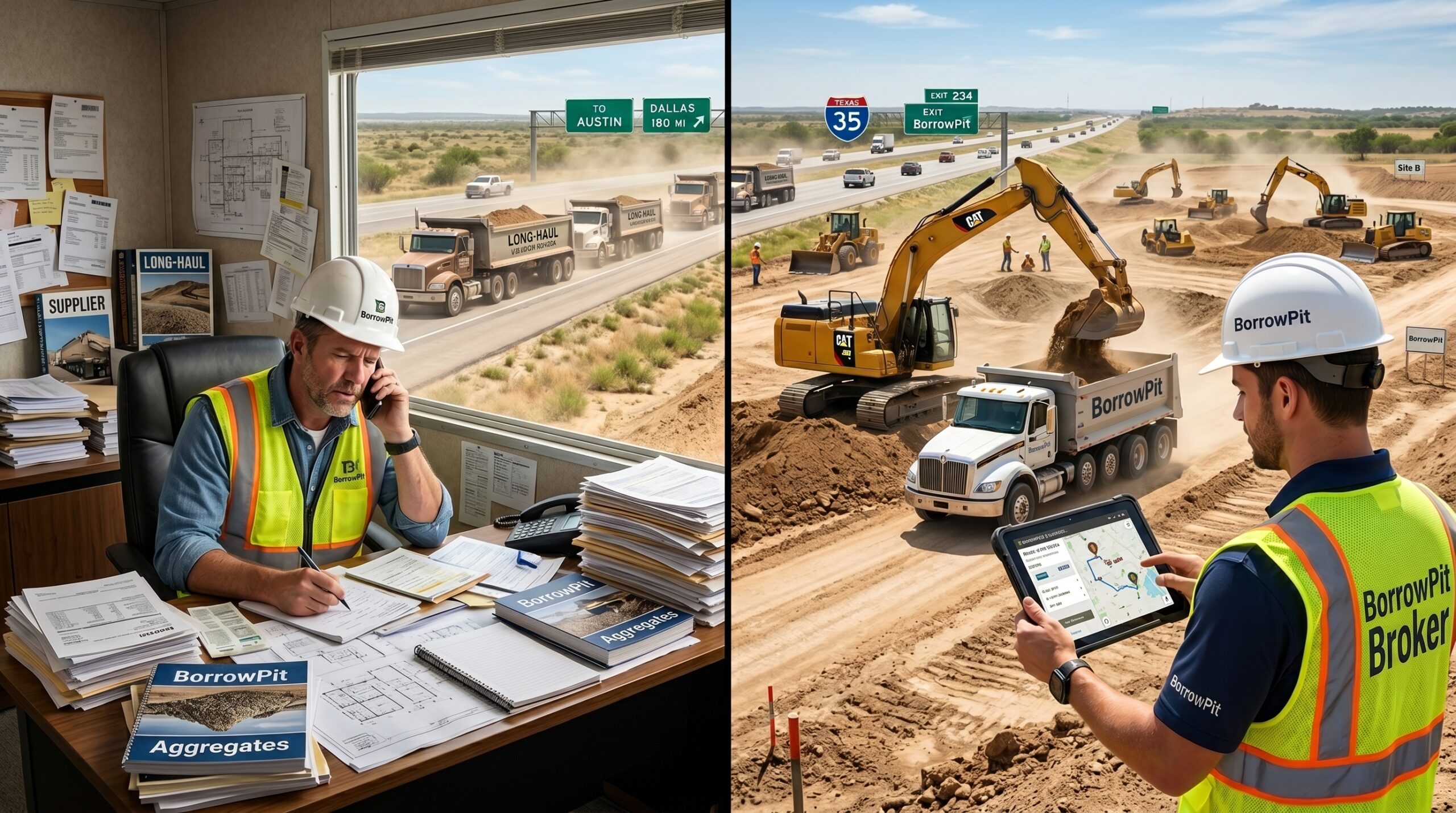
When comparing dirt brokering vs traditional material sourcing, the biggest difference lies in how materials are located and exchanged.
Traditional sourcing usually involves purchasing directly from quarries, aggregate producers, or material suppliers. Contractors contact vendors, request pricing, coordinate trucking, and schedule deliveries independently.
Dirt brokering takes a different approach. Instead of searching through multiple suppliers, contractors can work with brokers who identify available materials from projects that have excess dirt, fill, or aggregates. The broker helps connect supply with demand, creating opportunities that may not exist through conventional supplier channels.
In fast-growing Texas markets, both systems remain widely used. The key is understanding when each option provides the greatest advantage.
How Traditional Material Sourcing Works in Texas
Traditional sourcing remains the foundation of many construction procurement strategies. A contractor working on a road project near I-10 in Houston or a commercial site along SH 130 outside Austin may purchase materials directly from established suppliers with whom they have long-standing relationships.
Established Supplier Networks
One reason traditional sourcing continues to be popular is predictability.
Many contractors prefer working with vendors they know and trust. These suppliers often provide:
- Consistent material specifications
- Established delivery schedules
- Long-term pricing agreements
- Familiar quality control standards
Organizations such as the Texas Department of Transportation (TxDOT) maintain strict specifications for materials used in infrastructure projects, making supplier reliability particularly important.
While traditional sourcing provides stability, it may not always offer the most cost-effective solution when surplus materials are available elsewhere.
Why Dirt Brokering Is Gaining Popularity
The growth of Texas construction has created an interesting challenge: some projects need material while others are trying to dispose of it. This is where dirt brokering vs traditional material sourcing becomes especially relevant.
A residential development in Frisco may require thousands of cubic yards of fill dirt. At the same time, a nearby excavation project could be removing excess soil that needs a destination. Dirt brokers identify these opportunities and help connect both parties.
Rather than treating excess material as waste, dirt brokering transforms it into a resource.
How Dirt Brokers Match Supply and Demand
The value of dirt brokering comes from visibility. Many contractors simply do not know where available materials exist. Dirt brokers maintain relationships with developers, excavators, contractors, and landowners who either need material or have excess material available.
This creates several advantages:
- Reduced disposal costs
- Faster sourcing opportunities
- Improved material utilization
- Better supply and demand matching
BorrowPit supports both models.
Contractors can request brokering assistance when looking for material opportunities, or they can advertise directly through the platform. Businesses that want direct exposure can create listings starting at $249 per month, allowing buyers and sellers to connect without intermediary involvement.
Comparing Costs Between Both Approaches
For many contractors, the decision between dirt brokering vs traditional material sourcing ultimately comes down to economics.
Material pricing is important, but transportation often has a greater impact on overall project costs.
Transportation and Hauling Savings
In Texas, hauling expenses can quickly exceed material costs. A contractor sourcing fill dirt from 75 miles away may spend significantly more on trucking than on the material itself. Dirt brokers often help identify nearby sources, reducing travel distances and transportation expenses.
According to the Federal Highway Administration (FHWA), transportation efficiency plays a major role in construction productivity and cost management.
Shorter haul routes can result in:
- Lower fuel costs
- Fewer trucking hours
- Reduced equipment wear
- Faster project completion
For earthwork-intensive projects, these savings can become substantial.
Material Availability and Project Timing
Another factor in the dirt brokering vs traditional material sourcing debate is availability. Traditional suppliers may experience inventory constraints during peak construction seasons. Dirt brokers often provide access to alternative sources that contractors may not otherwise discover.
This flexibility can help projects avoid delays when demand surges across major markets like Houston, Dallas, Austin, and San Antonio.
Dirt Brokering vs Traditional Material Sourcing for Different Project Types
Not every project benefits equally from the same sourcing method. Large infrastructure projects often require strict material specifications and certified suppliers. Traditional sourcing may be the preferred option in these situations. Other projects are more flexible.
Examples include:
- Site grading
- Land development
- Residential subdivisions
- Commercial excavation
- Fill placement projects
For these applications, dirt brokering vs traditional material sourcing often favors brokering because surplus materials from nearby sites can meet project requirements while lowering costs.
A contractor developing a subdivision near New Braunfels might find suitable fill material from a nearby commercial excavation rather than purchasing new material from a distant source. The result is a more efficient construction supply chain.
How Technology Is Changing Material Procurement
The construction industry has traditionally relied on phone calls, personal networks, and supplier relationships. Today, digital marketplaces are expanding sourcing opportunities.
Instead of contacting multiple vendors individually, contractors can access centralized platforms that provide visibility into available materials and sourcing opportunities.
BorrowPit combines marketplace advertising with dirt brokering services, giving contractors flexibility based on project needs.
Some users prefer direct listings that allow buyers and sellers to communicate independently. Others choose brokering support when they need assistance locating material or identifying disposal options.
For sourcing assistance, project inquiries, or brokering opportunities, contractors can connect through BorrowPit’s contact page.
Which Strategy Makes Sense for Texas Contractors?
The answer depends on project goals. Contractors seeking highly specified materials with established supplier relationships may continue using traditional sourcing methods.
Contractors focused on reducing transportation costs, locating surplus materials, or improving procurement flexibility may find significant value in dirt brokering. In reality, many successful contractors use both approaches.
They rely on traditional suppliers for certain materials while using brokering services to identify opportunities for fill dirt, aggregates, and excavation materials when local availability creates cost advantages.
As Texas construction activity continues expanding across DFW, Houston, Austin, and San Antonio, hybrid sourcing strategies are becoming increasingly common.
Conclusion
The discussion around dirt brokering vs traditional material sourcing is not about replacing one system with another. It is about finding the right sourcing method for each project.
Traditional supplier networks offer consistency and established relationships. Dirt brokering creates opportunities to reduce hauling costs, improve supply chain efficiency, and connect buyers with available materials that might otherwise go unused.
For Texas contractors navigating competitive construction markets, combining both strategies often delivers the best results. Access to multiple sourcing options provides flexibility, cost control, and greater resilience when market conditions change.
Explore available material opportunities by searching listings near your project area, or list your material if you are looking to connect with contractors, developers, and buyers across Texas.
FAQs
Is dirt brokering only useful for large construction projects?
No. Dirt brokering can benefit projects of all sizes, from residential developments to large infrastructure jobs, especially when fill dirt or excavation materials are involved.
How does dirt brokering reduce project costs?
The biggest savings often come from shorter hauling distances, reduced disposal fees, and improved access to nearby material sources.
What types of materials are commonly brokered?
Fill dirt, select fill, sand, aggregates, topsoil, excavation spoil, and disposal site opportunities are among the most common materials.
Can contractors still use traditional suppliers alongside dirt brokers?
Yes. Many contractors combine traditional sourcing with dirt brokering to maximize flexibility and control costs.
Does BorrowPit offer both brokering and advertising services?
Yes. Contractors can request assistance finding materials through brokering services or advertise directly on the platform with listings starting at $249 per month.