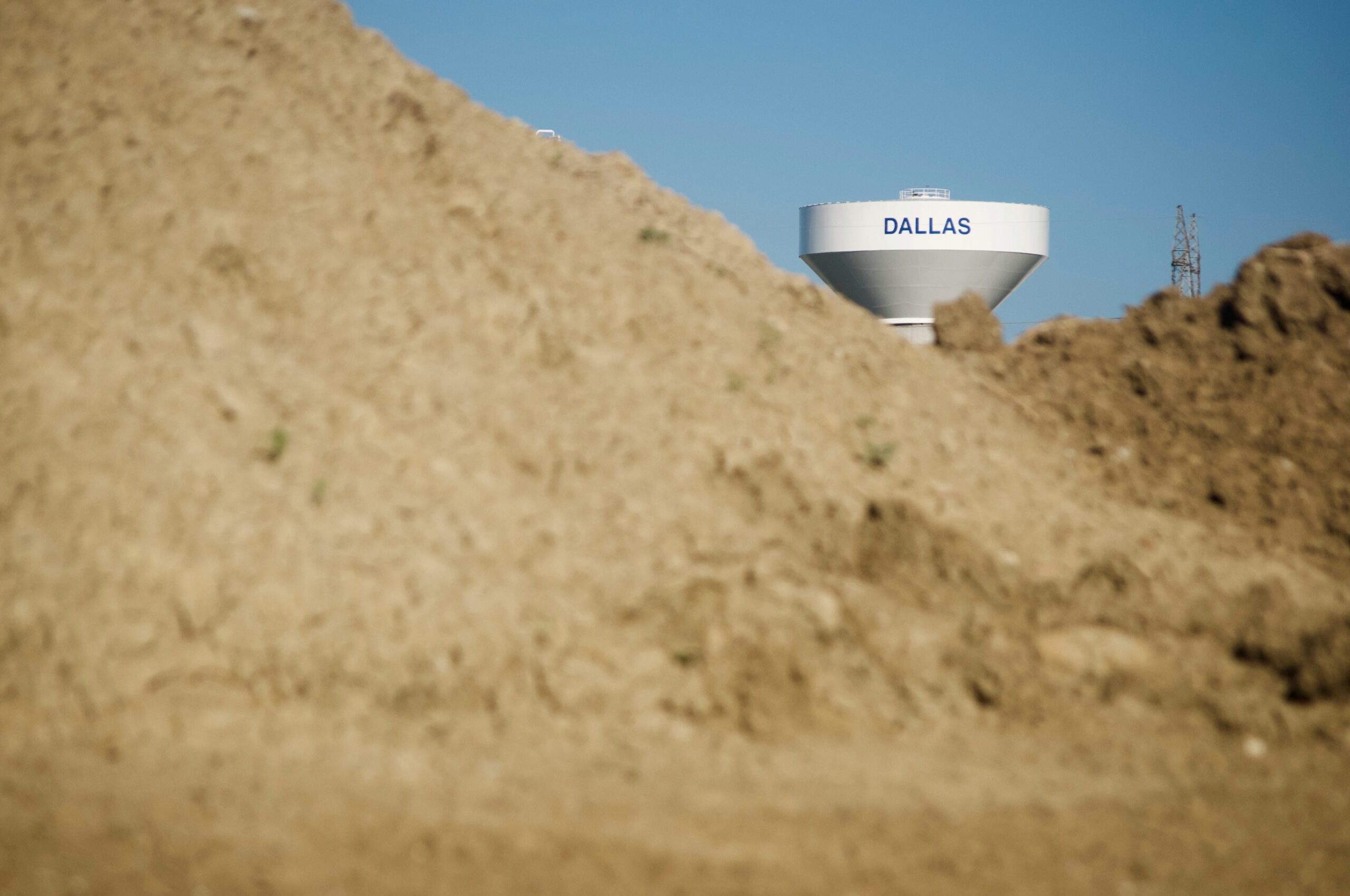

Houston is one of the toughest places in Texas to build on. Much of the metro sits on high-plasticity clay (“gumbo”) that swells when wet and shrinks during droughts, on flat ground with poor natural drainage and heavy rain. That’s why so many Houston jobs import select fill for building pads, paving subgrades and foundation backfill. This guide covers what Houston projects typically specify, how local conditions affect sourcing and placement, and what drives cost.
Why Houston Projects Rely on Select Fill
Large parts of Harris, Fort Bend, Brazoria and Galveston counties sit on clay-rich coastal plain soils with a high plasticity index. Those clays can move enough seasonally to crack slabs, heave flatwork and shift utilities. A compacted cap of lower-plasticity select fill between the native clay and the structure is one of the most common ways Houston geotechnical engineers reduce that movement.
Flat terrain and shallow groundwater add to the problem. Water that sits on or near a pad keeps the clay wet and unstable, so drainage, grading and fill quality go together.
What Houston Specs Typically Call For
Your geotechnical report and project specs govern, but Houston-area select fill specs commonly include:
- A sandy clay or clayey sand with a PI range such as 7 to 20 (some engineers use 10 to 20).
- A liquid limit cap, often around 35 to 40.
- No organics, debris or large clods or rock.
- Compaction to 95% of Standard Proctor (ASTM D698) or as specified, in loose lifts around 8 inches, with moisture held near optimum.
- For TxDOT and many public jobs, the applicable embankment or backfill item, such as TxDOT Item 132.
Bank sand is also widely used around Houston, especially for utility bedding and some backfill. It’s a different material with different specs, so don’t swap it for select fill unless the engineer allows it.
Weather and Scheduling
- Rain: Houston can get heavy rain any month, and hurricane season runs June through November. Wet pits slow loading, and saturated pads can’t be compacted until they dry.
- Heat: long, hot summers dry the surface of placed fill fast. Re-wet and re-compact pads that sit before the slab is poured.
- Plan buffers: build weather days into grading schedules, and line up a backup source before you need it.
Sourcing Select Fill in the Houston Area
- Get current lab data (PI, LL, gradation, Proctor) from the actual stockpile you’ll haul from.
- Compare delivered cost, not pit price. Houston traffic and long cross-metro hauls can add more than the material costs. A closer pit often wins even at a higher price per yard.
- Check that supply matches your volume. Make sure the source can deliver your full quantity in spec and on schedule.
- Submit early. Get the material submittal approved before mass grading starts.
- Agree on rejected loads. Settle who pays if a load fails inspection.
Inspection and Compaction Tips
- Reject loads with visible organics, debris or oversized clods.
- Watch for color or texture changes that suggest a new pit face, and re-test when they appear.
- Strip and proof-roll the native subgrade before placing fill.
- Keep lifts thin enough to compact through, and moisture-condition every lift.
- Test density at the required frequency and fix failures before covering them.
What Affects Select Fill Cost in Houston
- Haul distance and traffic: often the largest single cost factor.
- Volume and pace: steady, large orders typically price better than rush deliveries.
- Spec tightness: tight PI ranges or extra testing narrow which pits qualify.
- Weather: wet stretches reduce supply and can raise prices.
- Demand: busy development cycles in fast-growing suburbs can tighten supply.
Common Mistakes on Houston Jobs
- Using local “fill dirt” that’s really high-PI clay.
- Placing fill on a wet, unstable subgrade.
- Letting a finished pad sit through rain or heat without protection.
- Approving a pit once and never re-testing as the face changes.
Frequently Asked Questions
Is bank sand the same as select fill?
No. Bank sand is a sandier material often used for utility bedding. Select fill has a controlled plasticity range so it can bind and compact into a stable pad. Use whichever your specs call for.
How thick should a select fill pad be in Houston?
It depends on the clay’s swell potential and the structure. Your geotechnical report will specify the thickness. It varies widely from site to site.
Can I build on native Houston clay without select fill?
Only if your engineer’s design allows it. Many Houston slabs rely on a select fill cap, moisture conditioning or both.
For general specs and placement practices, see our complete select fill guide. Need select fill delivered in the Houston area? See Houston dirt and aggregate supply or talk to a broker.