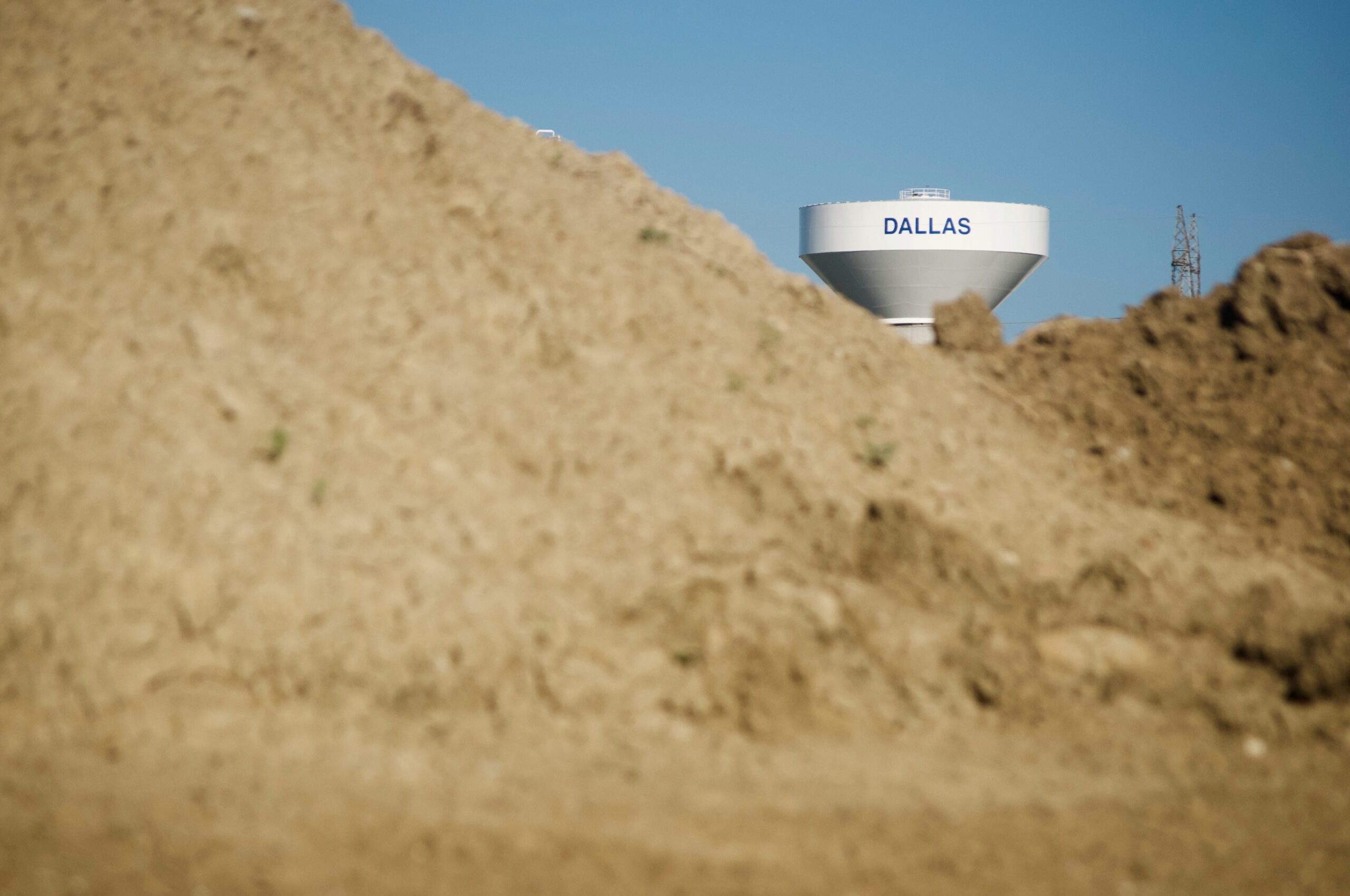

Select fill is one of the most commonly specified materials on commercial, residential and public works jobs, and one of the most commonly misunderstood. It’s a controlled soil, not just “good dirt.” Whether it passes inspection depends on its plasticity, gradation and moisture, and on how it’s placed and compacted. This guide covers what select fill is, where it’s used, how it’s typically specified, and how to source, inspect and place it without rework.
What Is Select Fill?
Select fill is a soil chosen and tested to meet specific engineering properties, usually a sandy clay or clayey sand with enough fines to bind and compact but low enough plasticity that it won’t swell and shrink much with moisture changes. It’s used where the ground has to carry load and stay put: under slabs, foundations, paving and utilities.
Common fill (also called general fill or embankment fill) is less controlled. It can raise grade in landscaped or non-structural areas, but it usually can’t go directly under a building pad. Topsoil is organic and meant for growing; it should never be used as structural fill.
How Select Fill Is Typically Specified
The governing numbers always come from the project’s geotechnical report and plans, and they vary by engineer and region. Most select fill specs address the same handful of properties:
- Plasticity Index (PI): often a range such as 7 to 20, or 10 to 20. Too low and the material can be hard to compact and erode; too high and it behaves like expansive clay.
- Liquid Limit (LL): frequently capped, commonly around 35 to 40.
- Gradation: a maximum particle size (often 2 to 3 inches) and a range for the percent passing the No. 200 sieve.
- Deleterious material: free of organics, debris, trash and oversized rock.
- Compaction: commonly 95% of Standard Proctor (ASTM D698) or a specified percentage of Modified Proctor (ASTM D1557), placed in loose lifts around 8 inches and within a moisture window near optimum.
Departments of transportation publish their own embankment and backfill items (TxDOT Item 132, for example). If you’re working on a public job, the DOT item, not a supplier’s description, is what the material has to meet.
Where Select Fill Is Used
- Building pads and slabs: a select fill cap over expansive native clay reduces movement under the slab.
- Foundation and wall backfill: stable, compactable material that doesn’t push on walls when wet.
- Roadway and parking subgrade: a uniform, load-bearing layer below base and pavement.
- Utility trench backfill: where specs call for select material above the bedding zone.
- Drainage and erosion-prone areas: sandier select fill holds shape better than fat clay in channels and slopes.
Sourcing Select Fill
Most failures start at the pit, not the jobsite. Before you commit to a source:
- Ask for recent lab results (PI, LL, gradation, Proctor) from the specific stockpile or pit face you’ll be hauling from, not a general sheet from years ago.
- Confirm volume and consistency. A pit that can supply 500 yards of in-spec material may not hold spec across 20,000 yards.
- Check haul distance. Trucking is usually the biggest variable cost on bulk fill. A cheaper pit 40 miles away can cost more delivered than a closer one.
- Submit early. Many engineers require a material submittal with lab data before the first load. Approval delays can stall grading.
- Agree on what happens if a load fails. Know who pays to remove and replace out-of-spec material.
Inspecting Select Fill on Delivery
- Look for visible organics, roots, trash, debris or oversized rock.
- Watch for color or texture changes between loads, which can signal a different pit face.
- Check moisture: material that’s far too wet or dry will be hard to bring into the compaction window.
- Have the testing lab sample at the frequency the spec requires, and sample again if the source or stockpile changes.
Placement and Compaction
- Strip vegetation and topsoil and proof-roll the subgrade before placing fill.
- Place in uniform loose lifts (often about 8 inches) and compact each lift before the next.
- Moisture-condition to the specified range. Most compaction failures are moisture problems.
- Test density on each lift at the frequency required, and rework failed areas before covering them.
- Protect finished pads from rain and drying out until the slab or base goes down.
What Drives the Cost of Select Fill
- Haul distance and truck availability.
- Volume and schedule: large, steady orders usually price better than rush or stop-start orders.
- Spec tightness: narrow PI ranges or extra testing limit which pits qualify.
- Local supply: metros with expansive native clay often see stronger demand for imported select fill.
- Weather: wet seasons slow pits and placement and can push prices up.
Common Mistakes to Avoid
- Using “fill dirt” from a source with no lab data.
- Approving a pit from one sample and never re-testing.
- Placing lifts too thick to compact through.
- Ignoring moisture until density tests fail.
- Choosing the cheapest pit price without comparing delivered cost.
Regional Notes
Select fill specs and local soils differ by market. For Texas, see our guides for Dallas–Fort Worth, Houston and San Antonio. In the Northeast, including Philadelphia, specs commonly follow state DOT backfill items, and frost depth and freeze-thaw are bigger design factors than the expansive-clay movement that drives most Texas select fill specs.
Frequently Asked Questions
Is select fill the same as structural fill?
Often, but not always. “Structural fill” is a broader term. Select fill is a specific, tested soil that many engineers specify as structural fill. Always go by the definition in your project specs.
Can I use native soil instead of select fill?
Only if the geotechnical engineer approves it. In expansive-clay areas, native soil usually can’t meet select fill PI limits.
How much select fill do I need?
Take the compacted volume from your plans and add a shrink factor, commonly 15 to 30% depending on the material and compaction spec. Your geotechnical engineer or supplier can help refine it.
Need select fill for an upcoming job? Talk to a Borrow Pit broker and we’ll find spec-compliant supply close to your site.