Choosing the right base material is one of the most important decisions on any civil construction project. Whether you’re building a subdivision in Dallas-Fort Worth, widening a highway near Houston, or preparing a commercial site in Austin, the performance of the finished pavement depends heavily on the material beneath it. One of the most commonly specified base materials across Texas is flexbase, particularly on projects governed by TxDOT Item 247 specifications.
Understanding what is flexbase, when it should be used, and how it differs from other aggregate base materials helps contractors avoid specification issues, improve long-term pavement performance, and control project costs. From quarry-produced crushed limestone to recycled concrete base, each option has its place depending on the project requirements, traffic loads, and engineering specifications.
Understanding What Is Flexbase
Flexbase is a dense-graded aggregate base course used to create a stable foundation beneath asphalt and concrete pavements. In Texas, the material most commonly consists of crushed limestone, although TxDOT Item 247 also permits other approved aggregates such as crushed gravel, recycled concrete aggregate (RCA), and other durable materials that meet specification requirements.
Unlike fill dirt, which primarily raises site elevations or supports embankments, flexbase is a structural layer engineered to distribute vehicle loads, minimize settlement, and provide a consistent platform for pavement construction. Properly compacted flexbase improves pavement life by reducing movement caused by heavy traffic and moisture changes.
You’ll find flexbase material in Texas on nearly every type of transportation project, including:
- State highways
- County roads
- Commercial parking lots
- Industrial facilities
- Residential streets
- Airport pavements
- Heavy equipment yards
Because of its structural role, flexbase must meet strict quality requirements rather than simply being crushed rock. Material is evaluated for durability, gradation, plasticity, and compaction characteristics before it is accepted for use.
TxDOT Item 247 and Where Flexbase Is Used
Most public roadway projects in Texas reference TxDOT Item 247, which establishes the requirements for Flexible Base. The specification defines acceptable aggregate sources, grading requirements, durability standards, construction methods, and quality control procedures.
Before selecting material, contractors should understand where Item 247 applies and why compliance matters.
Common Applications Under TxDOT Item 247
TxDOT Item 247 is used wherever a stable base course is needed beneath pavement. Typical applications include:
- Interstate and state highway construction
- Farm-to-market roads
- Municipal streets
- Bridge approaches
- Commercial parking lots
- Industrial developments
- Distribution centers
- Airport access roads
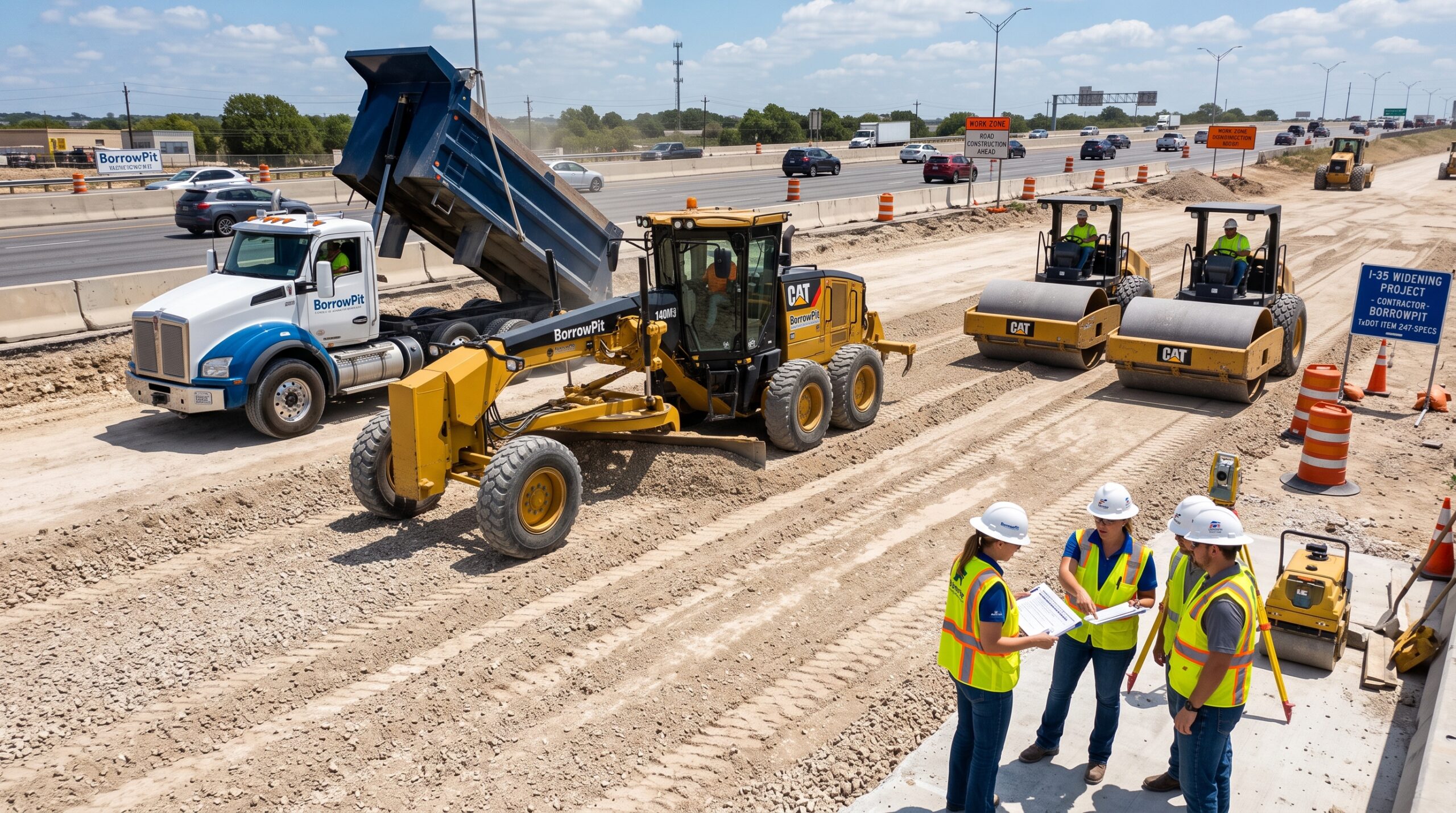
For example, roadway improvements along I-35 in Austin, SH 99 near Houston, or US-75 through Dallas frequently specify Item 247 flexible base beneath asphalt pavement. The material provides structural support while helping transfer traffic loads evenly into the underlying subgrade.
Current Flexible Base requirements can be reviewed through the official TxDOT Standard Specifications website.
When Contractors Specify Flexbase Instead of Other Base Materials
Not every project requires the same aggregate base. The project engineer determines the appropriate material based on anticipated traffic, soil conditions, pavement design, and owner specifications.
The following sections explain where flexbase is typically the preferred choice.
Flexbase for Heavy-Traffic Construction
Projects supporting frequent truck traffic generally specify flexbase because of its strength and predictable compaction characteristics.
Typical examples include:
- Distribution centers
- Manufacturing plants
- Industrial parks
- Logistics facilities
- Major municipal roads
- State highway projects
Because flexbase forms a dense, interlocking aggregate layer, it distributes concentrated wheel loads more effectively than untreated soil or lower-quality aggregate.
When Alternative Base Materials Are Used
Some private developments allow alternatives depending on engineering requirements and project budgets.
For example:
- Recycled concrete base may be accepted for commercial developments.
- Crushed asphalt may be used on temporary access roads.
- Stabilized subgrade may reduce the required base thickness.
- Local aggregate sources may satisfy municipal specifications where TxDOT standards do not apply.
Even when alternatives are permitted, contractors should verify whether local municipalities or project engineers impose additional testing requirements before procurement.
Quarry Limestone vs Recycled Concrete Base
One of the most common sourcing decisions contractors face is choosing between virgin crushed limestone and recycled concrete aggregate. Both materials can serve as base courses when they meet project specifications, but each offers distinct advantages.
Crushed Limestone Flexbase
Quarry-produced limestone remains the industry standard for many TxDOT and municipal projects.
Advantages include:
- Consistent gradation
- High durability
- Reliable compaction performance
- Established quality control
- Wide acceptance on public projects
Most limestone quarries produce material specifically engineered to satisfy TxDOT Item 247 grading and durability requirements.
Recycled Concrete Base
Recycled concrete aggregate (RCA) is produced by crushing demolished concrete into reusable aggregate.
Benefits include:
- Lower material costs in some markets
- Reduced landfill waste
- Local availability in urban areas
- Sustainable construction practices
However, recycled concrete may not be accepted on every project. Acceptance depends on owner specifications, engineering requirements, and compliance with applicable quality standards.
For contractors working around Dallas-Fort Worth, where demolition activity generates significant recycled material, RCA can provide an economical option for commercial developments when permitted.
Sourcing Flexbase in Texas
Selecting the right supplier involves more than finding the closest quarry. Large civil projects often require thousands of tons of material delivered over several weeks or months, making supplier reliability just as important as price.
Before committing to a supplier, contractors typically evaluate:
- Production capacity
- Aggregate quality
- Hauling distance
- Delivery schedule
- Testing documentation
- Previous project experience
A project near San Antonio may source limestone from regional quarries, while developments around Houston might evaluate both quarry aggregate and recycled concrete suppliers depending on availability and hauling costs.
Digital construction marketplaces are also becoming part of the procurement process. Contractors searching for material suppliers, disposal locations, or construction logistics can explore the BorrowPit marketplace to identify available resources across Texas. Learn more about the platform on the About Us page or contact the team directly through the Contact Us page for project-specific sourcing assistance.
Conclusion
Understanding what is flexbase and how TxDOT Item 247 governs its use helps contractors make informed material decisions before construction begins. While crushed limestone remains the preferred option for many roadway and infrastructure projects, recycled concrete base can provide a cost-effective alternative when project specifications allow.
Whether you’re building commercial developments in Dallas-Fort Worth, paving industrial facilities in Houston, or constructing roadways near Austin or San Antonio, selecting the right base material is critical to pavement performance, construction efficiency, and long-term durability. Evaluating supplier capacity, confirming compliance with project specifications, and planning material deliveries early are key steps toward keeping Texas construction projects on schedule.
FAQs
What is flexbase made of?
Flexbase is typically produced from crushed limestone, although TxDOT Item 247 also allows other approved aggregates such as crushed gravel and recycled concrete when they meet specification requirements.
What is TxDOT Item 247?
TxDOT Item 247 is the Texas Department of Transportation specification that establishes quality, gradation, durability, and construction requirements for flexible base materials used beneath pavement.
Is recycled concrete the same as flexbase?
Not necessarily. Recycled concrete can be processed to meet flexbase specifications, but it must satisfy the project’s engineering requirements and any applicable TxDOT or local standards before use.
Where is flexbase commonly used?
Flexbase is commonly used beneath highways, municipal roads, parking lots, industrial facilities, residential streets, and commercial developments throughout Texas.
How do contractors source flexbase in Texas?
Contractors typically purchase flexbase from limestone quarries, aggregate suppliers, or approved recycled material producers. They evaluate material quality, production capacity, hauling distance, testing documentation, and delivery reliability before selecting a supplier.